Pitzer Adventures
  • Home
  • About Us
  • Photo Galleries
    • Africa
    • Antarctica
    • Baja California
    • Asia
    • Cuba
    • Europe
    • USA
    • Canada
    • Family and Friends
    • IPhone Photography
    • Green Valley AZ
  • Videos
  • Travels
  • Blogs
    • Travel Blog
    • Grace Blog
  • Classes
    • MW iPhone Photography
    • MW iPad Class

Canadian Maritime Provinces

8/6/2018

1 Comment


The Tour Begins: Halifax, Nova Scotia

Friday, August 3 we flew to Halifax, Nova Scotia from Montreal. This was the beginning of our main tour of the Canadian Maritime Provinces. We learned from our guide, Anne, that Nova Scotia means New Scotland. Since I am part Scottish, I decided that it could be very interesting.


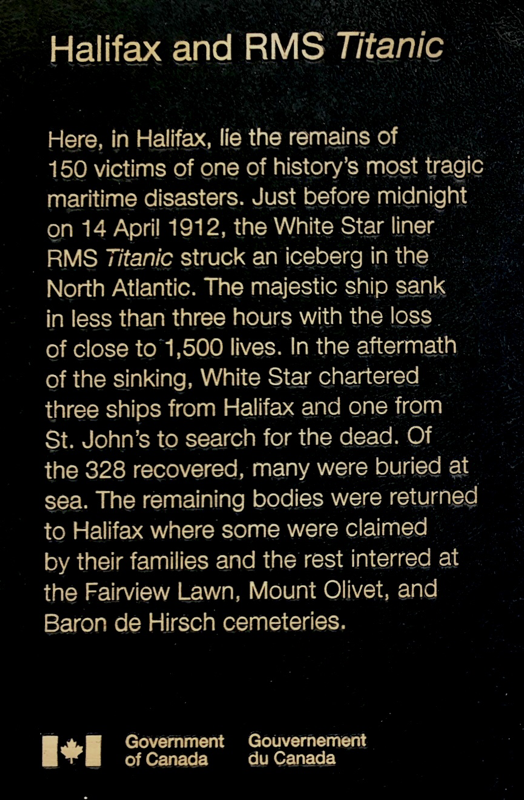
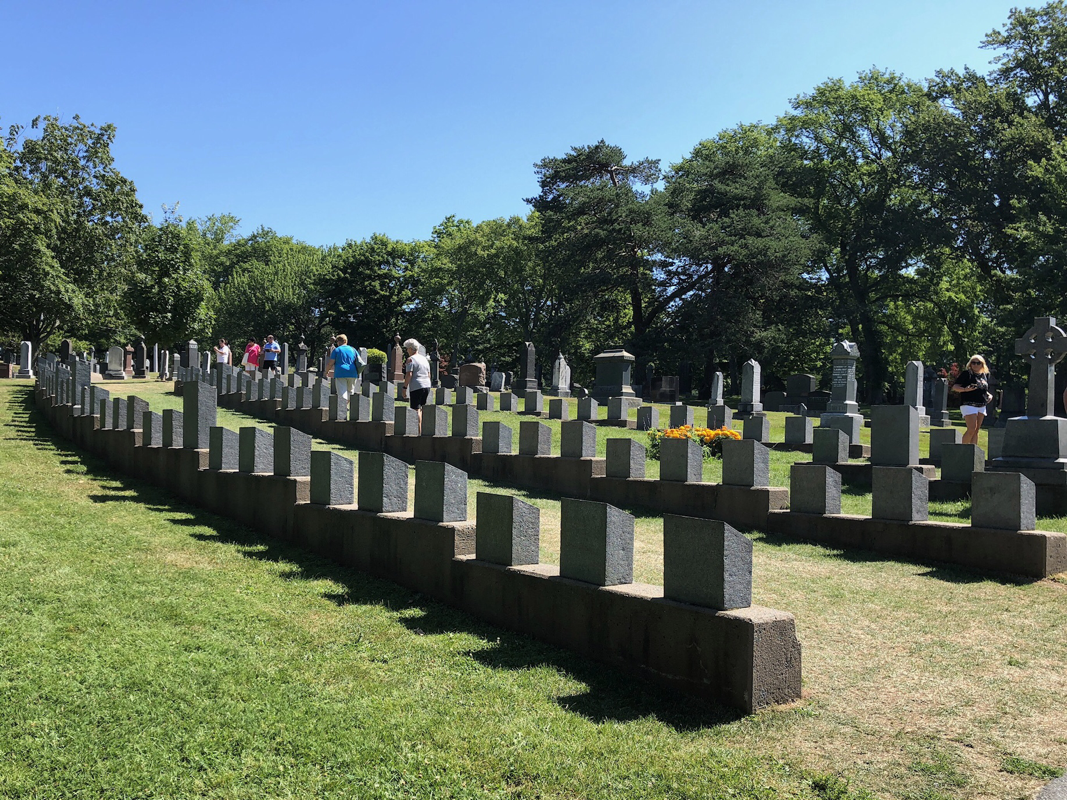
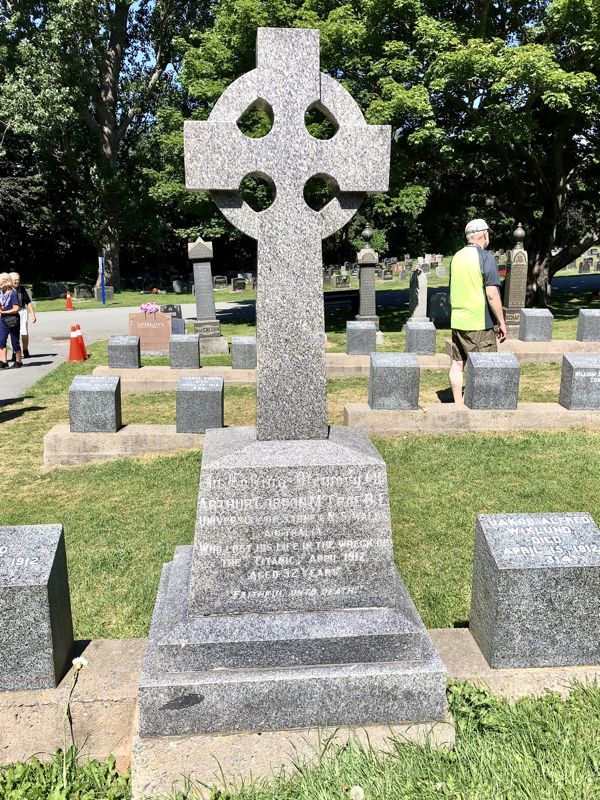
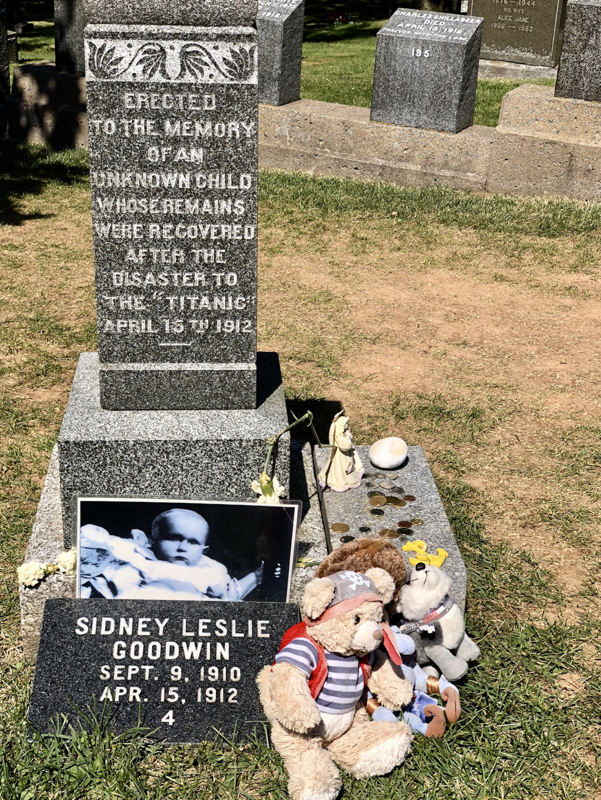
We checked into the Atlantica Hotel. The next morning after breakfast we met the rest our tour members. There are 31 of us now. After the welcome session where our Program Director, Anne, went over all the important information we need to know and after we introduced ourselves, we headed out on a bus tour of the city. The first stop was at the cemetery where 150 victims of the Titanic disaster were buried. Three ships from Halifax were sent to recover victims and many of them are interred in this cemetery. This includes a baby, who was later identified through relatives’ DNA.


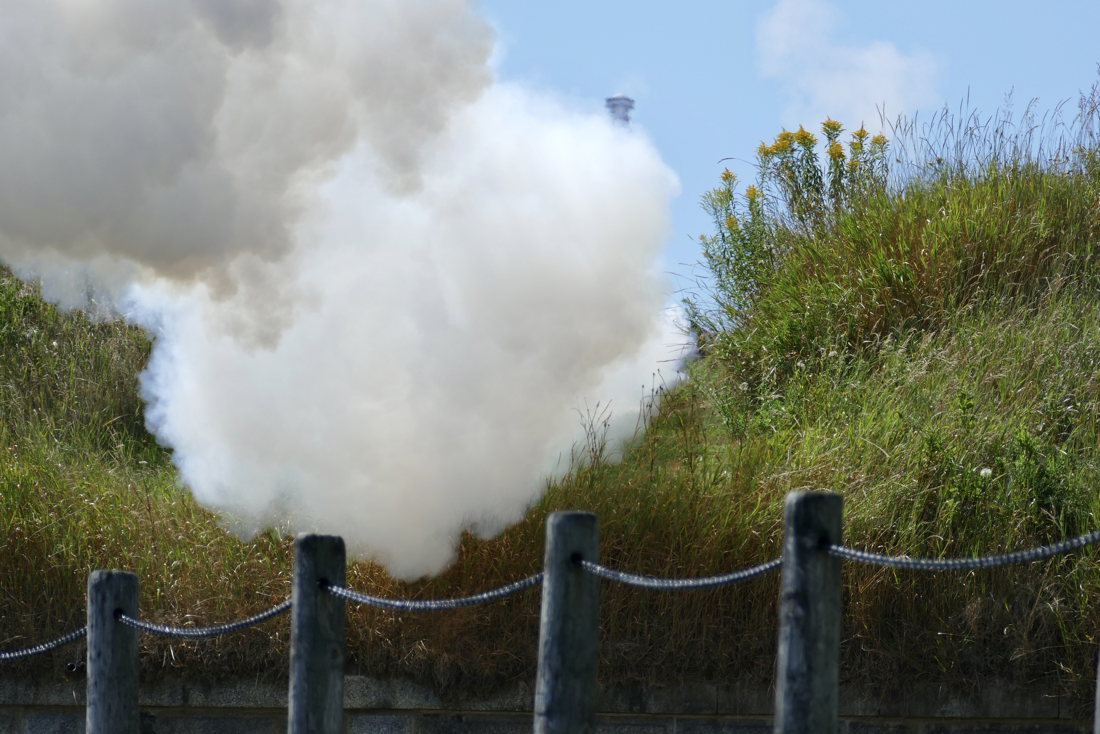
We moved on to the Citadel where they set off a canon blast at precisely 12:00 Noon each day. We were able to witness the ceremony from fairly close. (See small video below.)


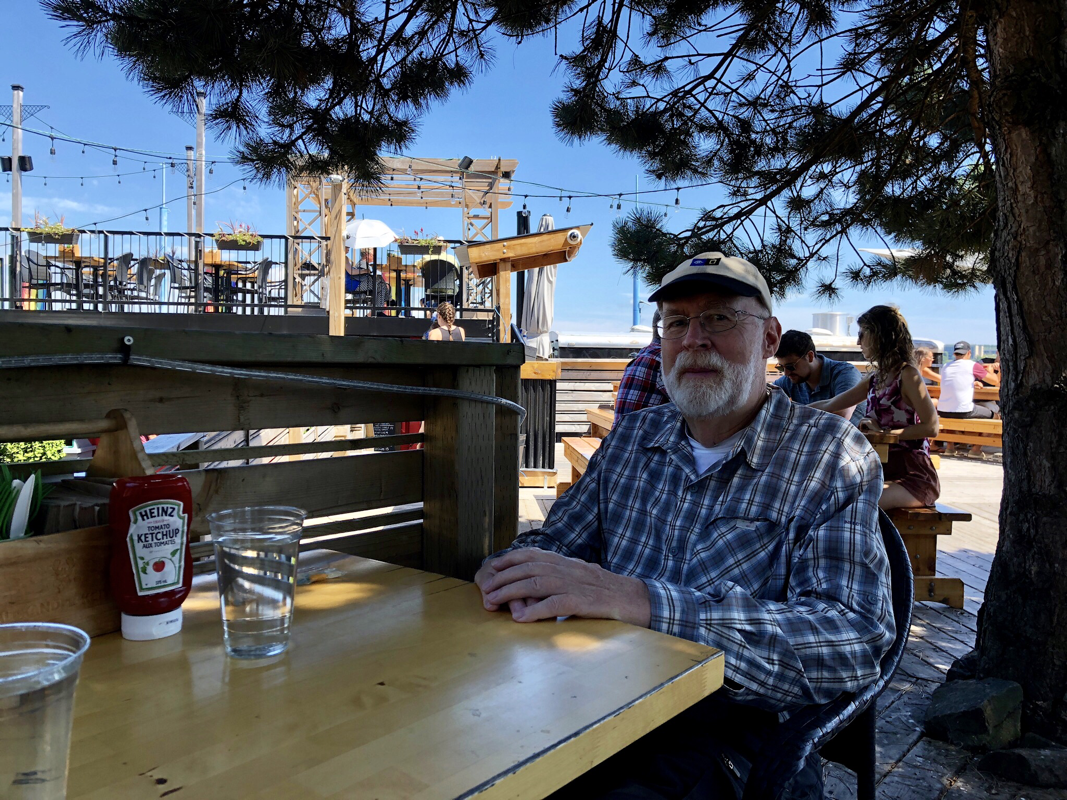
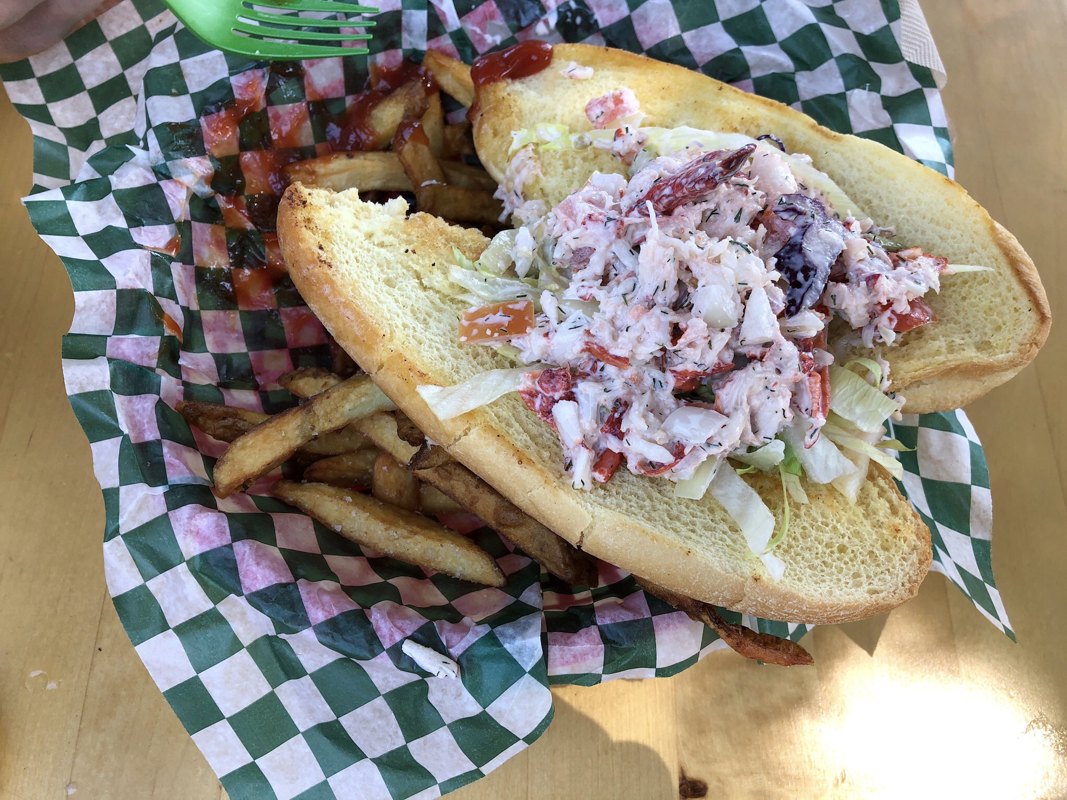
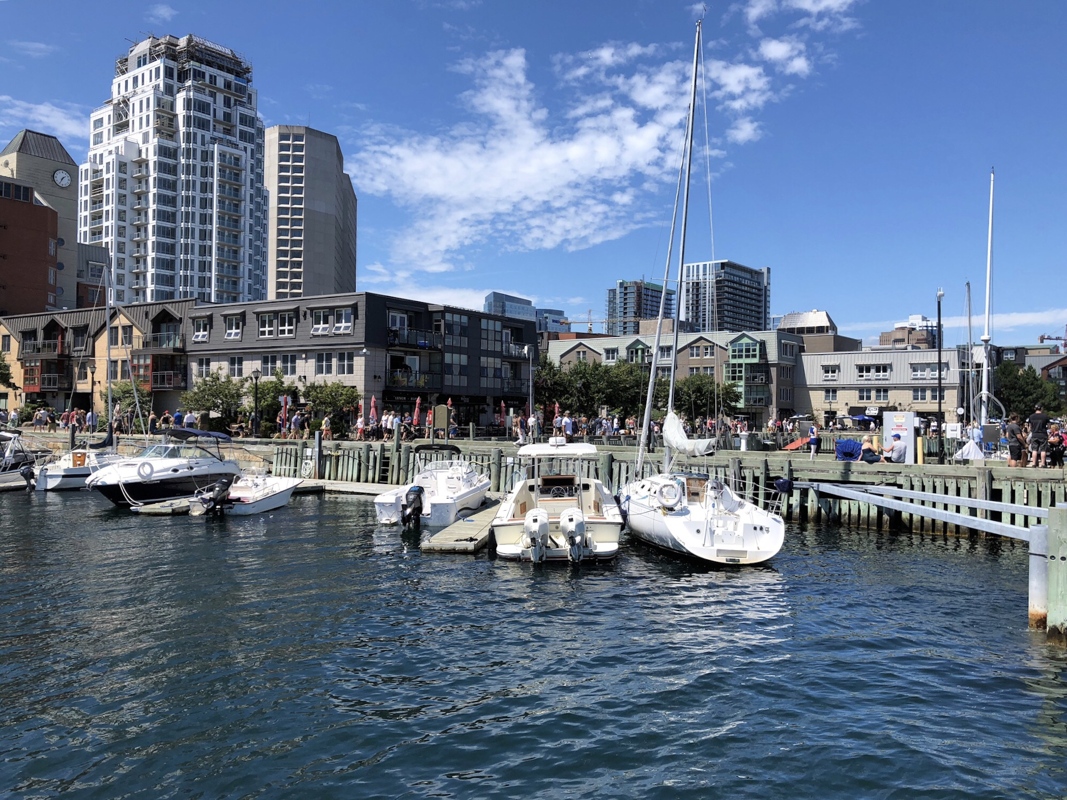
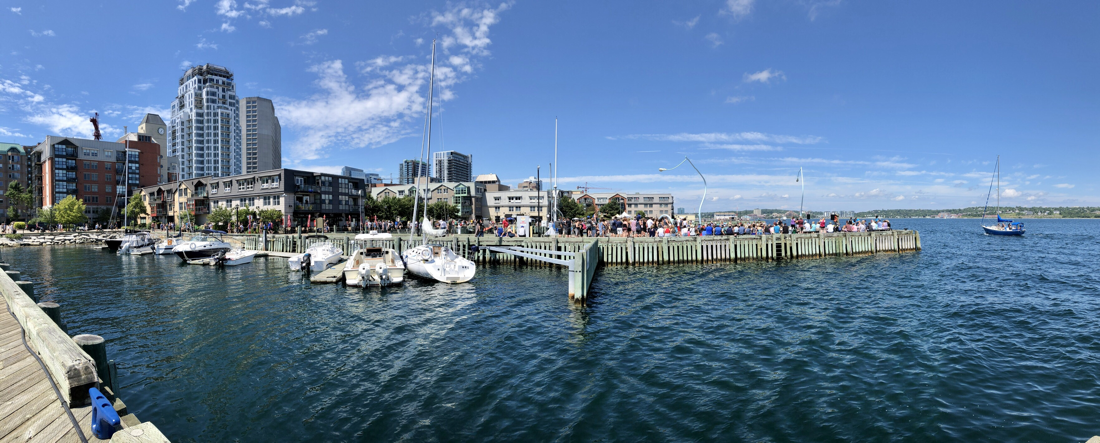
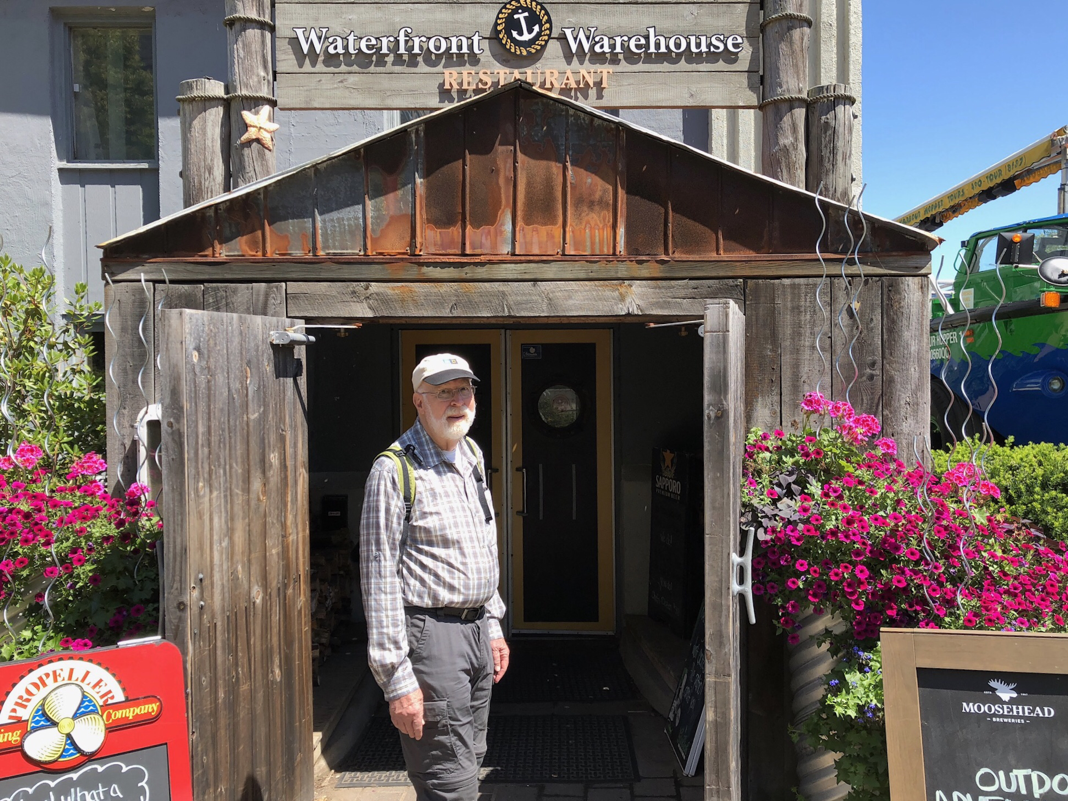
Our afternoon was spent roaming the waterfront, but first was lunch at the Stubborn Goat Beer Garden where we had our first lobster roll. We had just heard of them, but didn’t know what to expect: turns out it was a hotdog bun with lots of shredded lobster meat on it all resting on a bed of excellent French fries. It was a hot afternoon so after doing some walking around we were happy to visit the Maritime Museum of the Atlantic. They had a small, but nice, display of ships, models, and of particular interest were the steam ships, including a model of the Titanic. The bus picked us up at 3:30 and we headed for a short rest at the hotel before heading back down to the Waterfront Warehouse Restaurant for our full group Welcome dinner. The haddock we had pre-ordered was very good.


The next day we visited Peggy’s Cove and Lunenburg.


Grace and Paul​

1 Comment

Canadian Maritime Provinces

8/4/2018

0 Comments


Pretrip Continues: Montreal, Quebec

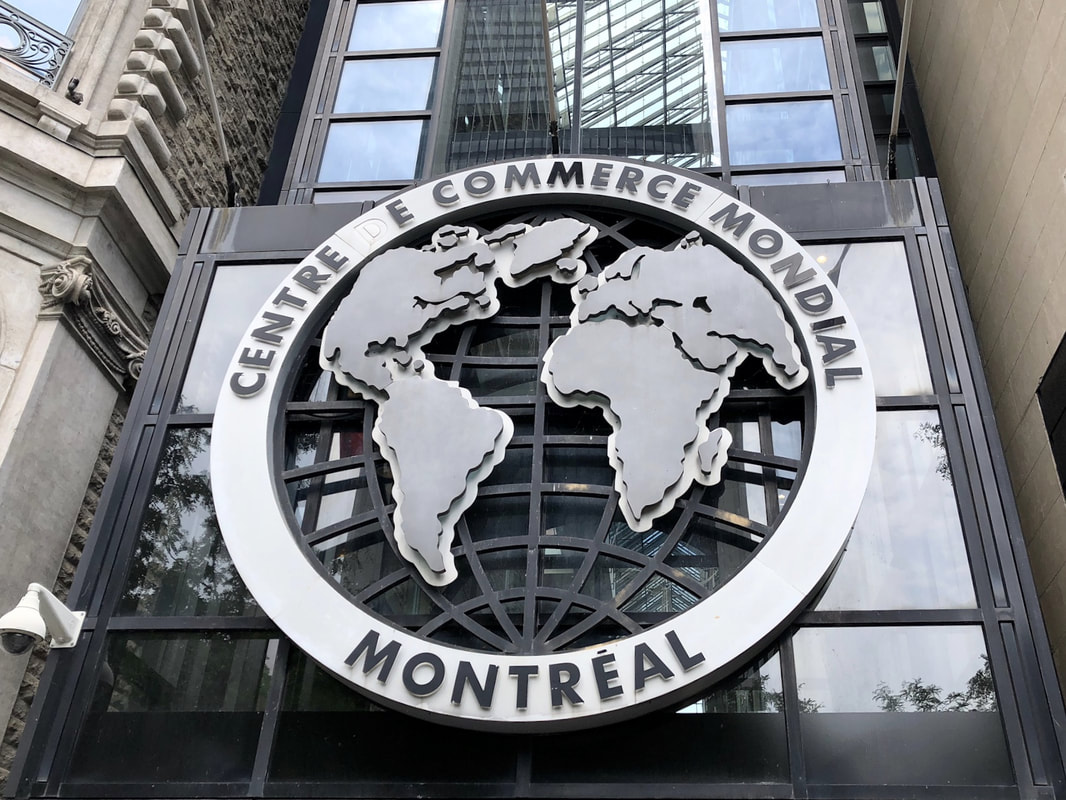
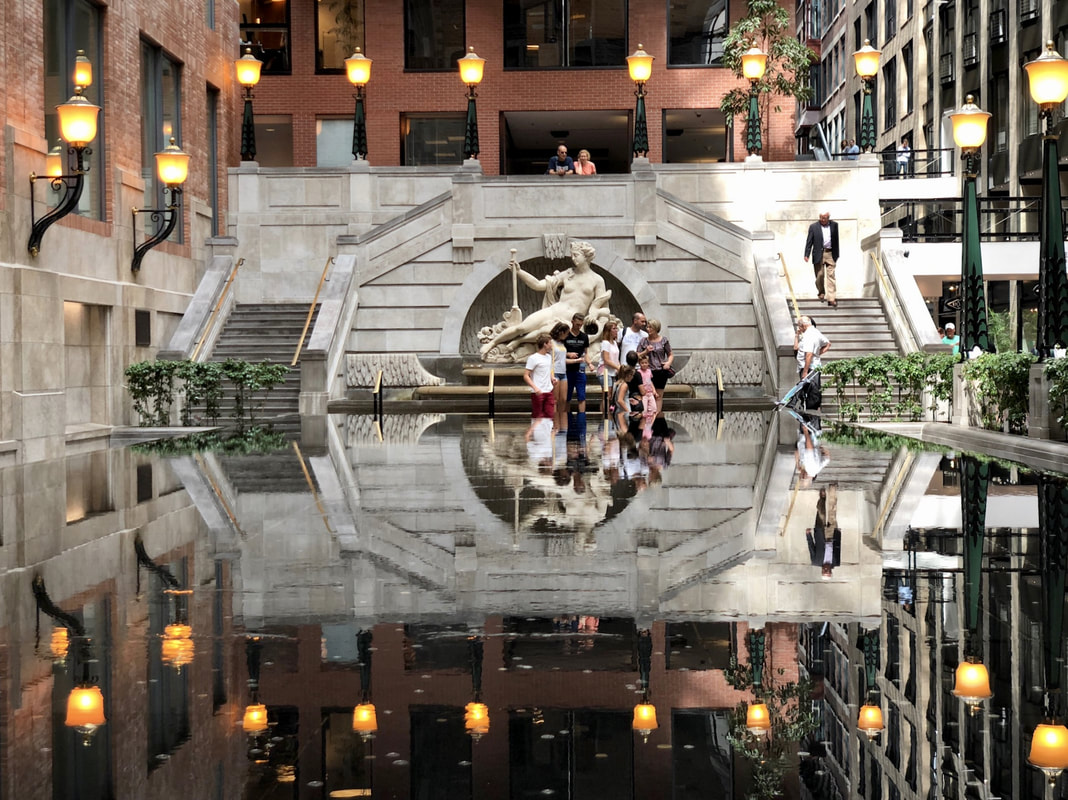
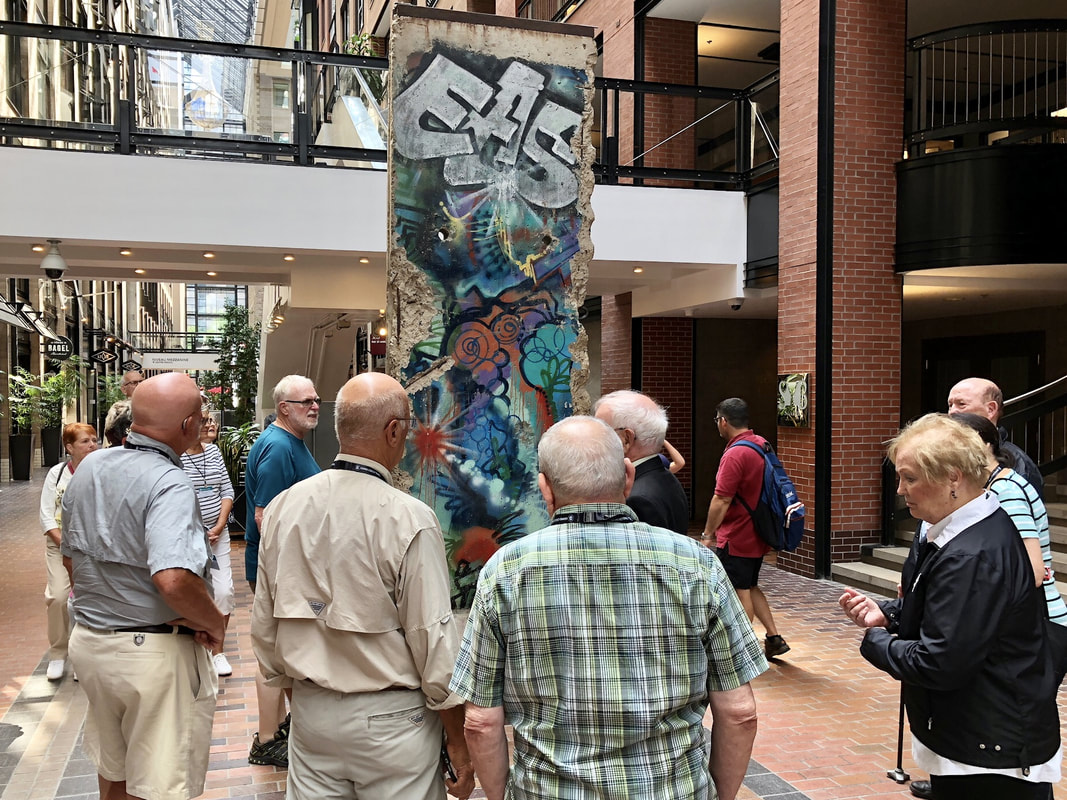
On Wednesday, Aug. 1, we left Quebec City and drove by bus to Montreal. It took about three hours and we made one comfort stop along the way. The first stop when we arrived in the city was for a delicious lunch at a restaurant that specialized in beef brisket. There we picked up a local guide for an afternoon overview of the city. The first stop was at the E Commerce Center. The center of this building is the location of the former city wall. They covered it over and placed there some artwork in the form of a reflecting pool, a statue, and a piece of the Berlin Wall.

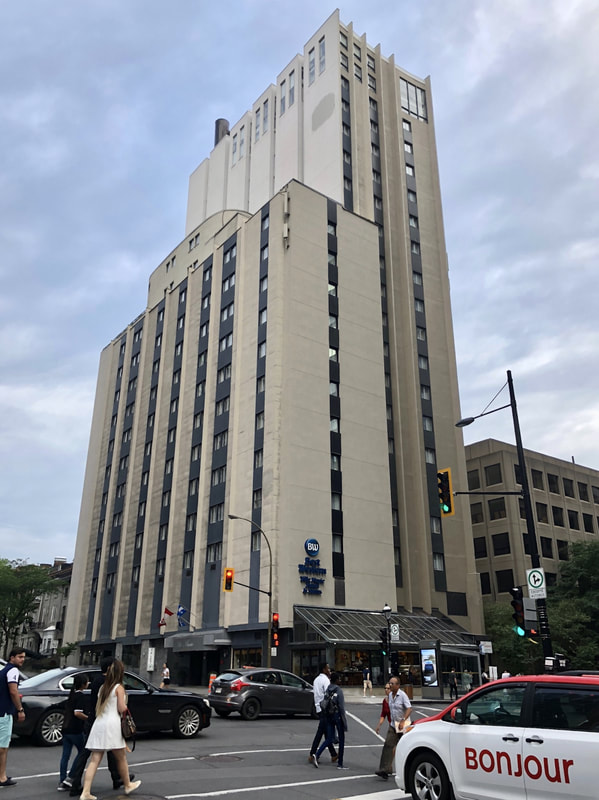
The driving tour took us along the waterfront and then up the Rue Sherbrooke that passes McCord Museum and the University of McGill. We drove by our hotel - a Best Western at the corner of Rue Peel. We drove up Mount Royal where there is a large city park at the top. This gave us a nice overview of the city. We were on our own for dinner and from the hotel we walked a few blocks down Peel to Alexandre, a nice restaurant that had outside seating. 

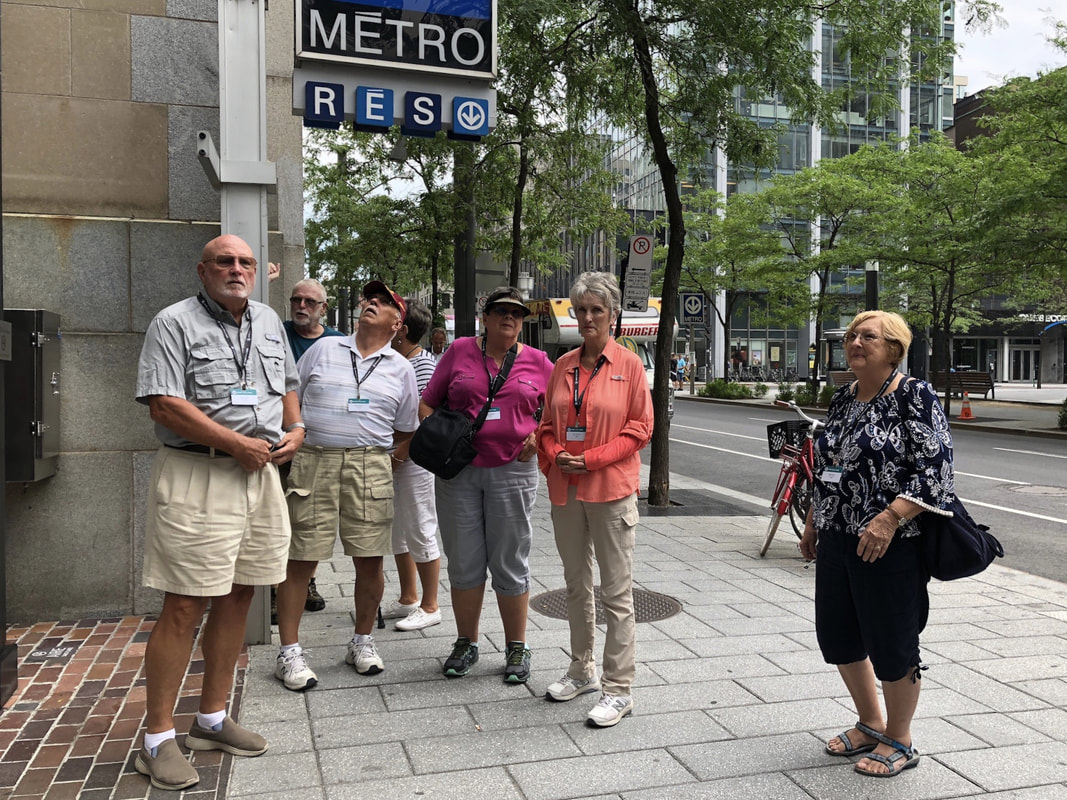
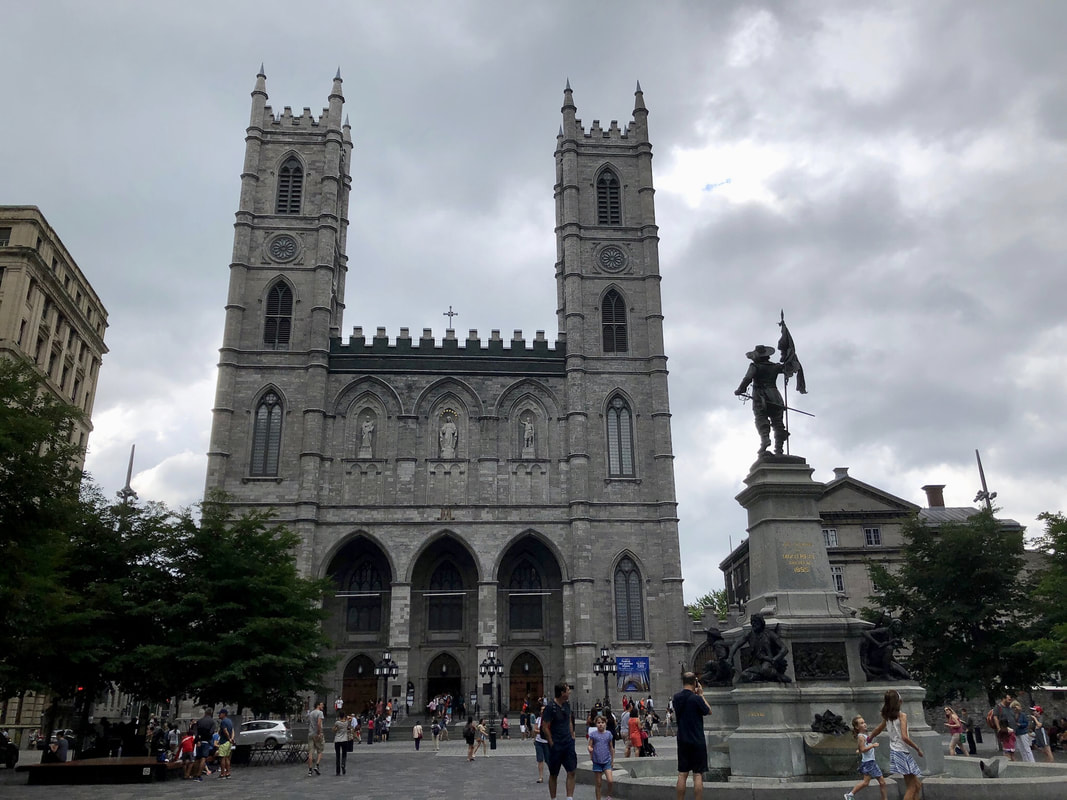
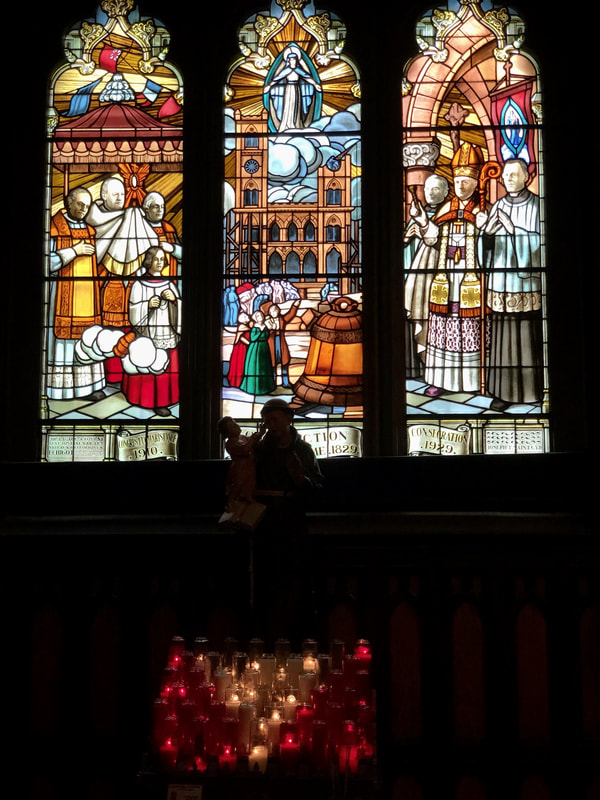
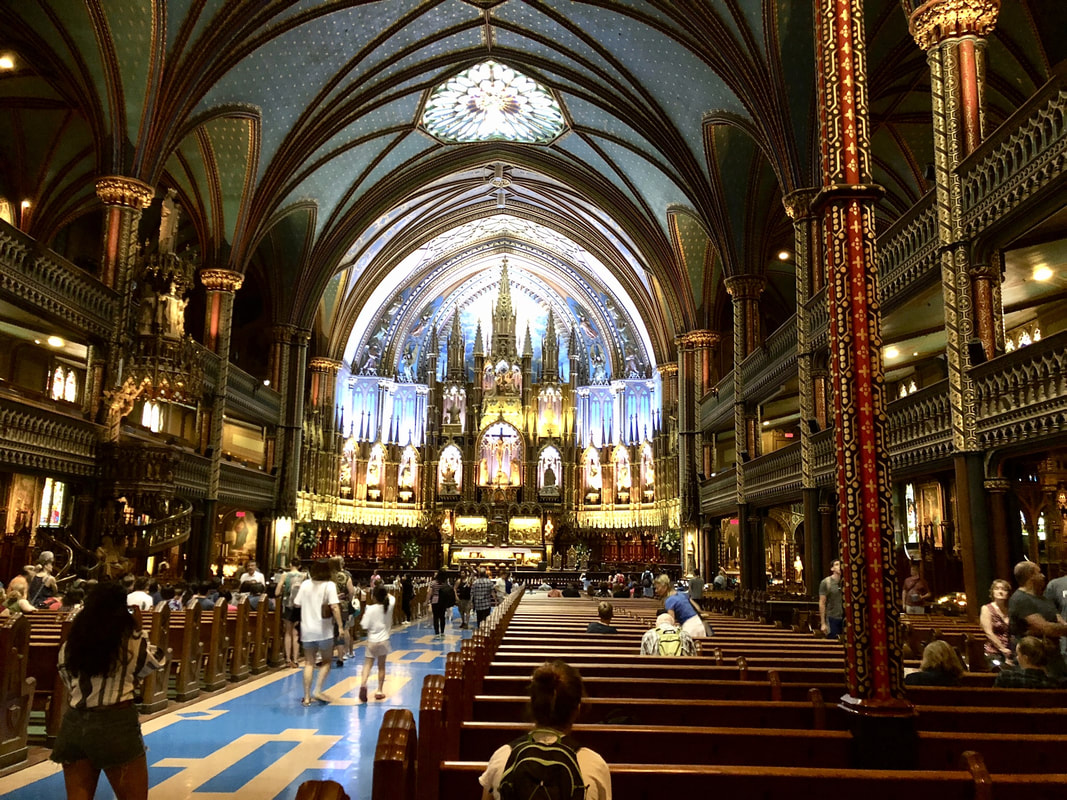
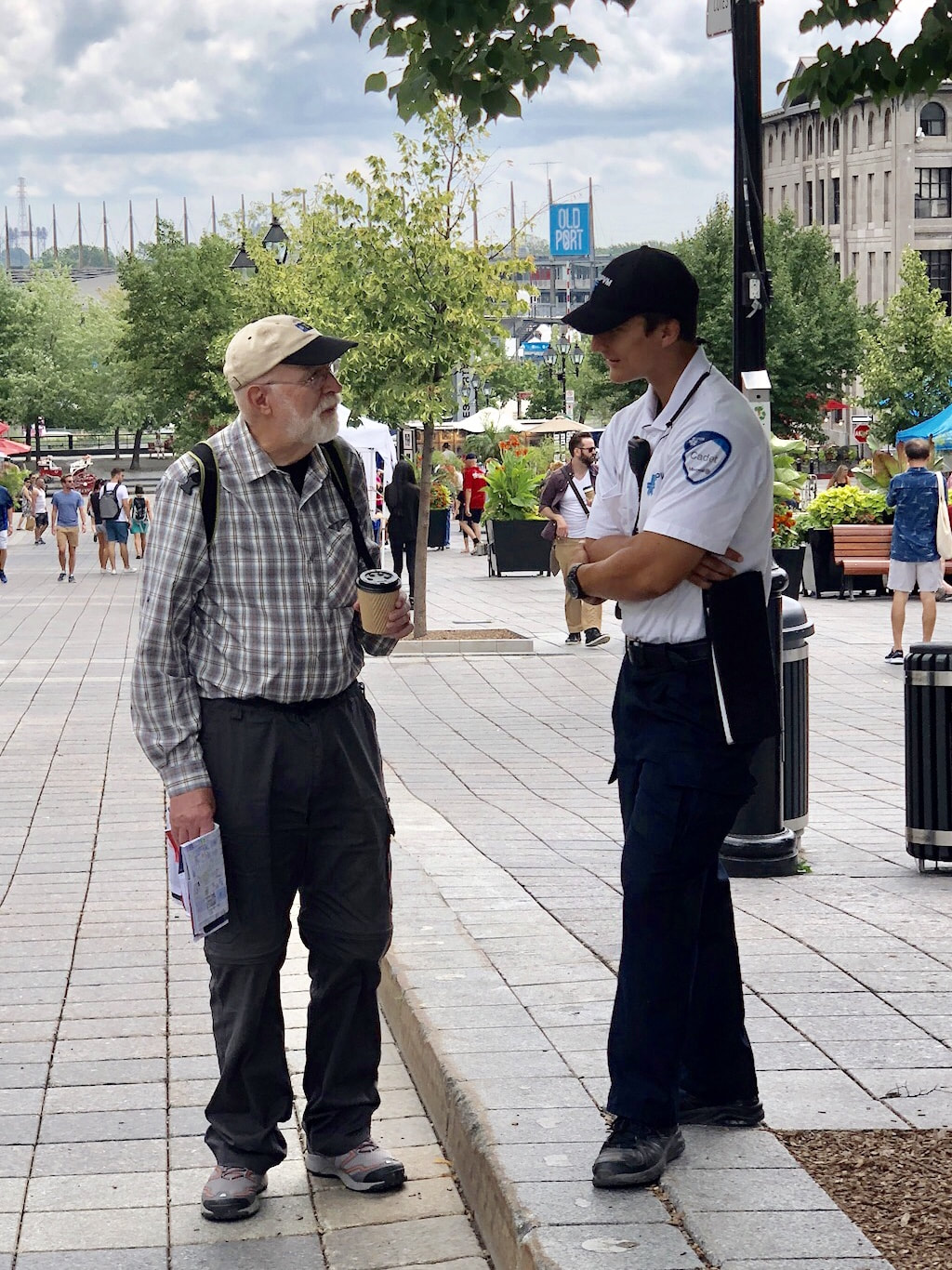
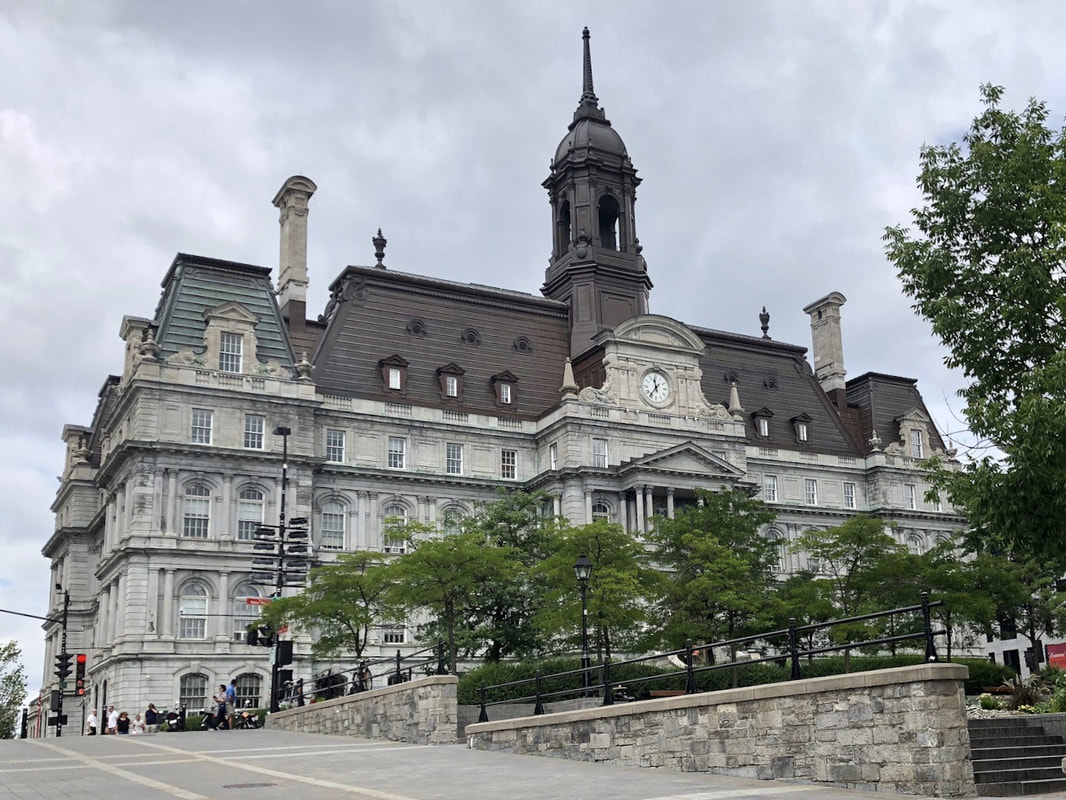
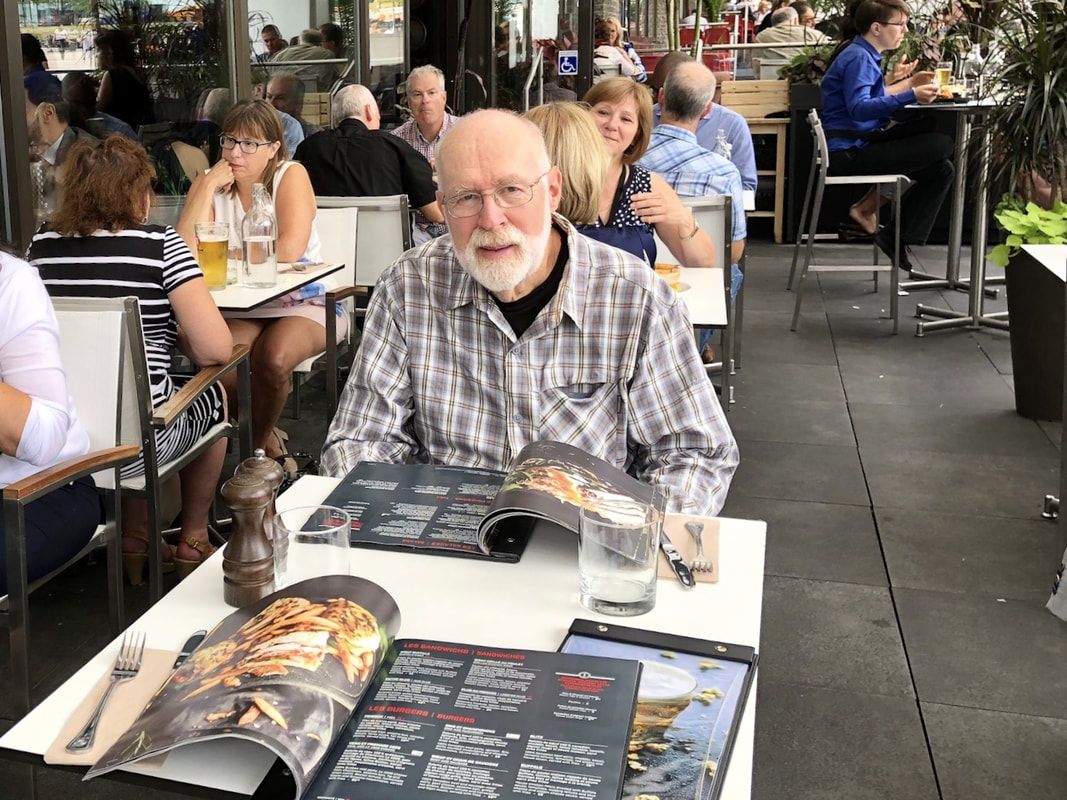
Thursday was a day completely on our own. I put Paul in charge of planning our day and he did an excellent job. After breakfast we headed for the closest Subway (Metro) station. It took help to figure out how to buy all-day passes, but soon we were headed for The Notre-Dame Cathedral. We had to change trains once to get there. Notre-Dame is a beautiful cathedral and we enjoyed viewing the interior for a while. Next we headed down the hill toward the harbor and the Rue Saint Paul, which is a pedestrian street lined with interesting shops geared toward tourists. From there we walked to the Hotel de Ville, which Paul thought was a hotel. Nope, a policeman explained to him that “Hotel de Ville” in French translates as “City Hall.”  We then headed for the Metro again and retraced our steps stopping at the Place des Arts. We discovered quite an underground area of shops at this stop, but we found our way out and had lunch a La Cage, which is a sports bar. They had a lovely eating area outside, and it was a pleasant day. The weather frequently seemed like it would rain, but it didn’t. By the time we finished lunch it was mid afternoon so we decided to call it quits on our day’s adventure and return to the hotel. I managed to get checked in for our flight the next day, using my trusty iPad Pro. For dinner we went back to Alexandre’s and our guide, Anne, joined us. The rest of the evening was spent getting ready to leave in the morning. 

​Bags were out by 9:30 and we left for the airport. Our flight to Halifax was about 1:20 and only took about 1 1/2 hours. We lost another hour as Halifax is on Atlantic Daylight Time, which is four hours ahead of Pacific Daylight Time.

That is all for now. More about Halifax in the next post.
​Grace and Paul
0 Comments

Canadian Maritime Provinces Tour

7/31/2018

1 Comment


Pretrip Starts in Quebec City, Quebec

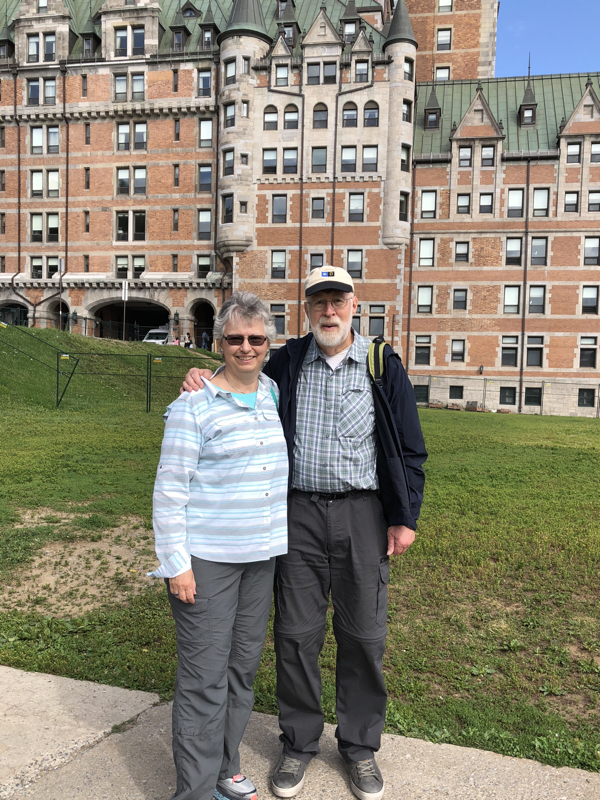
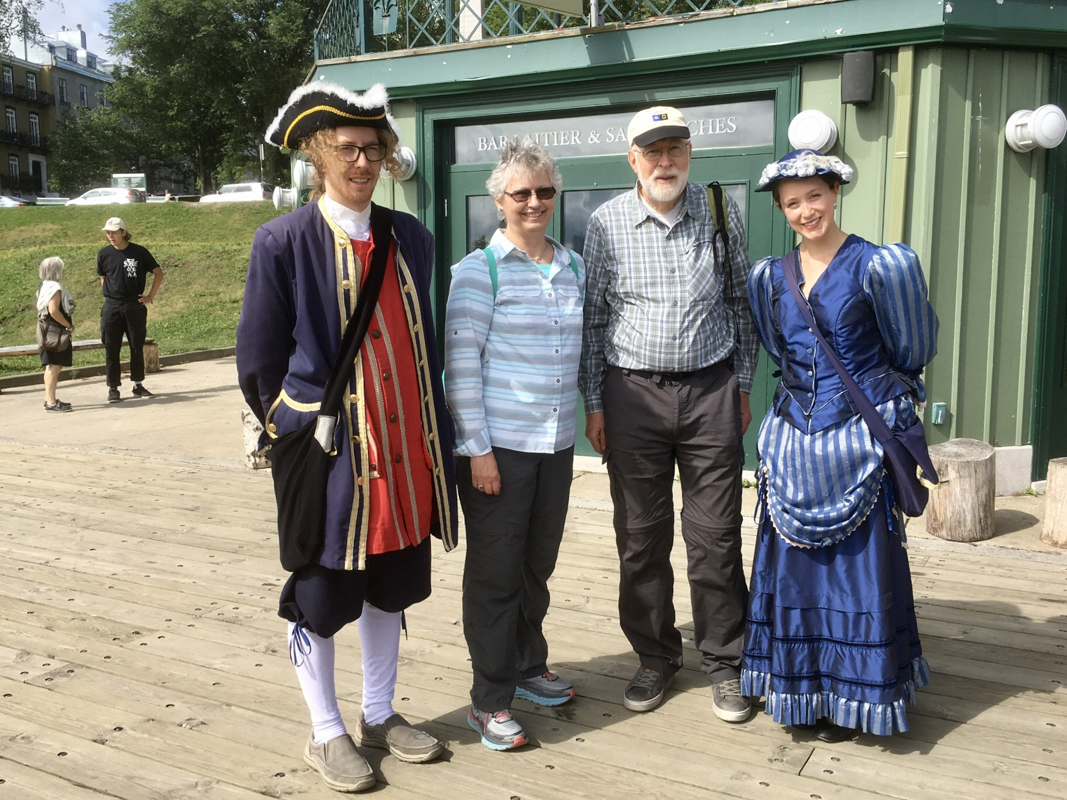
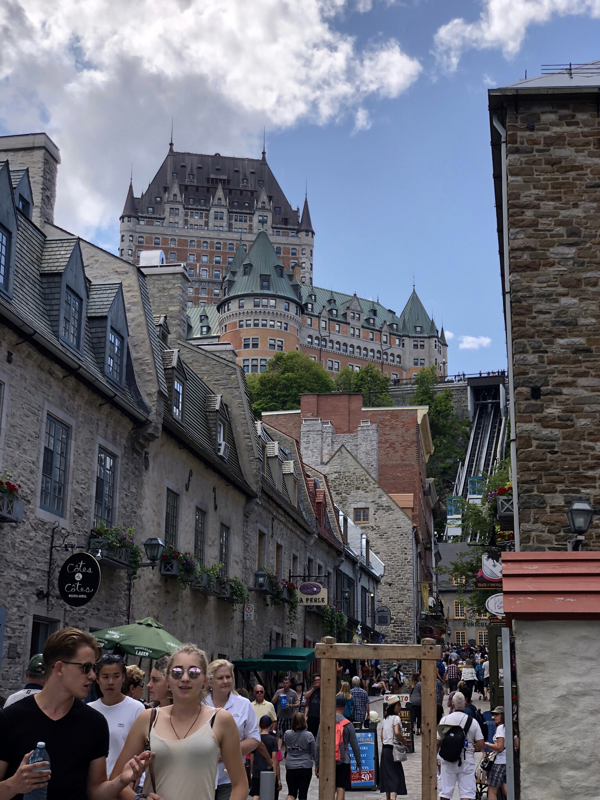
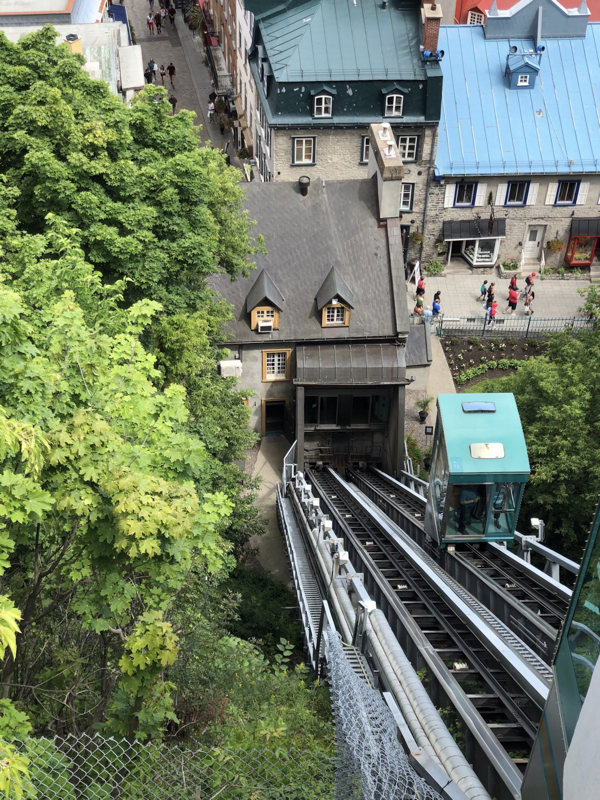
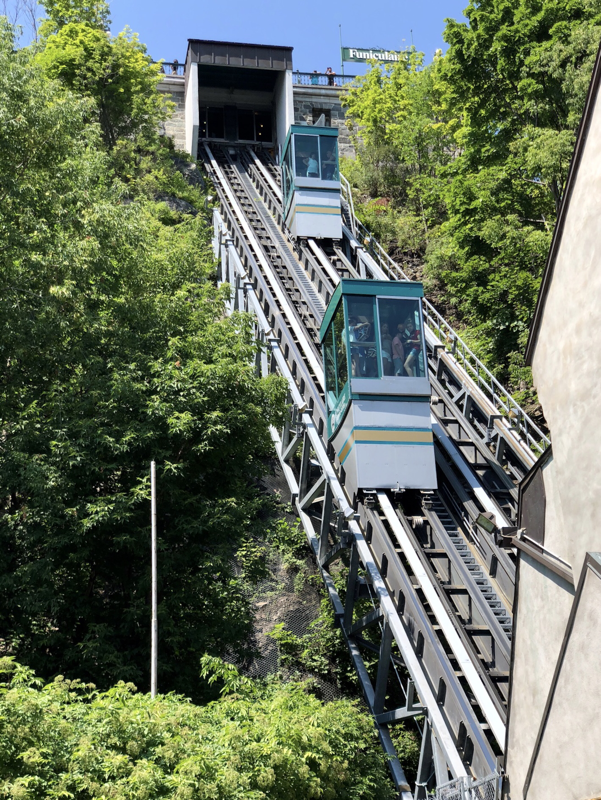
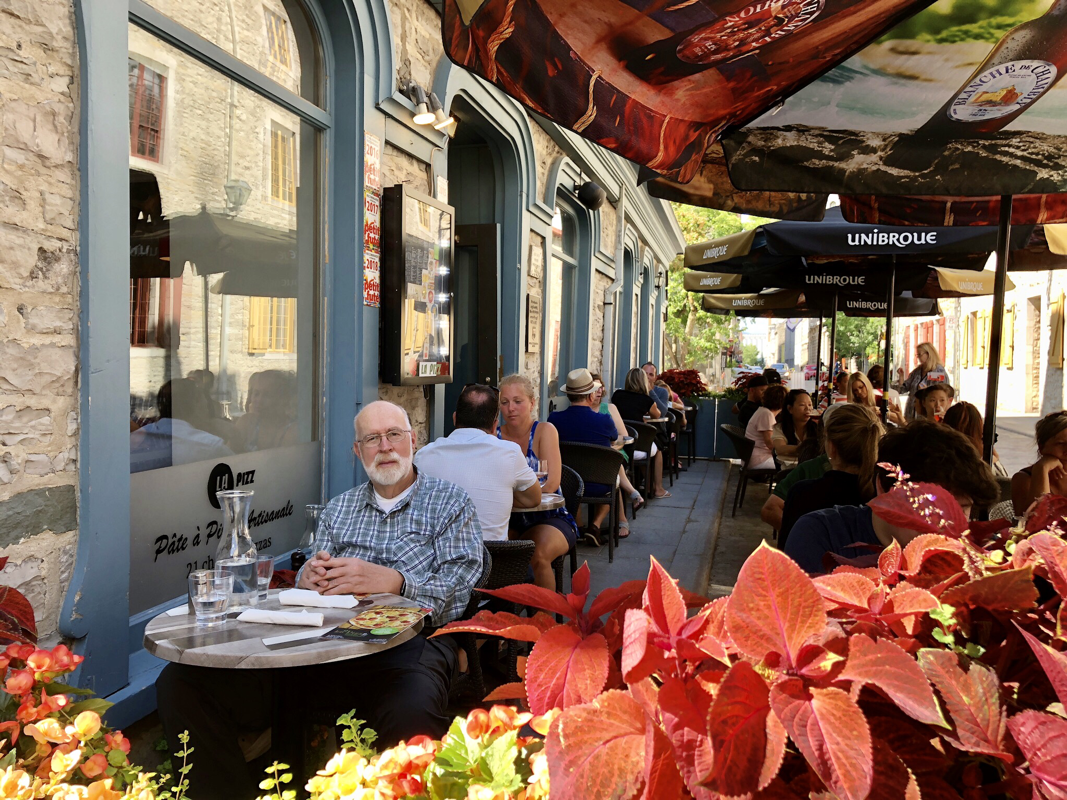
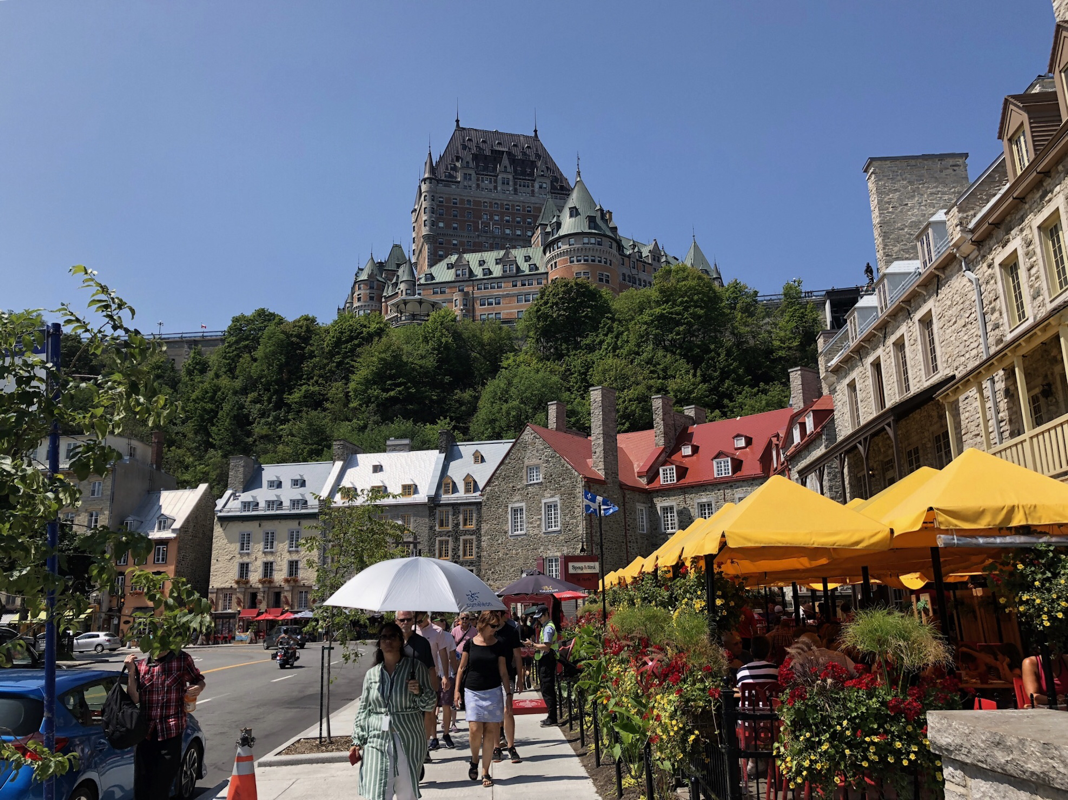
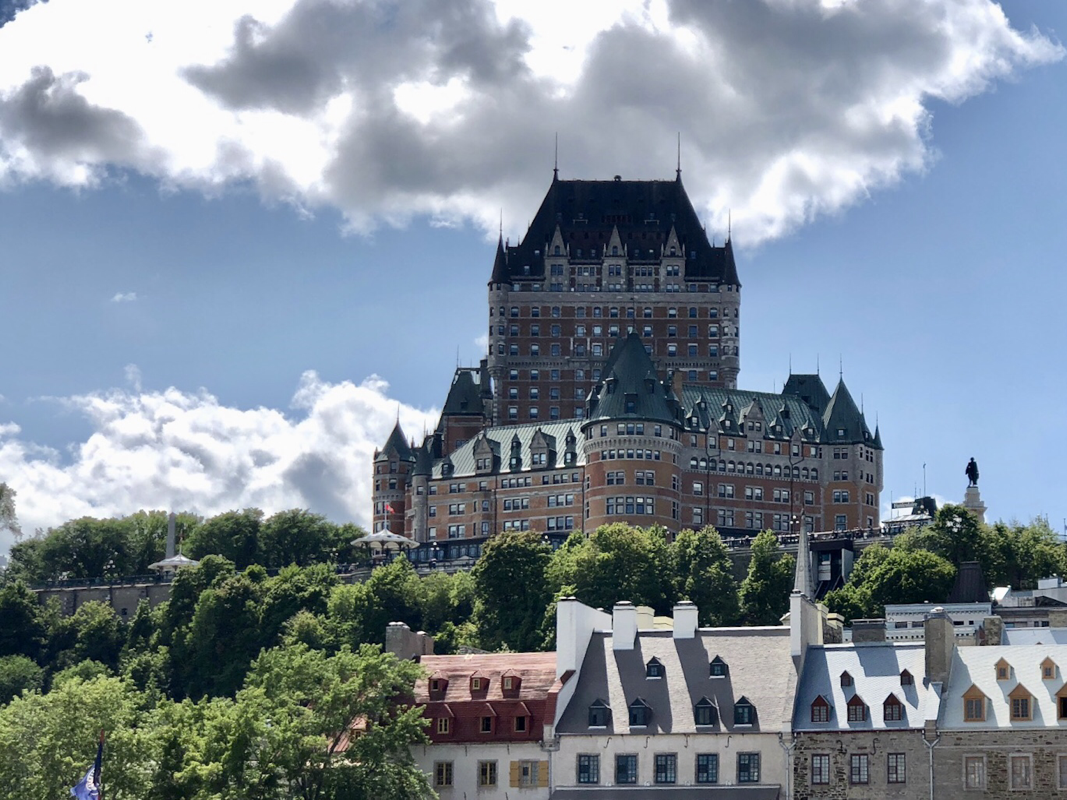
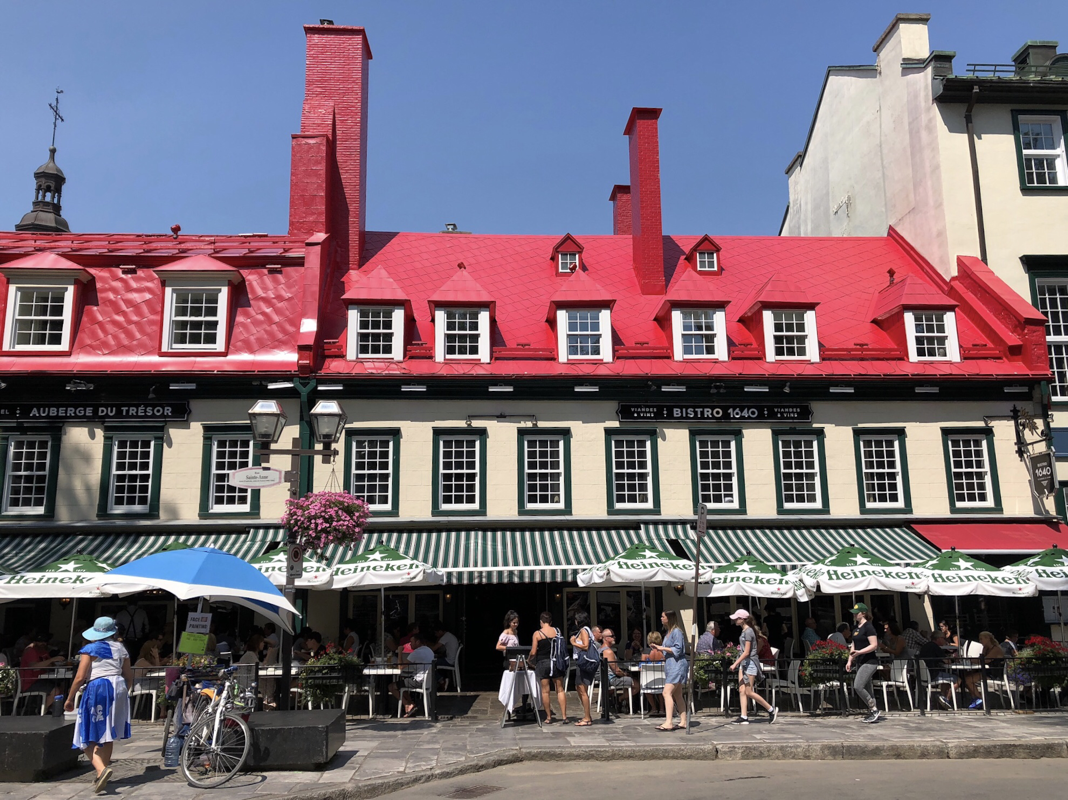
We are beginning the pre-trip part of our Canadian Maritime Provinces Tour with Grand Circle Travel. As usual, we arrived in the origin city a day ahead. In this case it is Quebec City. We are staying at the Clarendon Hotel which is perfectly located in the center of historic “Old Town” In the morning, after just happening to wander into the oldest restaurant in town to have breakfast, we took a tour through the famous Chateau Frontenac Hotel. The tour began below the hotel on a wide boardwalk called the Terrasse Dufferin. We had bought our tickets while at home for this hour-long tour guided by a fellow in period clothing from the late 17th century. As we went through parts of the old hotel we learned a bit of its history. Some claim that it is the most photographed hotel in the world. We spent the rest of the day wandering around the old town. After a ride down a funicular we walked through the lower section of the city and to a ship dock where a couple of cruise ships were located. We had some lunch at an outside cafe where we enjoyed resting and people watching. Somehow rather than riding the funicular back up the hill, we ended walking the whole way to the top, taking our time on long flights of stairs and windy sidewalks. Diner was next at another outdoor cafe. The weather was really very delightful.


The morning of Monday, July 30, we met the twenty people on our pre-trip and our guide, Anne Matheson. We embarked on a half day city tour with Marie, a local guide. Quebec is a city rich with history dating back to the early colonial period. The drive took us to and through some lovely areas outside the central city and to the Plains of Abraham - the famous battlefield of the French and Indian War. Quebec is located on the narrowest part of the St. Lawrence River and the daily tide fluctuation here is about 15 feet, twice a day. We stopped in the lower part of town where Samuel de Champlain created the first French settlement in North America in 1608. The area is called Place Royals. This is also where ships dock, even today, although now they are often large cruise ships. There we saw samples of the three kinds of roofs used in the past: cedar (too volatile), slate (too heavy), and tin, just right. Most are now made only of tin. In winter they have lots of snow from about November until April, but the streets are efficiently cleared during the night. The temperatures get down to -40 degrees. Yikes! We spent the afternoon doing some wandering around and getting a little rest before our group met for a “Welcome” dinner at a restaurant up the street.


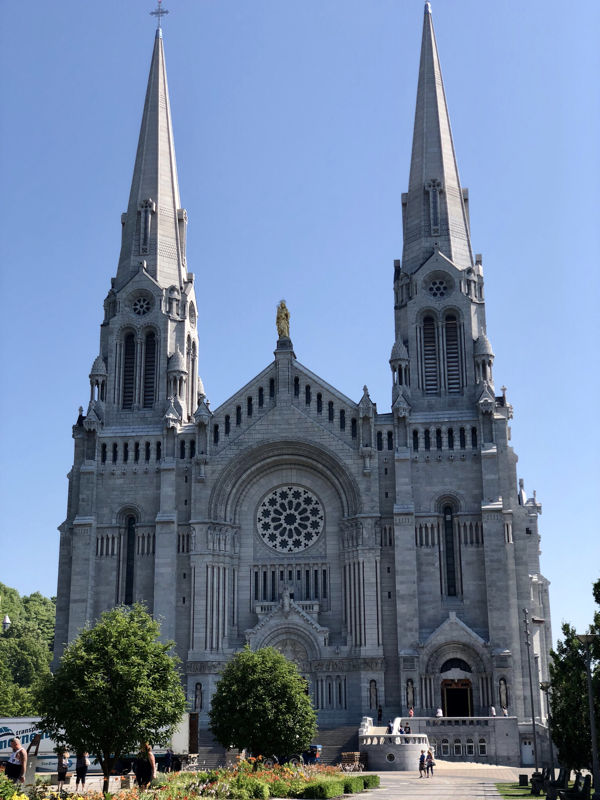
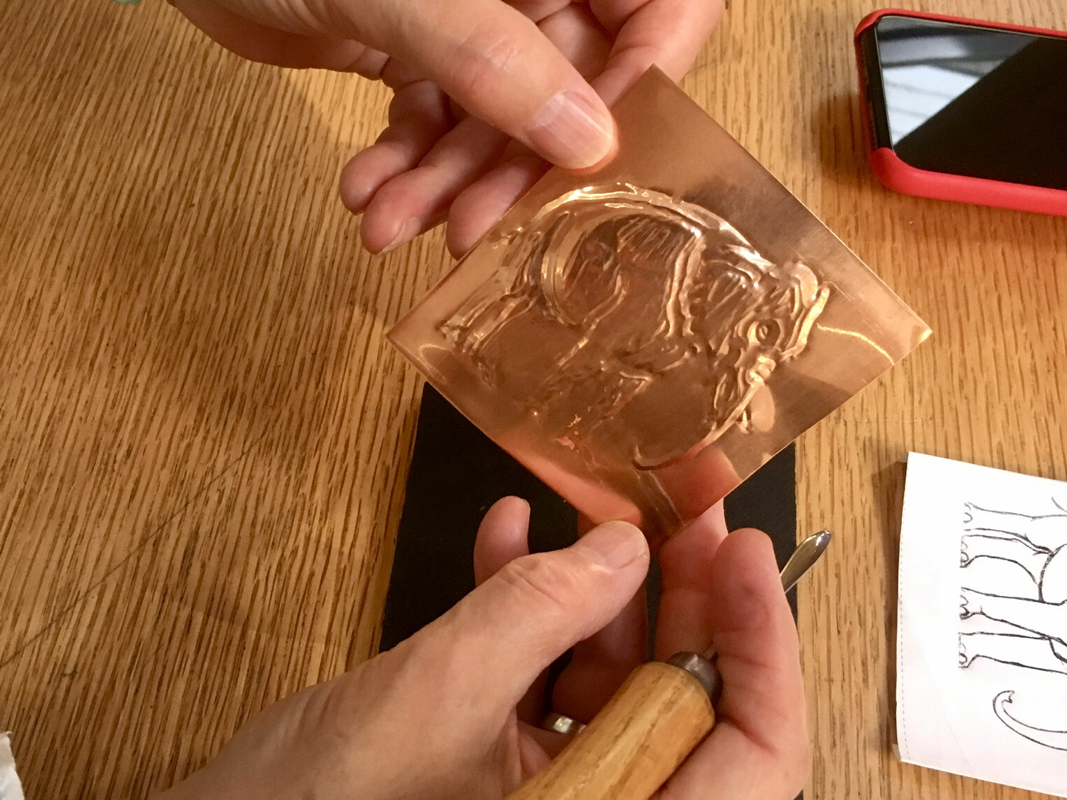
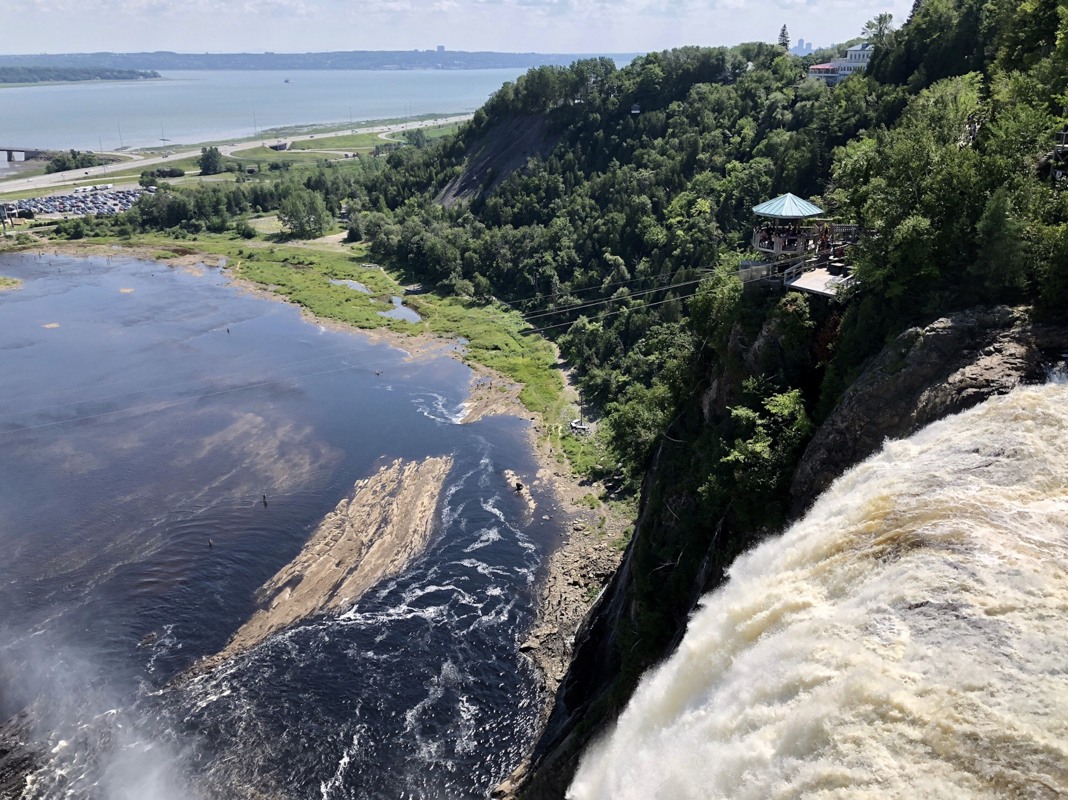
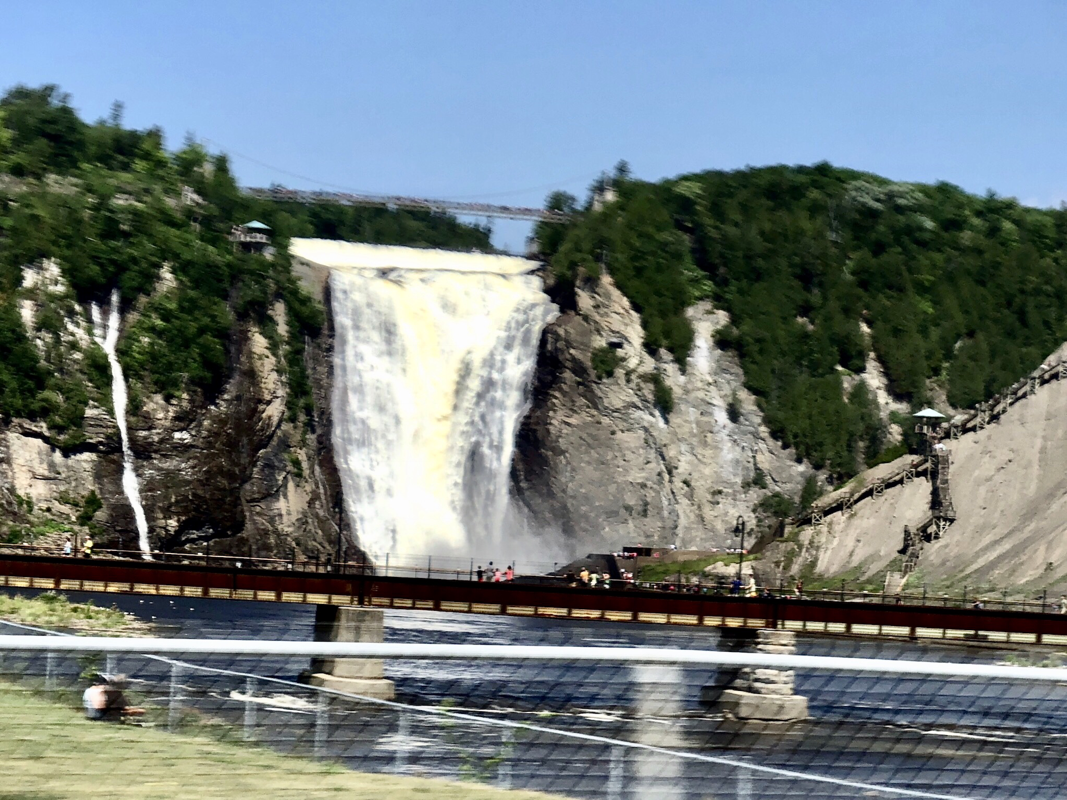
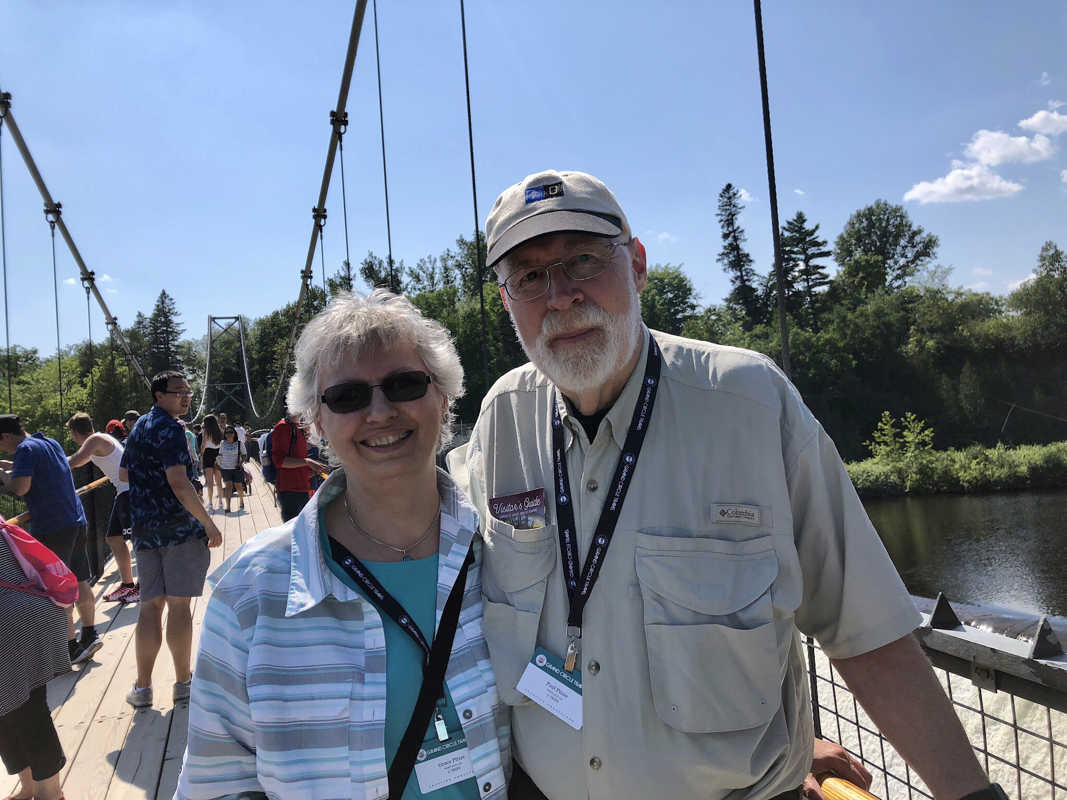
Tuesday we took an extra trip our guide planned for us. The first stop was at the Copper Gallery and workshop of Albert Gilles. We learned about the beautiful work the family members do, and then we had a chance to try our hand using the tools and making a small piece of copper artwork. My elephant actually turned out quite well. The second stop was at the Basilica of St. Anne de Beaupre, which was finished in the 1930s. The third stop was out on the Ile d’Orleans, in the St. Lawrence River. The large island is the garden and agricultural area for Quebec and is 5 miles wide and 18 miles long. We stopped for lunch at a place that made delicious chocolate. From there we stopped at a winery to sample five kinds of wines they make on site from their own fruit: pears, apples and grapes, including ice wine from frozen apples which are left on the trees until it is 40 degrees below. Delicious. Back to the mainland, the last stop was at the famous Montmorency Falls. They are 1.5 times higher than Niagara Falls, but not nearly as wide. They are still impressive and we were able to walk out onto a pedestrian bridge to see them up close and personal. It was a great day’s outing.


After dinner at a popular restaurant and some gelato, it was time to turn in and get ready for our departure in the morning.


In the morning we will drive to Montreal for two nights. It has been a delightful stay in Quebec City.

​Grace and Paul


1 Comment

Saskatoon, Saskatchewan

7/29/2018

1 Comment


Visiting Special Iranian Friends

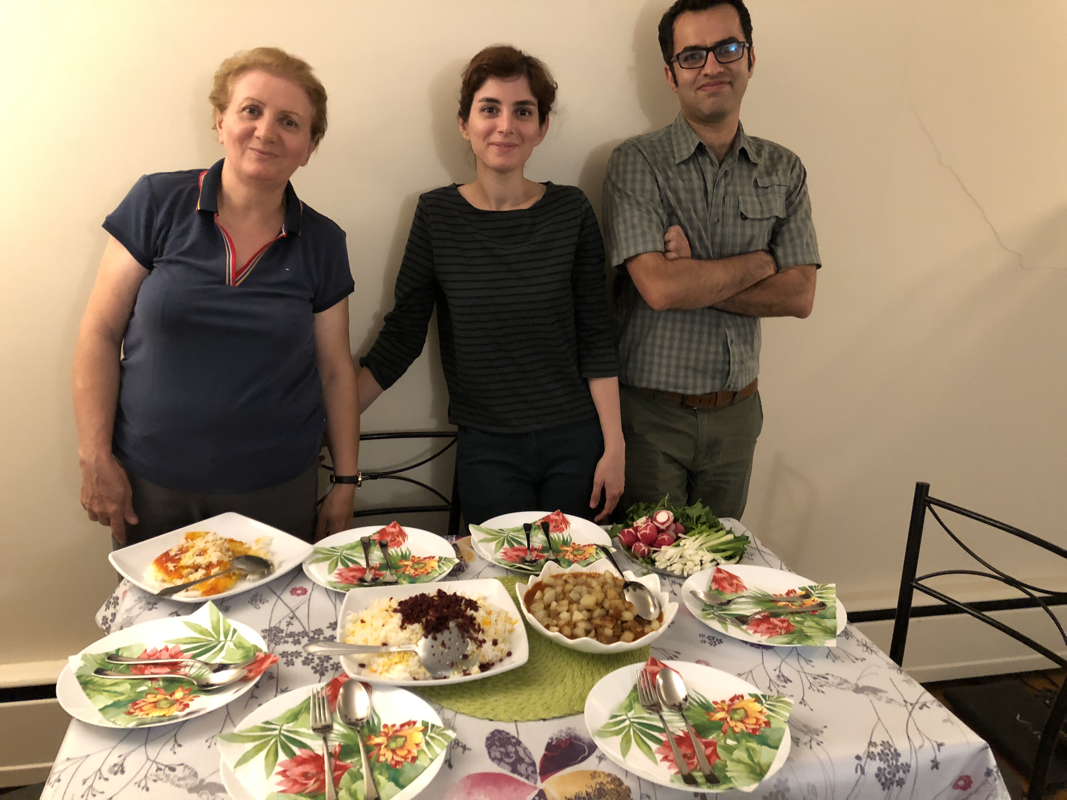
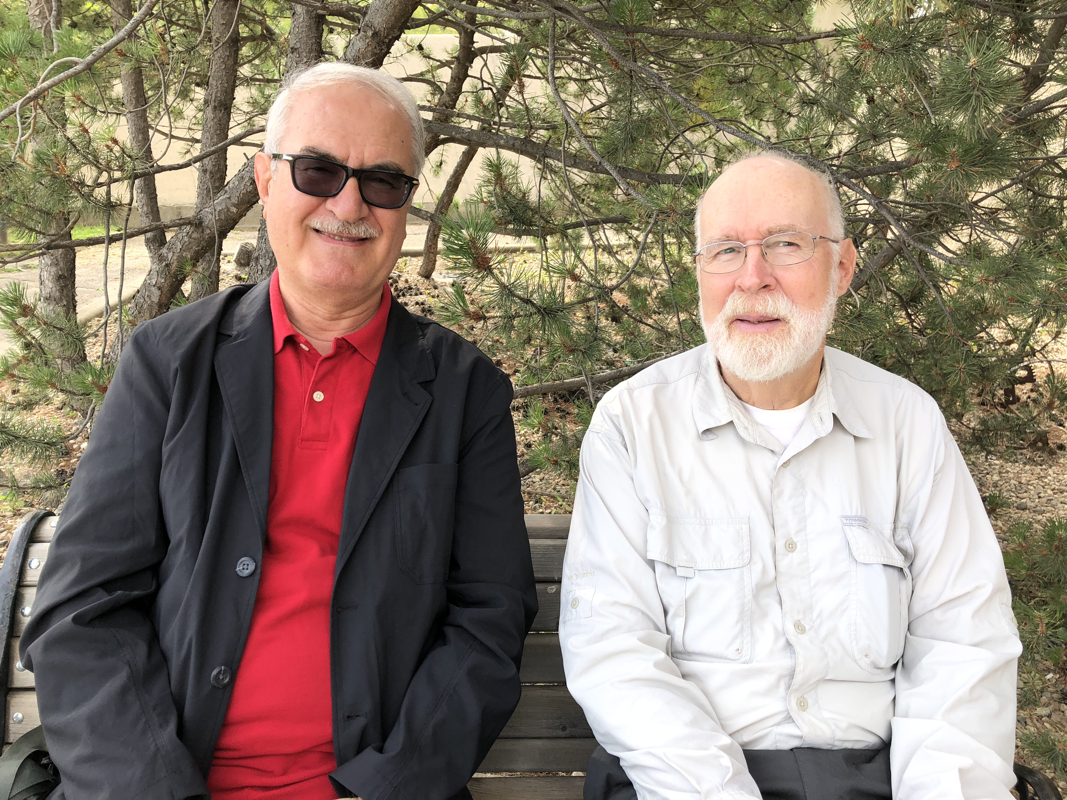
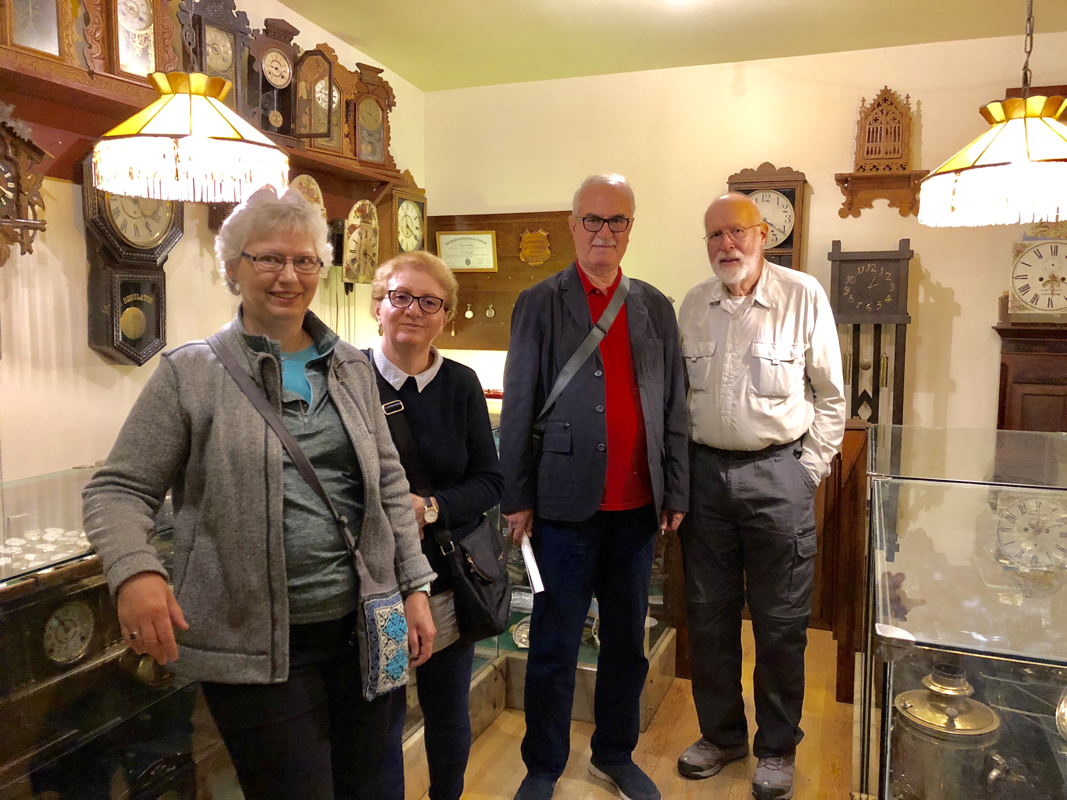
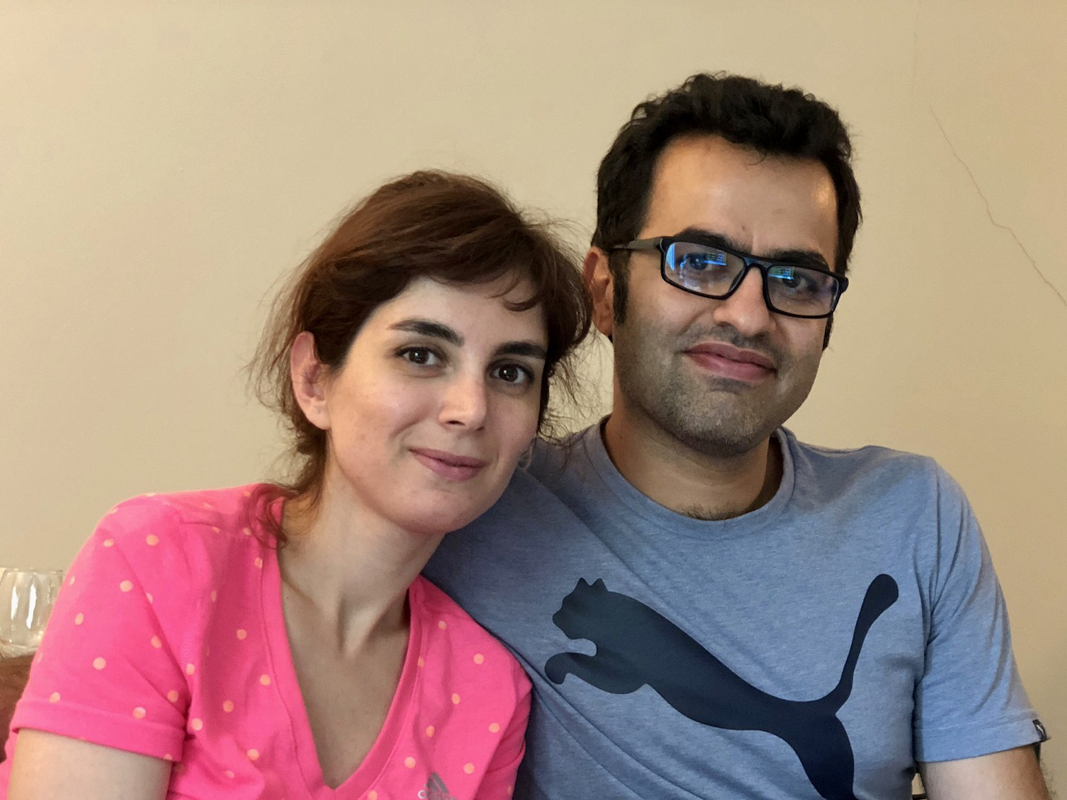
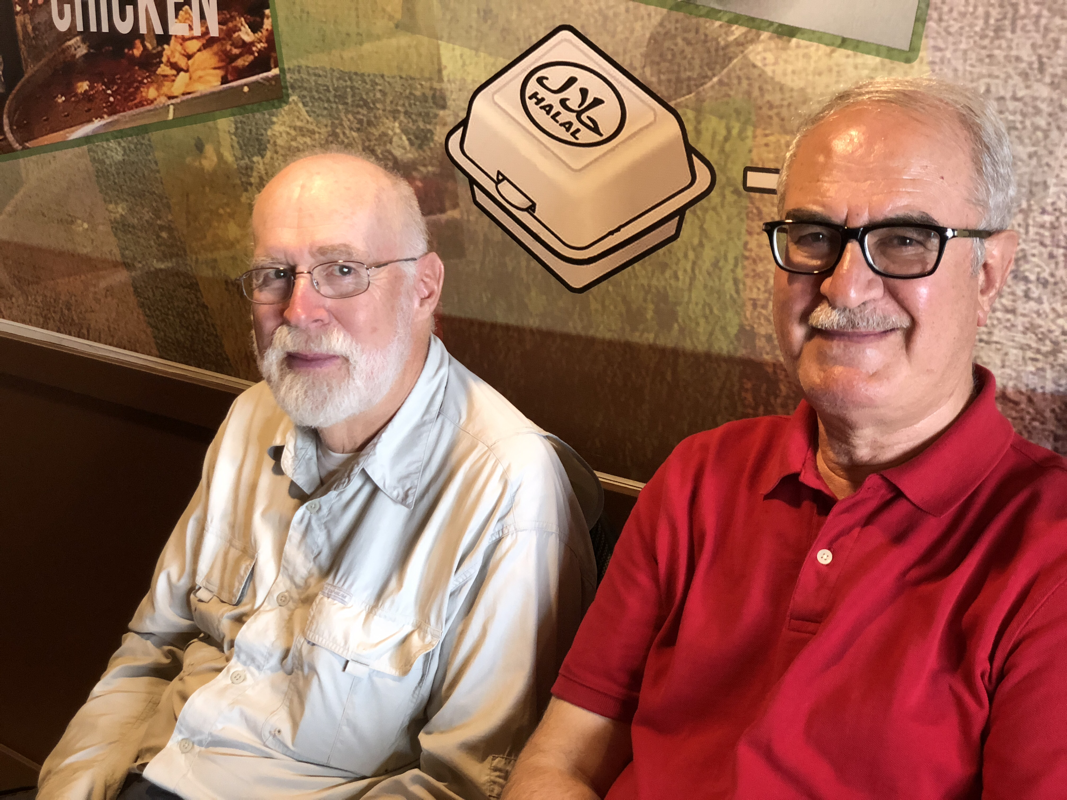
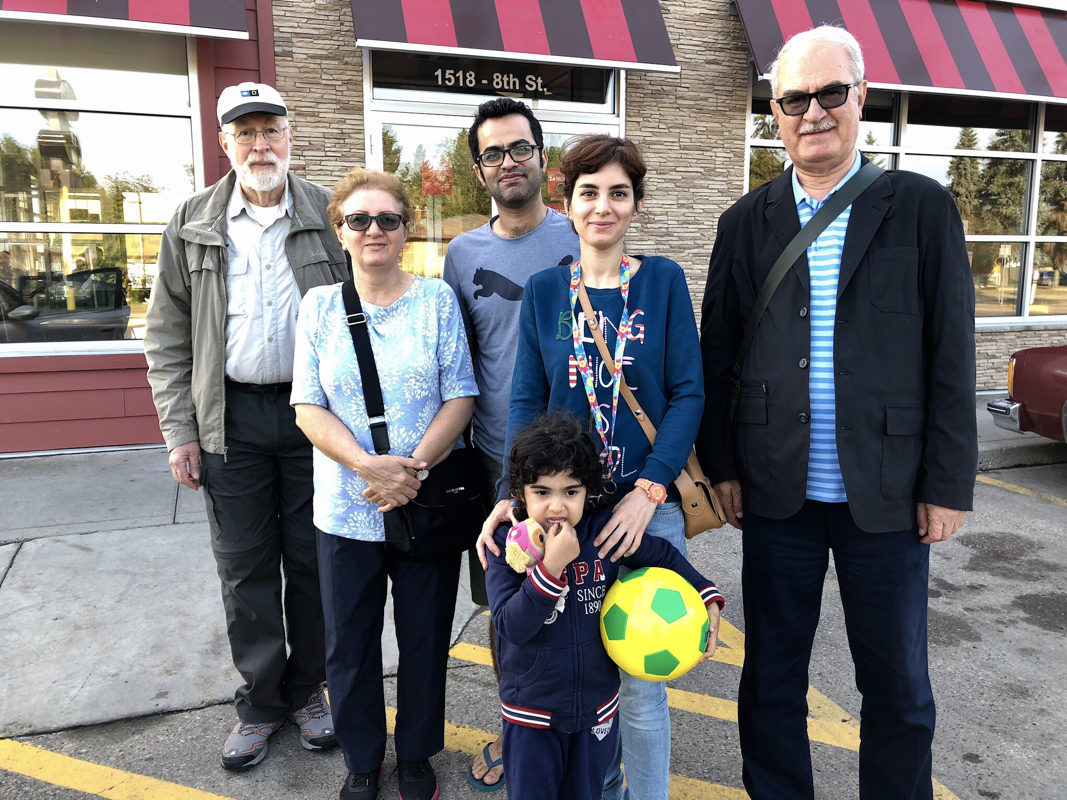
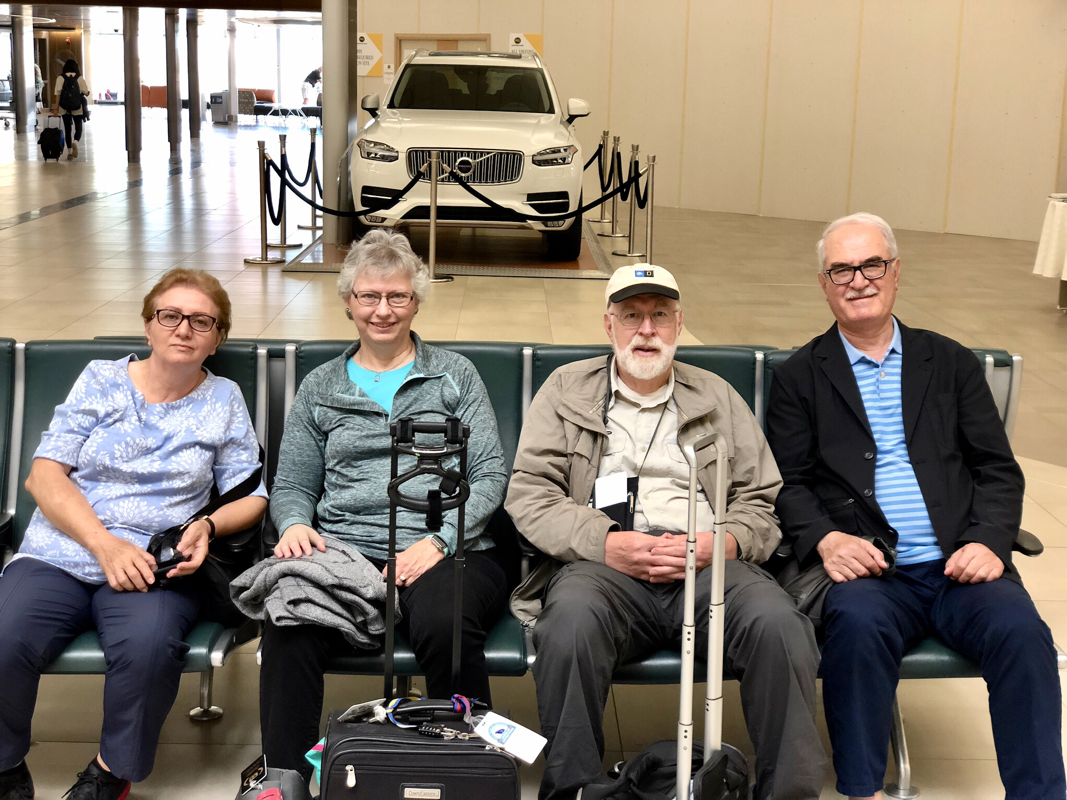
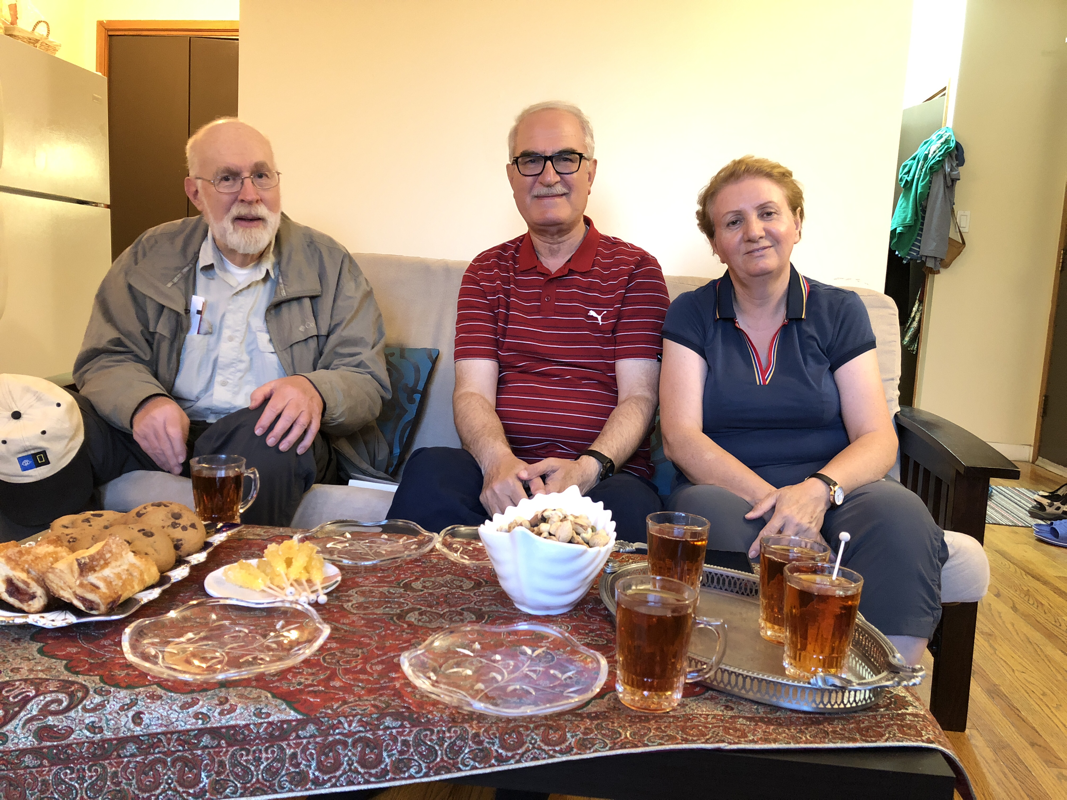
On the way to start our tour of the Canadian Maritime Provinces, we stopped in Saskatoon, Saskatchewan. Our dear friends, Yousef and Narmin from Iran, are visiting their daughter, son-in-law and granddaughter there. Yousef’s daughter and her husband are attending the local university. Yousef was Paul’s mentor when he was teaching English in Iran with the Peace Corps. They have maintained their friendship for over fifty years, so this reunion was very special.

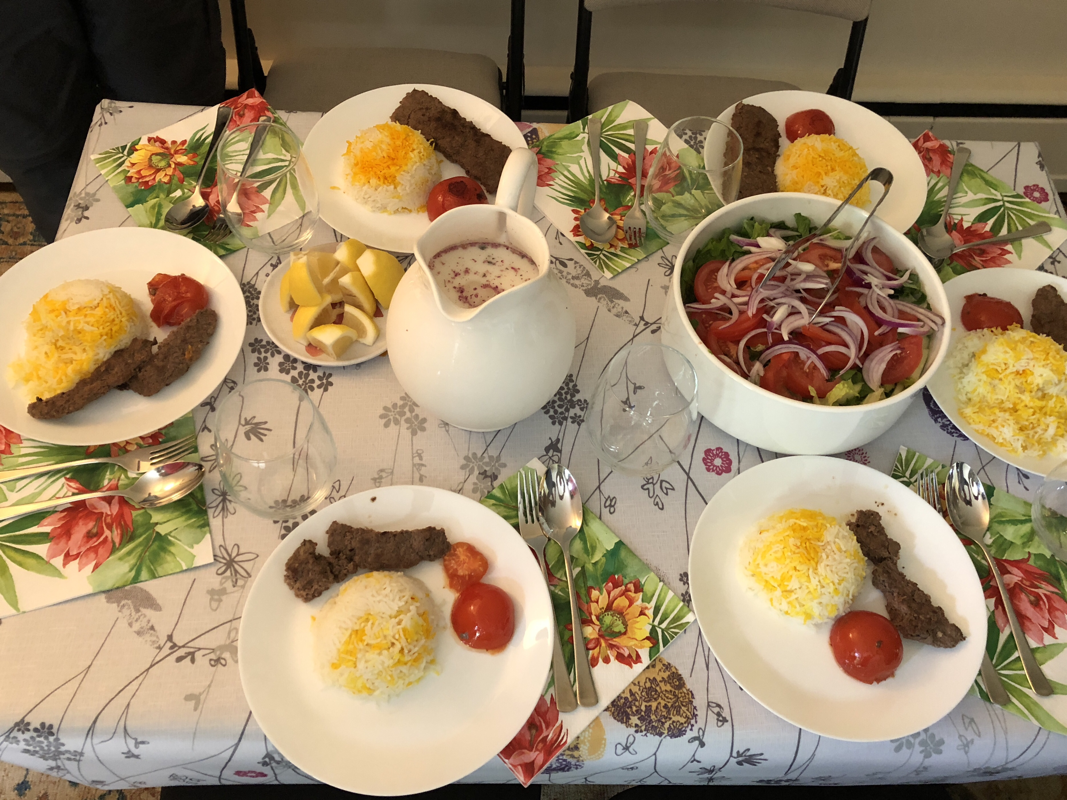
We were met at the airport and taken directly to the kids’ home for a delicious Iranian style dinner before going to our hotel for the night. The next morning we met at a nearby restaurant for breakfast and then enjoyed visiting the Western Development Museum. It was one of the best laid out history museums we have ever visited. We enjoyed the “Main Street” exhibit that showed an old town in 1911. Other exhibits covered more recent time periods.

In the afternoon we went to the one Iranian restaurant in Saskatoon and had delicious kabobs. We spent the rest of the afternoon just hanging around visiting. The kids loved the opportunity to practice their English and to listen to all the stories Paul and Yousef told as they reminisced about their time together when Paul was in the Peace Corps. The stories never quit. Narmin cooked a delicious dinner for us of chicken and saffron rice.

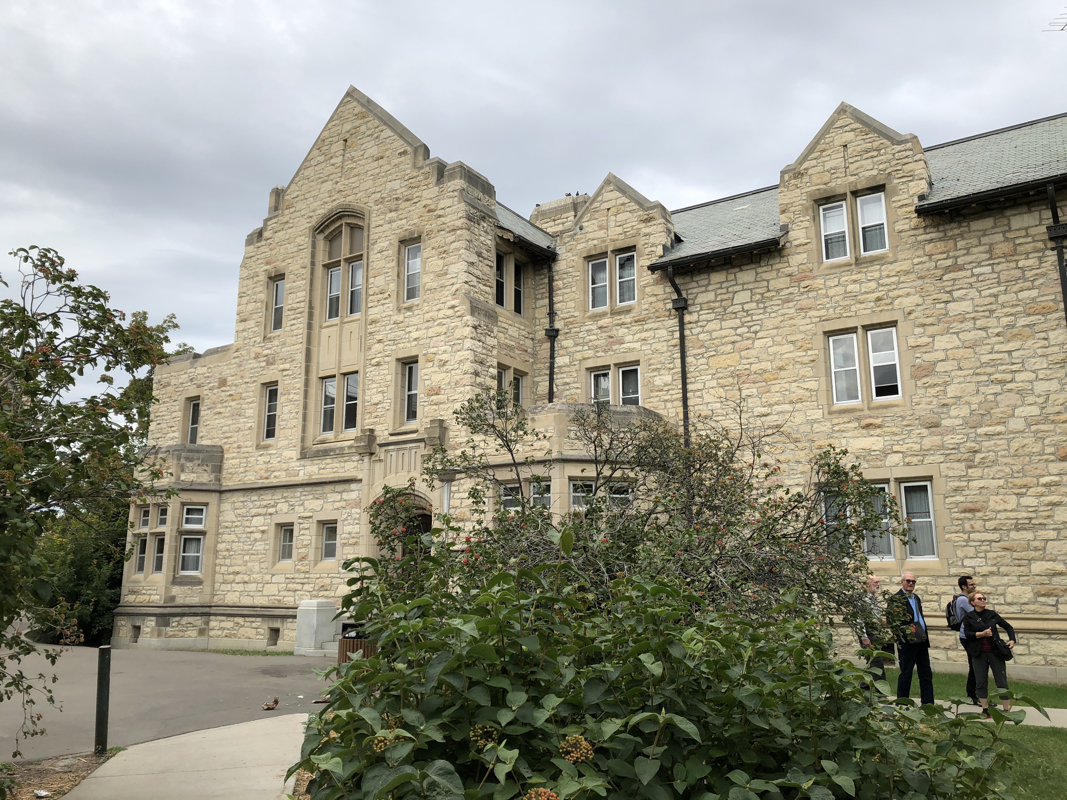
After breakfast the next day Hamid and Nazanin, Yousef’s son-in-law and daughter, gave us a tour of the University of Saskatoon. It is a beautiful campus. We started in the Geology building where they had a great exhibits that included replicas of a number of dinosaur skeletons. The last building we visited was the engineering school where they study. It was special that we got to see their labs and hear the explanations of their projects. The afternoon again was spent hanging around, visiting and sharing stories. This was what we stopped in Saskatoon to do. Again Narmin fixed us a delicious dinner of a special soup made with oats chicken and lots of vegetables. She is an accomplished cook.

The next morning after breakfast they took us to the airport where we had to say good-bye. It was a very sad time. The last time we saw them, we could not dream that this chance would come again, so now we can think that it might happen again one of these days.

Now we are on to Quebec City where the Pre-Trip begins to our tour of the Maritime Provinces of Canada.

Grace and Paul
1 Comment

Hot Air Balloon Festival

6/25/2016

0 Comments


Beautiful Day for Balloons

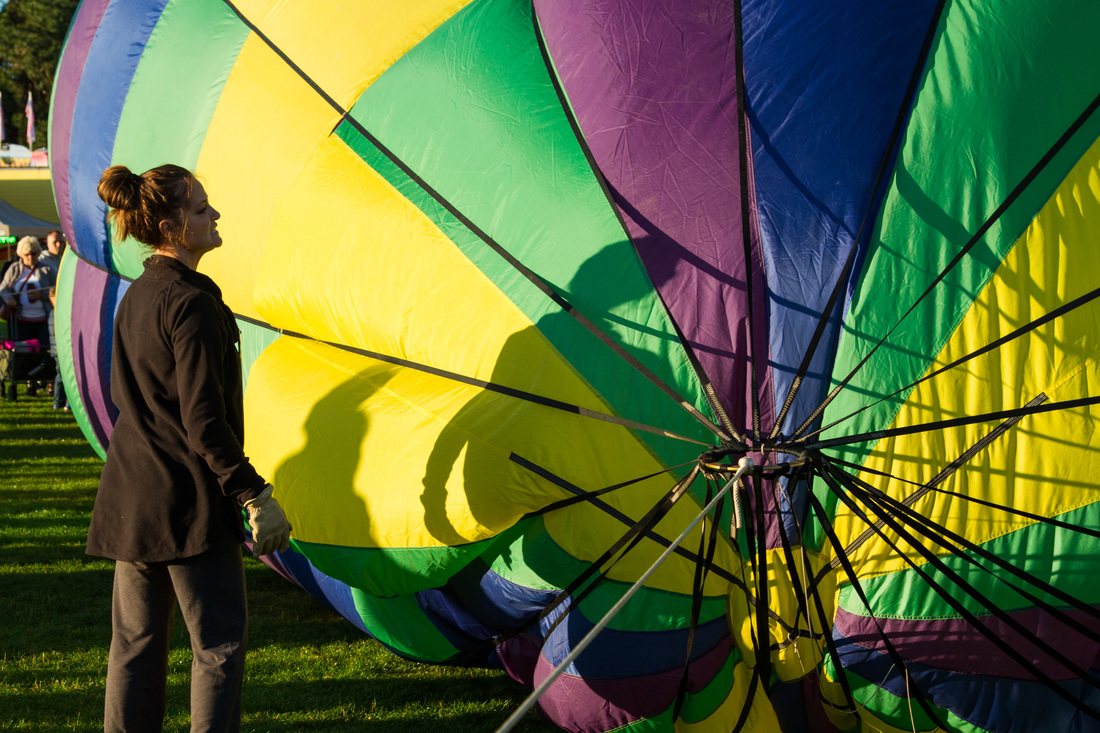
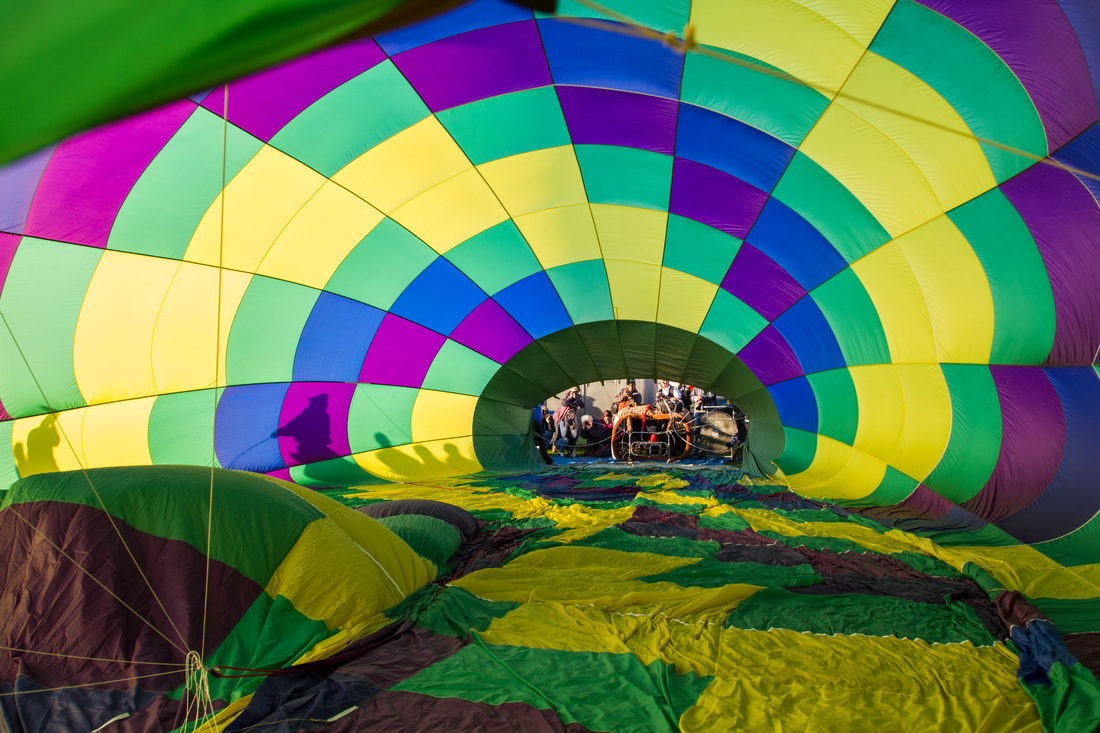
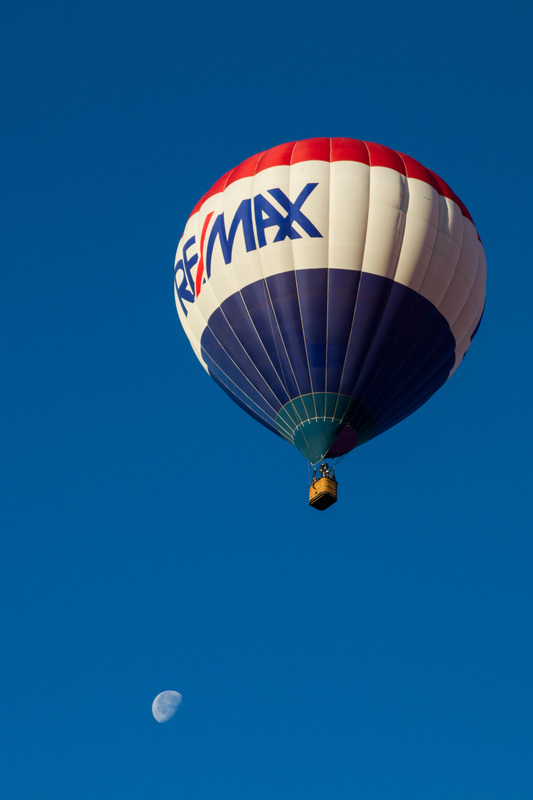
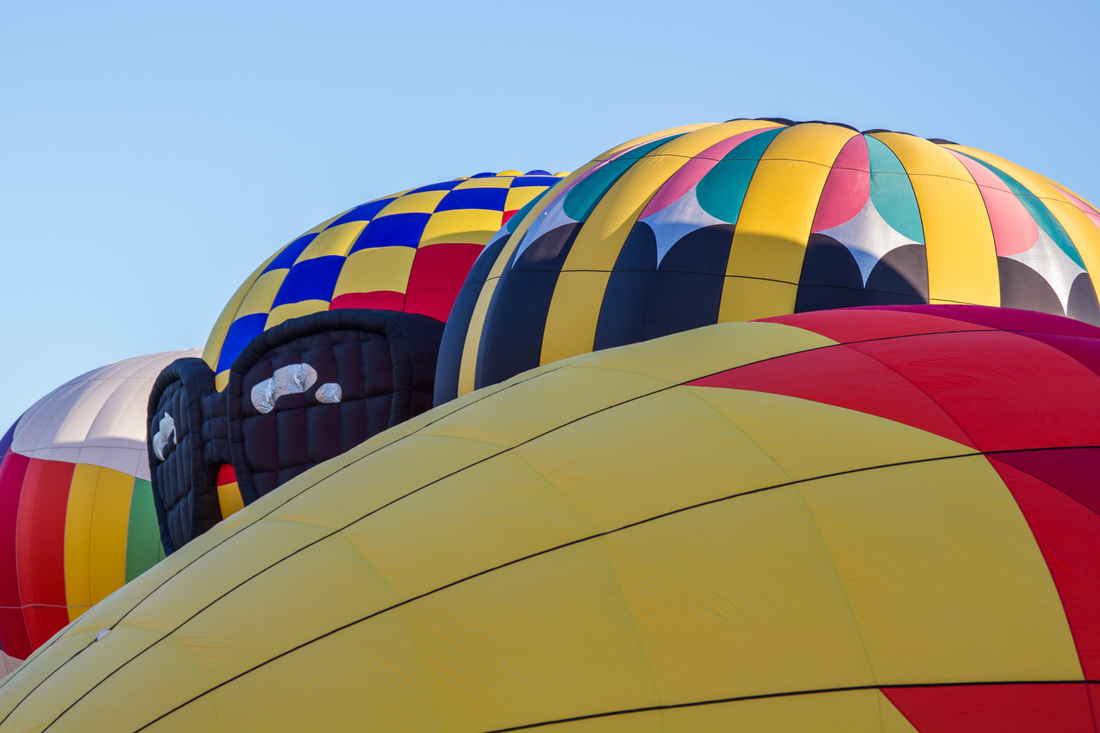
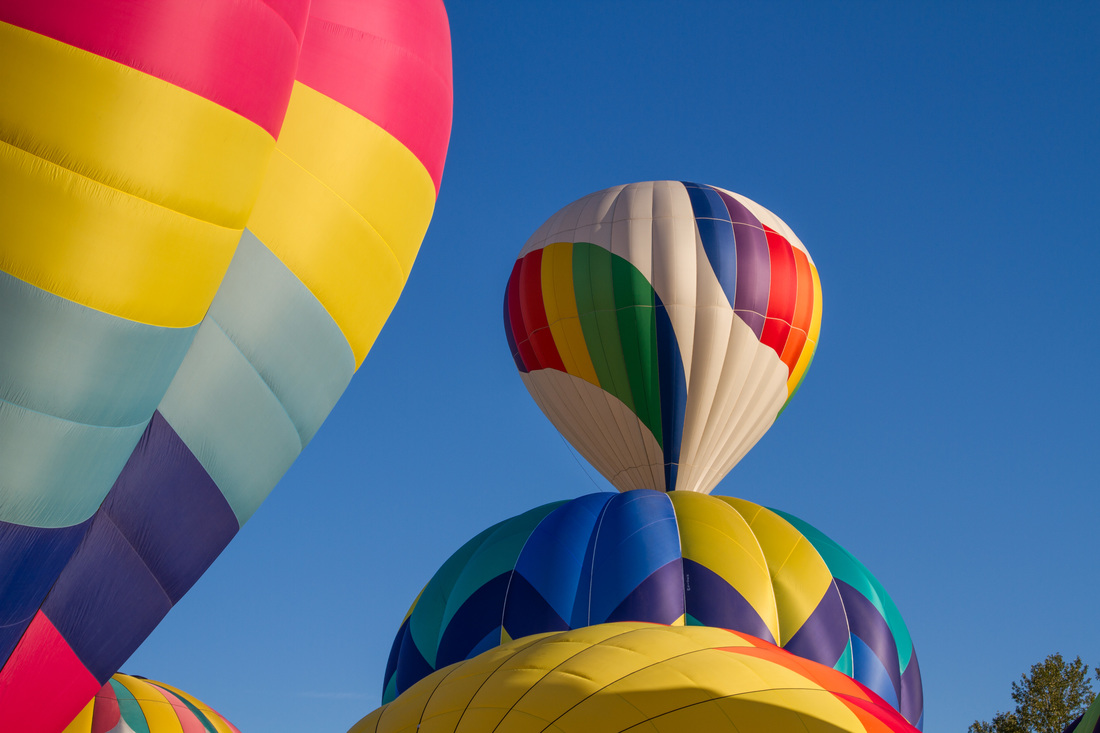
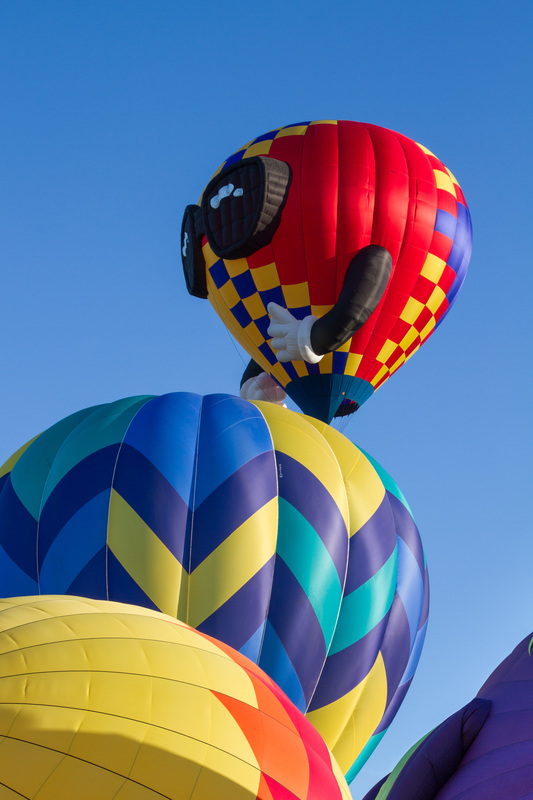
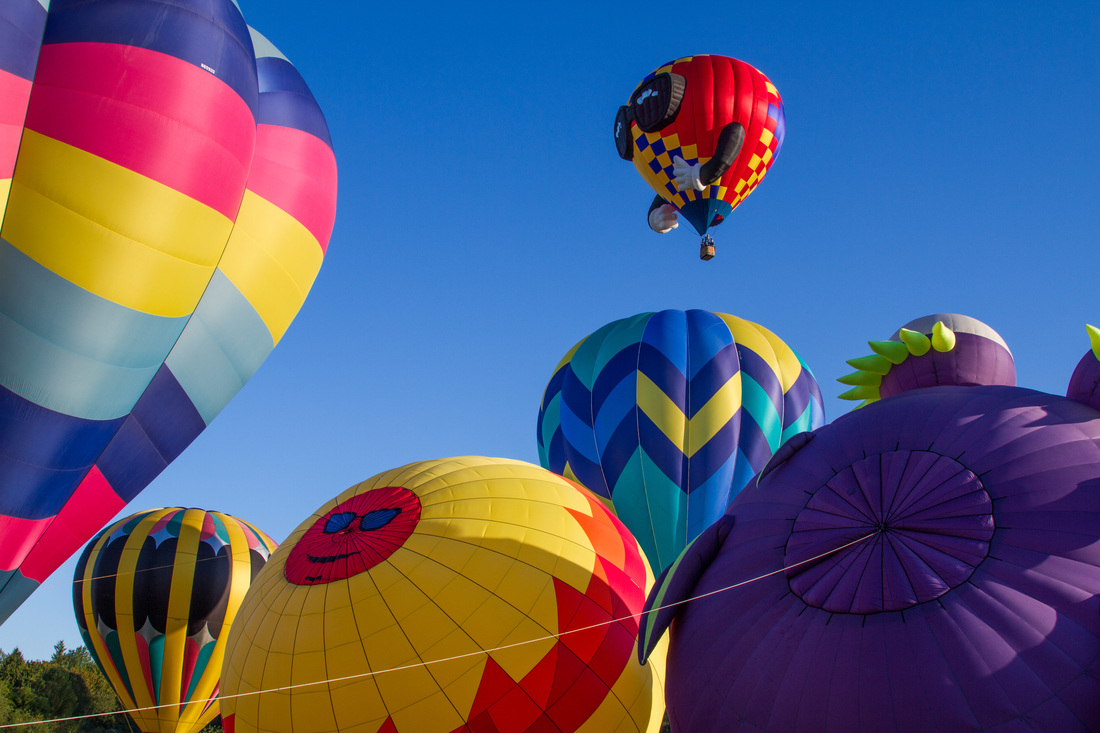
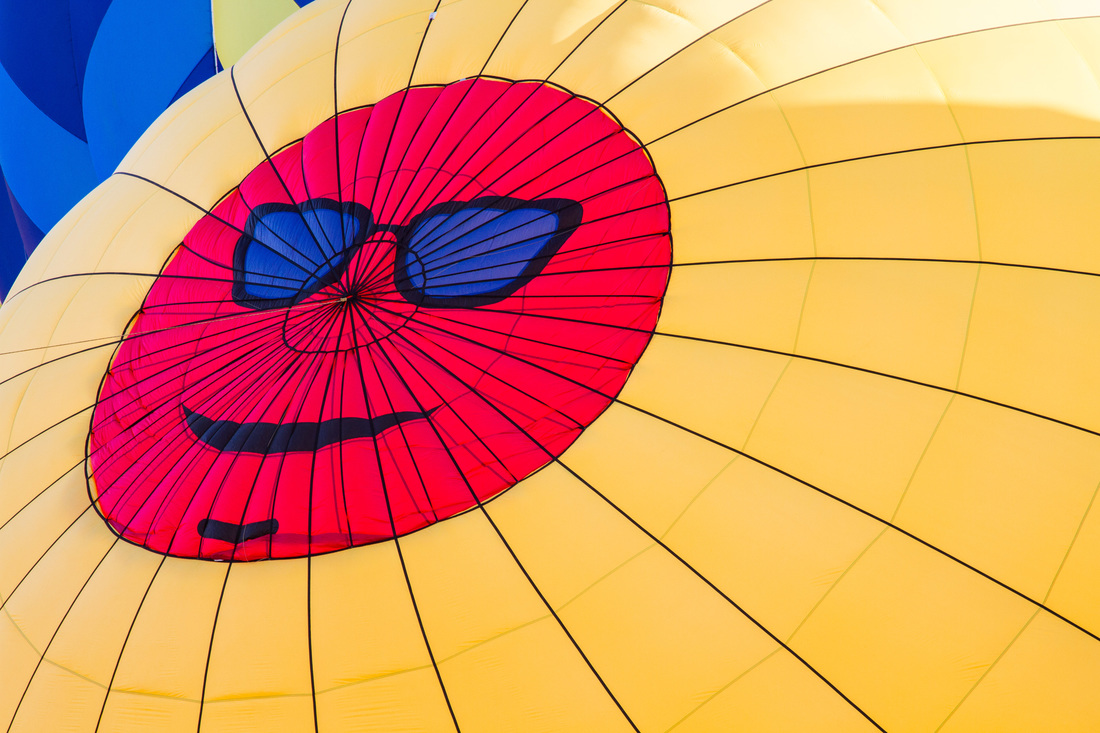
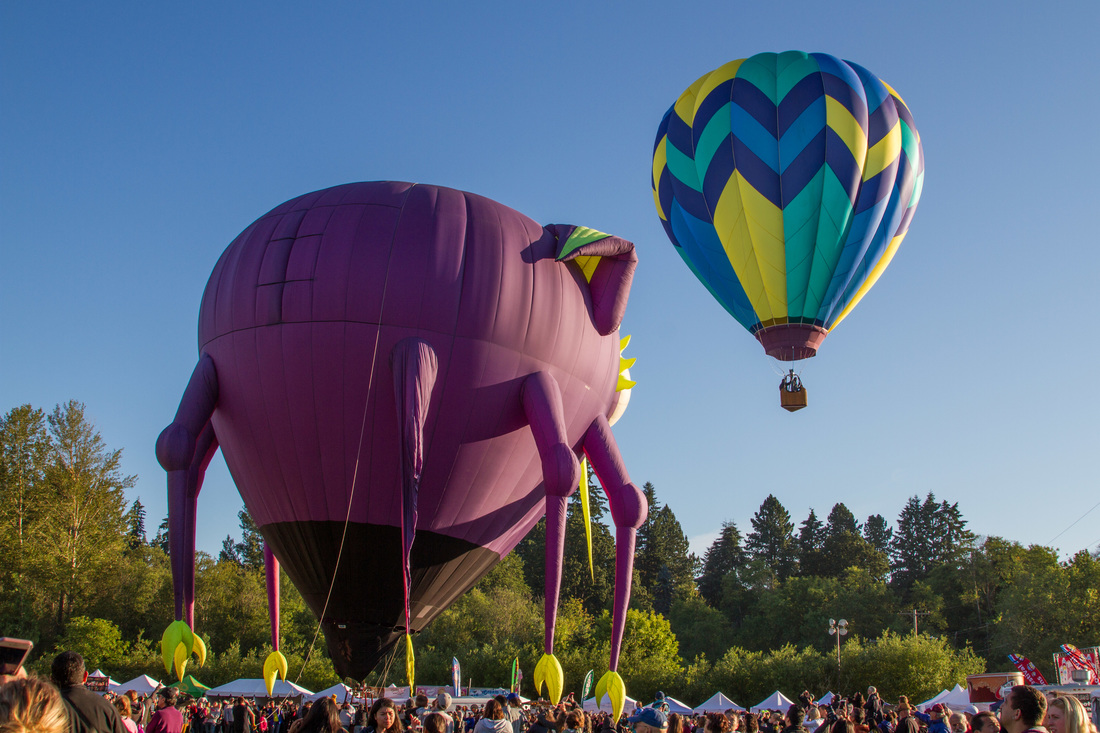
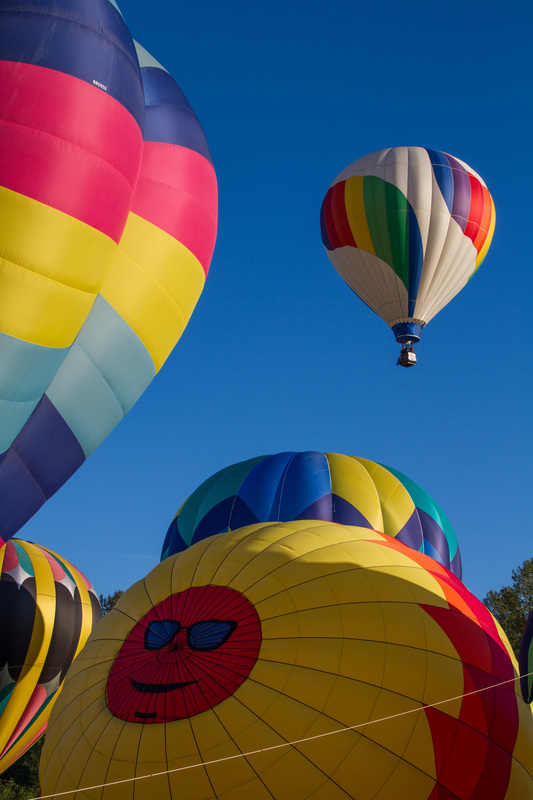
Every year, Portland, Oregon has its Rose Festival in June. This includes parades, visiting ships, a fun center, and many other events. One of those has been a Hot Air Balloon Festival, which was held June 24-26 this year (2016.) After a rainy start on Friday when the balloons could not go up, Saturday turned out beautiful and many people turned out. We arrived about 4:30 a.m. and they weren't even set up to let us in, yet. Eventually over a dozen balloons were set up, filled with hot air and took off. It was a beautiful sight against a clear blue sky. We were able to get as close as we wanted, but sometimes farther away was better to capture the whole picture.

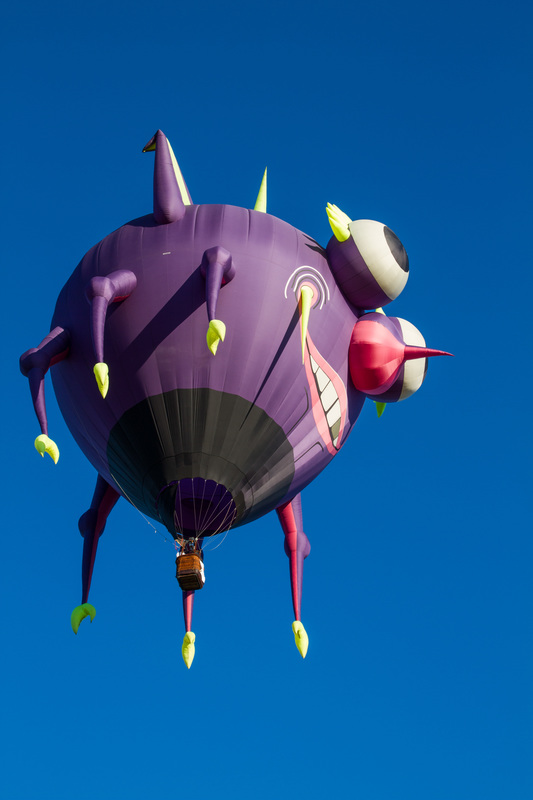
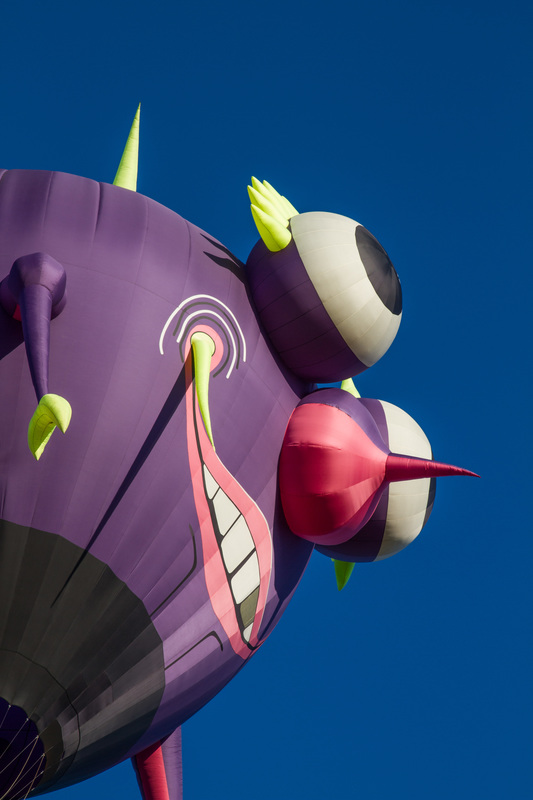
The first balloon up carried a flag and someone sang the National Anthem. The largest balloon depicted the "Purple People Eater" and we were reminded that if we remembered the song, we were OLD. To add to the interest, the moon was still up, and shows in some shots. Here are a just few of my photos. Click the button to see more.

Stay tuned for our next adventure.
Grace and Paul
Picture
Click on the photos to enlarge them.
More Balloon Pictures
0 Comments

Olive Oil Production

5/19/2016

0 Comments


What Makes Extra Virgin Olive Oil?

May 9 we left for the Chianti countryside, driving through the gorgeous vineyards and hills of Tuscany. Our first stop was to the Pruneti family owned olive oil mill. This was the state of the art mill with machines that accomplished all the steps in the process of producing extra virgin olive oil. Since mid October through December is the time when this is done, we could only hear about it through a lecture by an enthusiastic guide.

In order to have truly extra virgin olive oil the olives have to be pressed, by mechanical means (not chemical) and below 27 degrees Celsius. They first press the green olives, then the purple/brown, and last the black olives.

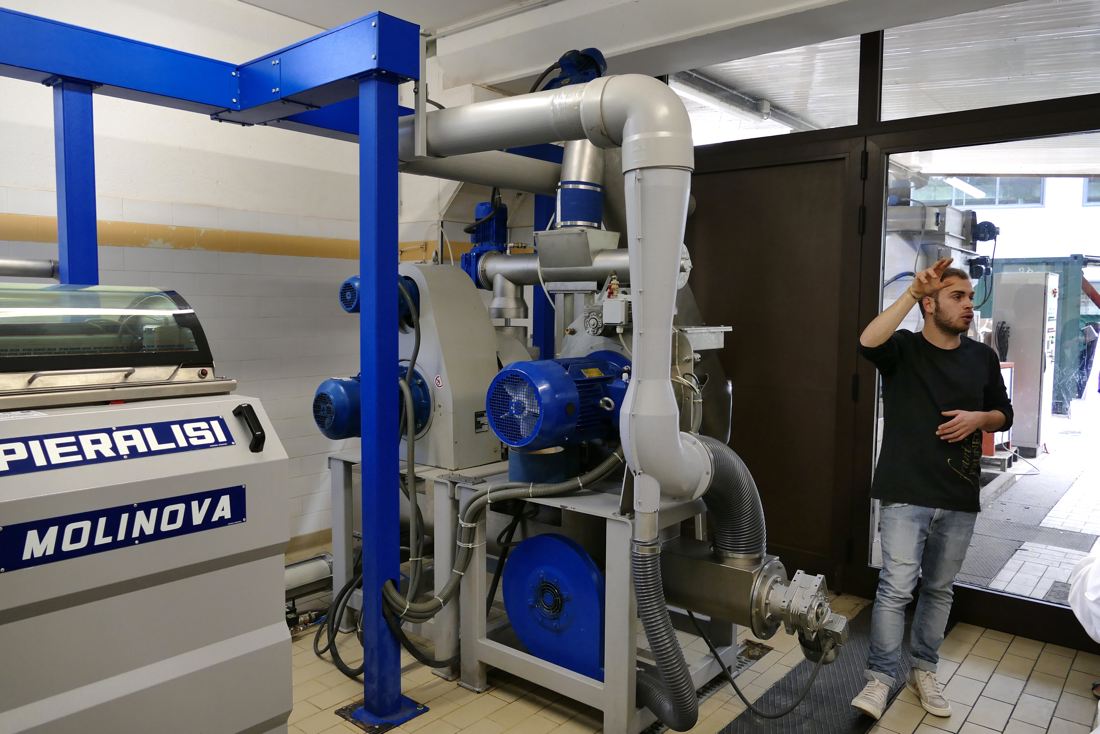
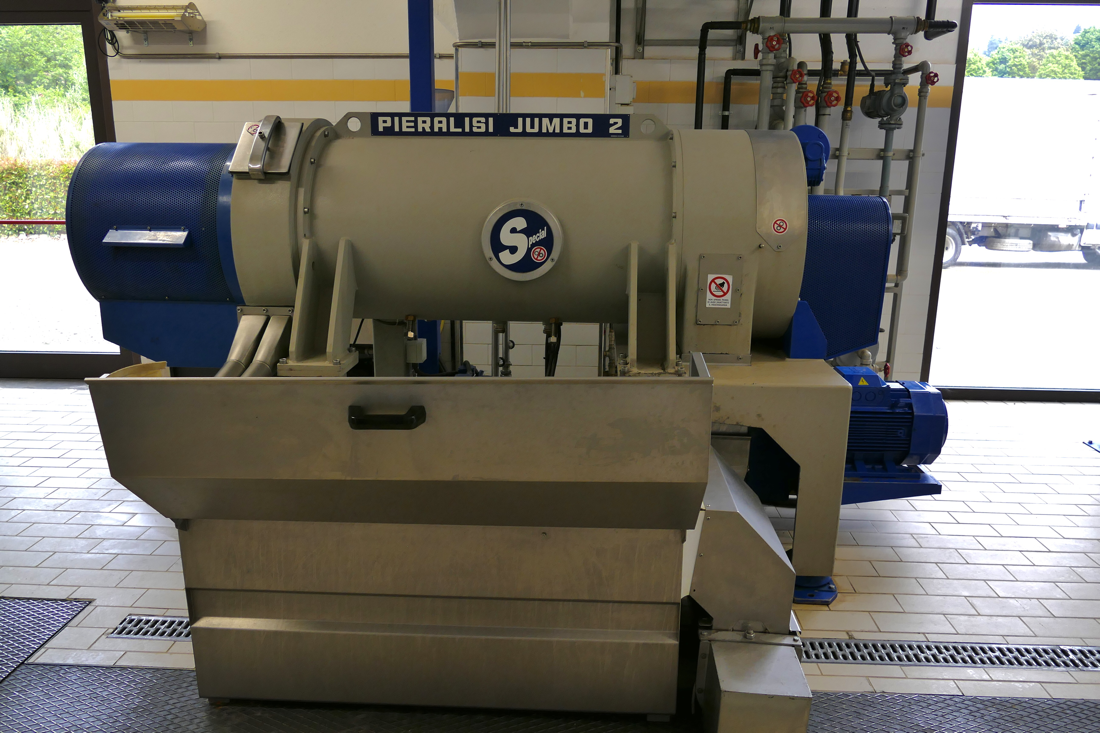
This is an organic company so they follow all the regulations needed. Each of the six machines did something special to the olives such as:
1. Takes off the leaves, stems and anything else that came in with the olives.
2. Washes the olives in cold water.
3. Cuts up the olives, stone/pit included. The pit is important for the taste. This machine mixes that into a paste.
4. This machine is a five stage mixer that slowly turns the paste until it becomes shiny, indicating the oil is coming out
5. The paste is then pumped into the last chamber where it is spun fast to extract the oil. 20% of the oil is extracted to this point.
6. The final state is to filter the oil to be sure all the particles of the stones, etc. are removed. All those byproducts are used for biofuel or burned in the winter.

Needless to say, the really good extra virgin olive oil is not cheap. There should be no sediments in the bottle and the acidity should be less than 0.02%. The olive oil is bottled with nitrogen in the dark bottles to keep out oxygen and help preserve it. The rule of thumb is that it should be used up before the next year's harvest.

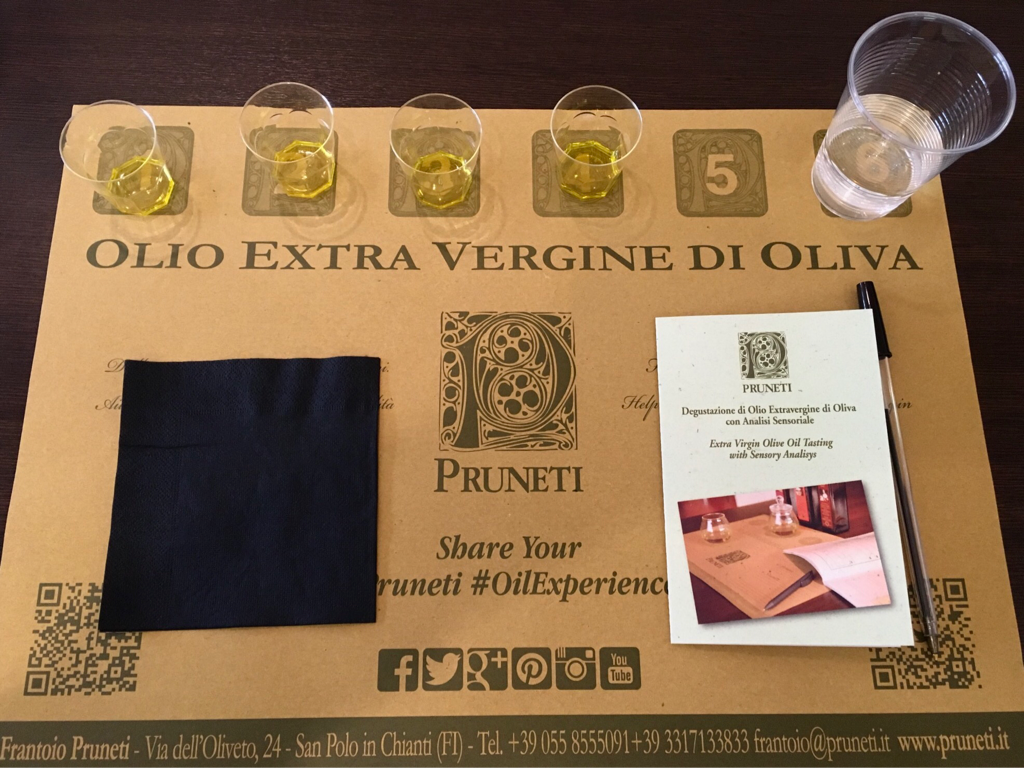
After the explanation of all the process and machines, we were taken upstairs to some tasting. A question was asked about "Light" olive oil. Since all oil is 100% oil, the word light just refers to its taste and has nothing to do with calories, etc.

When tasting olive oil there are three things to try to sense.
1. Is there a grassy green taste?
2. Is there a spicy taste which would be the antioxidants?
3. Is there bitterness in the back of your throat?

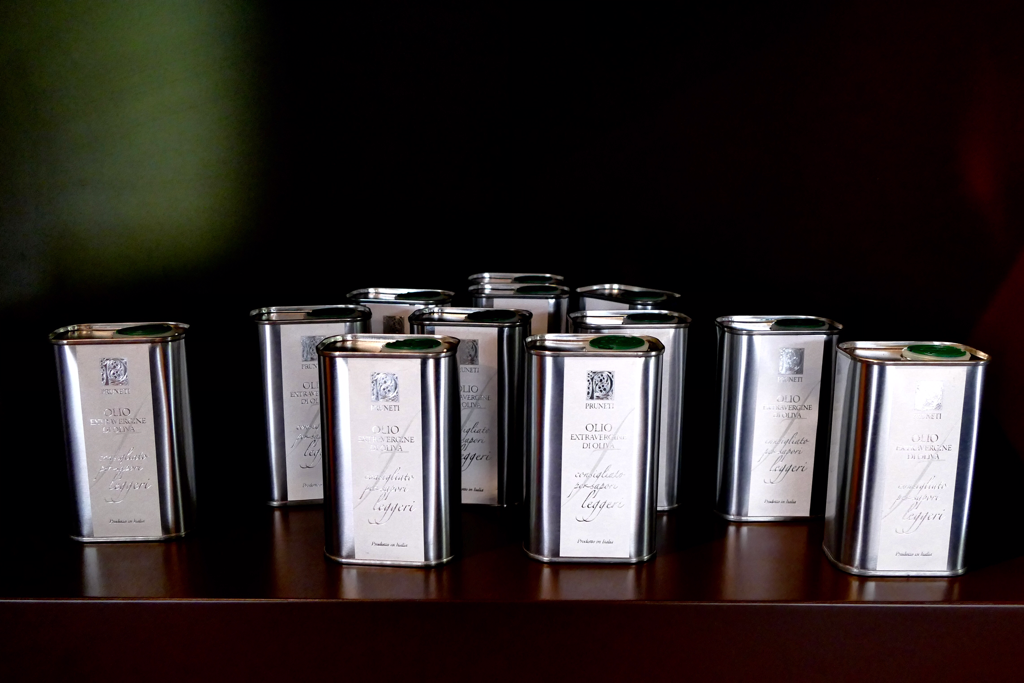
This mill sells their oil at their location and also at some specialty shops in the US. Some of our group bought bottles and cans to take home. This was a very informative stop.

The next stop for the day was to visit Christina at her 400 year old farm house for a cooking lesson. Those who wanted had a chance to participate in making the dishes we would have for lunch. The end result was delicious.

This was another event filled day.
Grace and Paul
Picture
Family olive mill produces extra virgin olive oil from their own trees.
Picture
Stations all set for tasting
Picture
Tasting four kinds or oil.
Picture
Special label for the Bike Races.
Picture
Cans are as good as glass bottles.
Machine 1
Machine 2
Machine 3
Machine 4
Machine 5
0 Comments

Carrara Marble Quaries

5/19/2016

0 Comments


Where do they get all that marble?
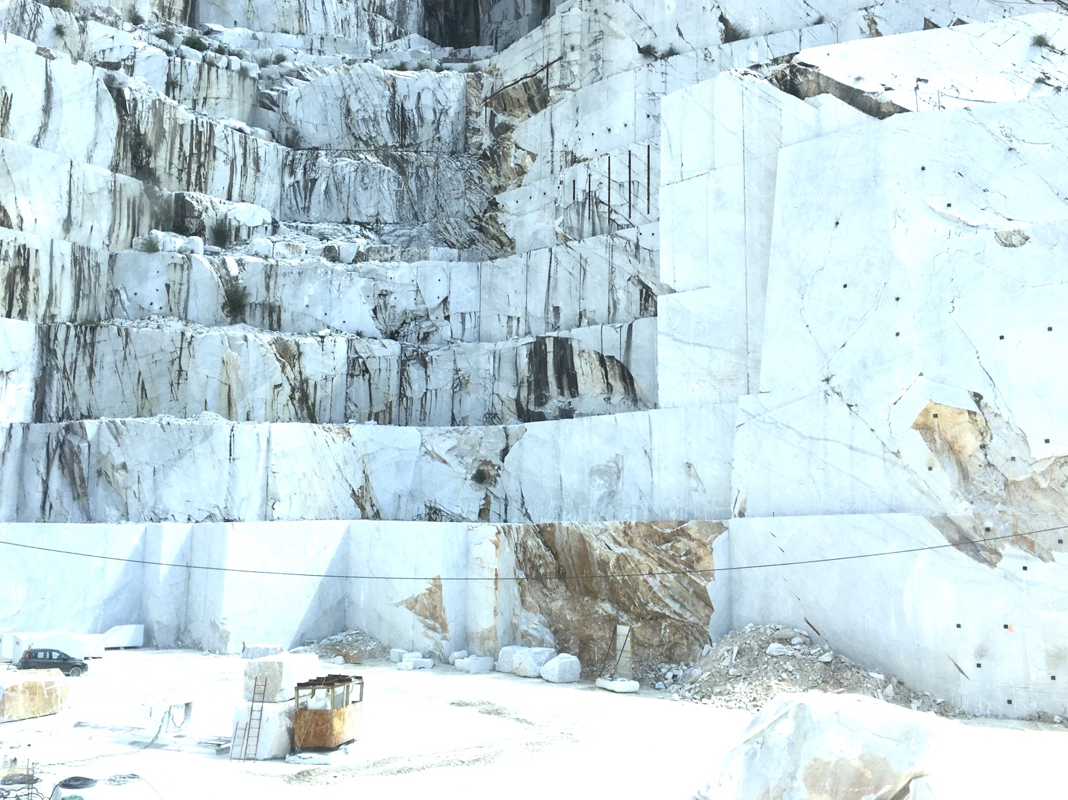
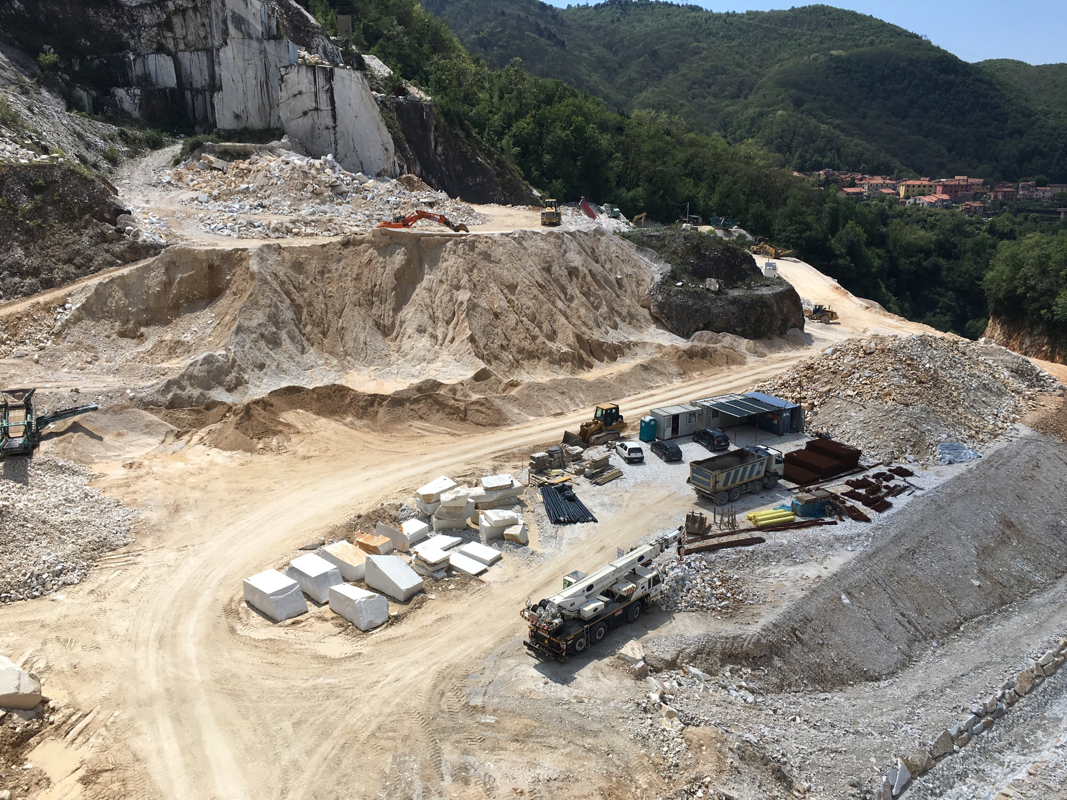
May 6, Carrara Marble Quarry north of Lucca

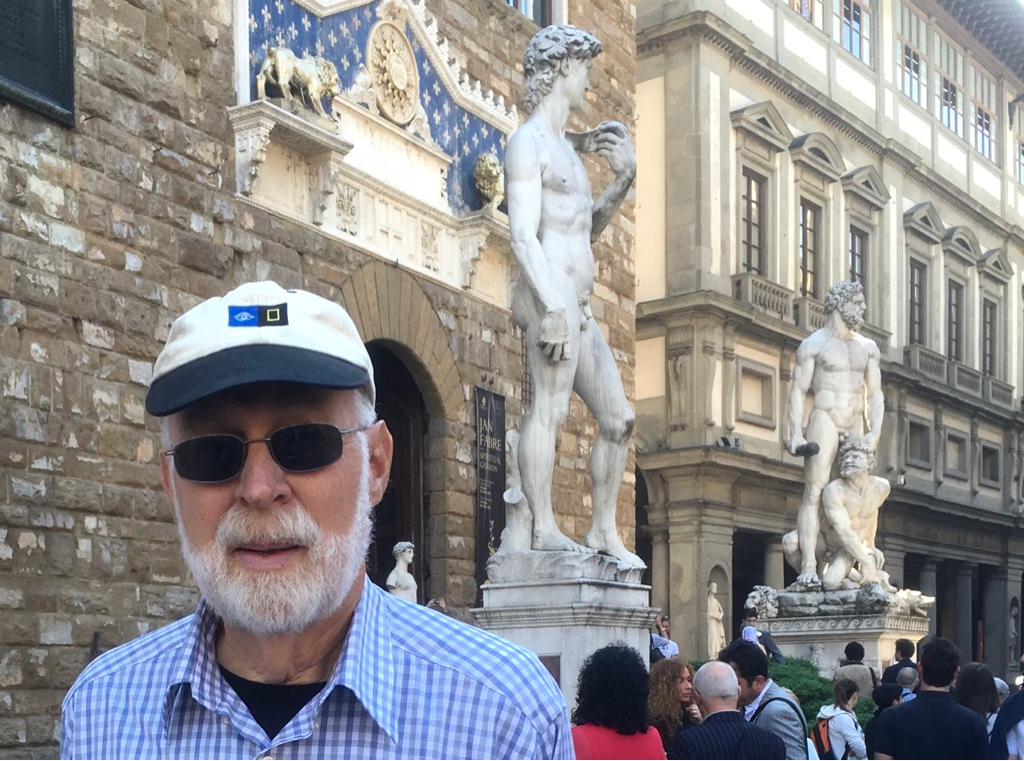
Did you ever wonder where they got all those huge pieces of marble used to carve statues, like the David in Florence? Well, we found out first hand.

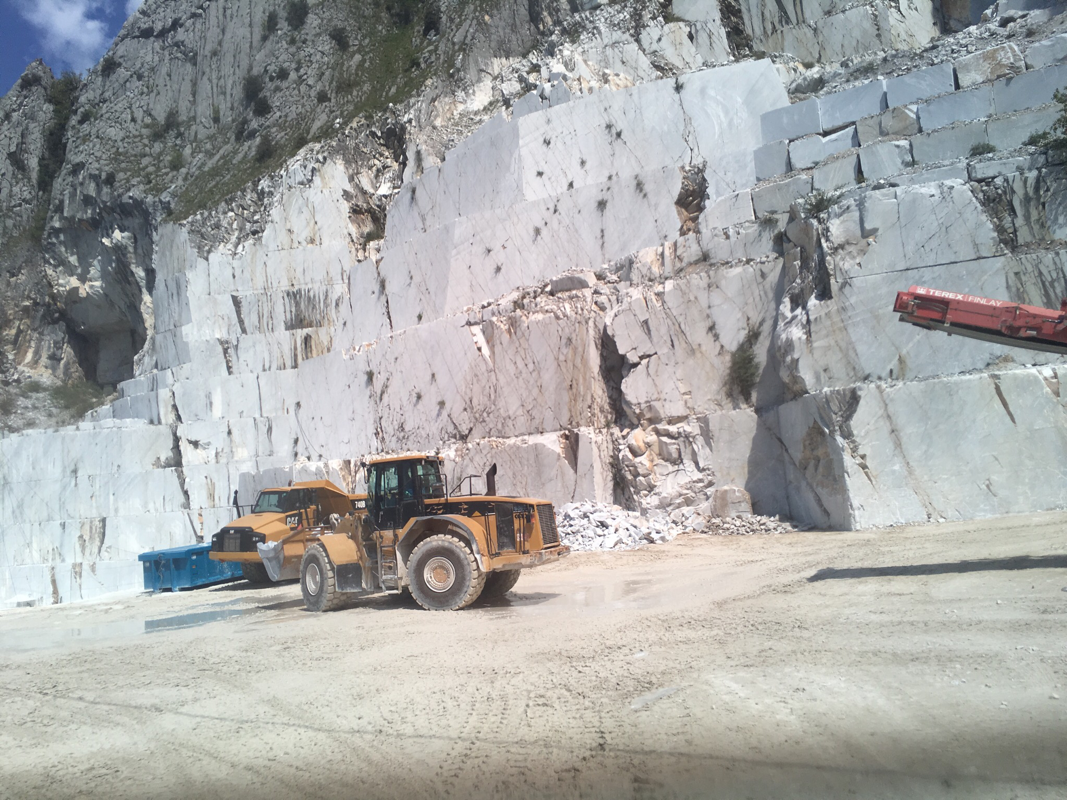
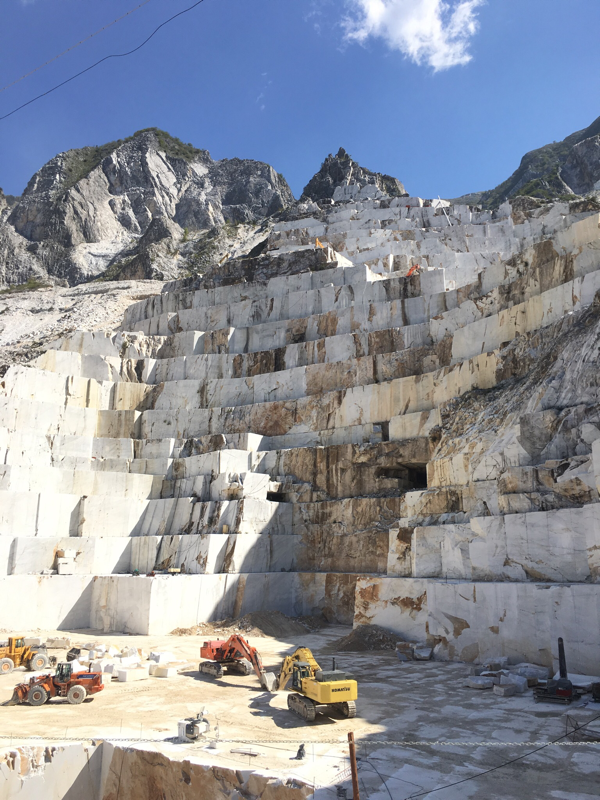
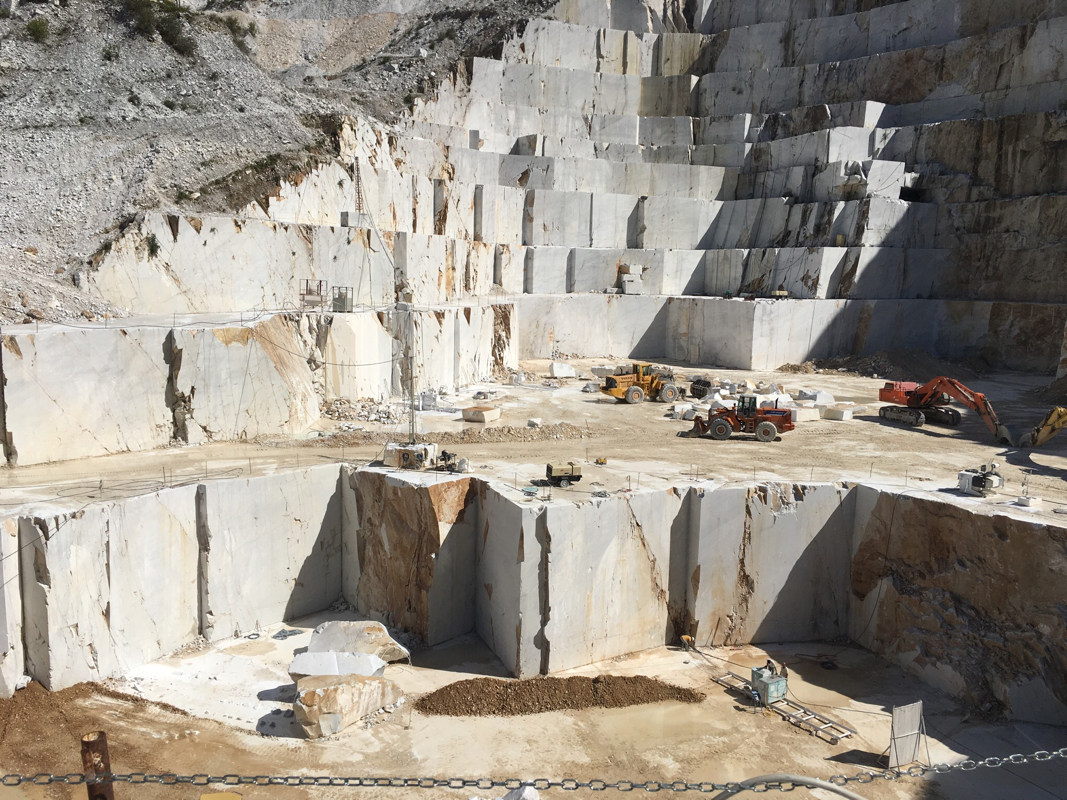
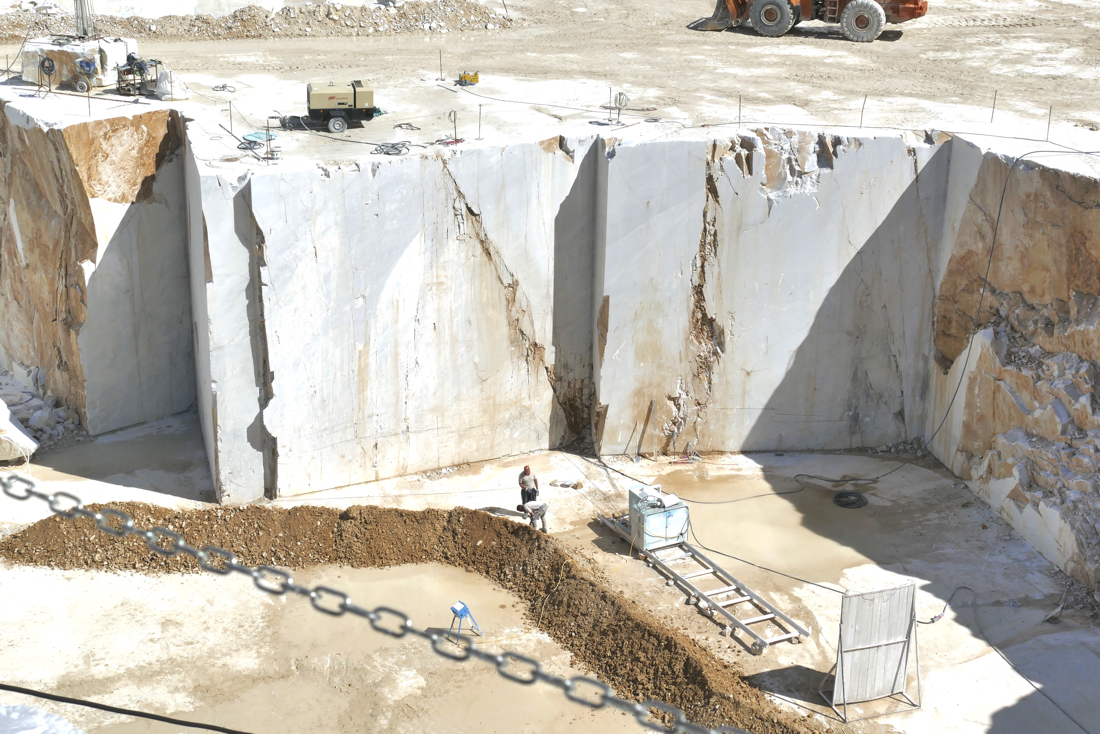
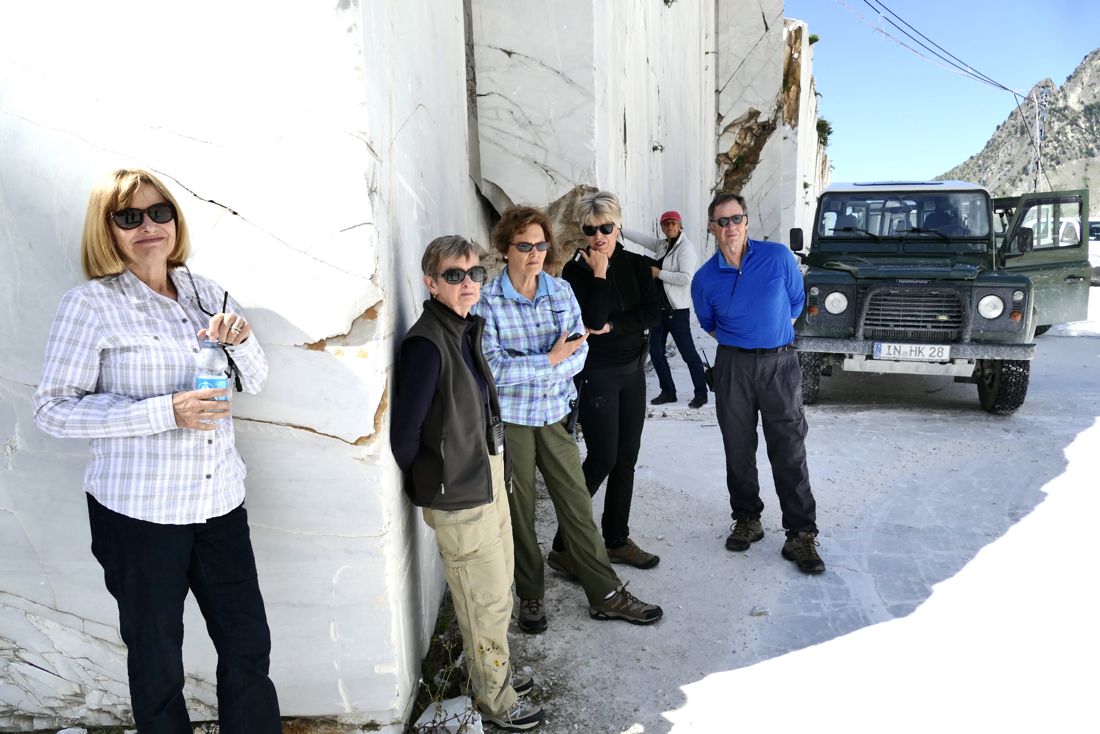
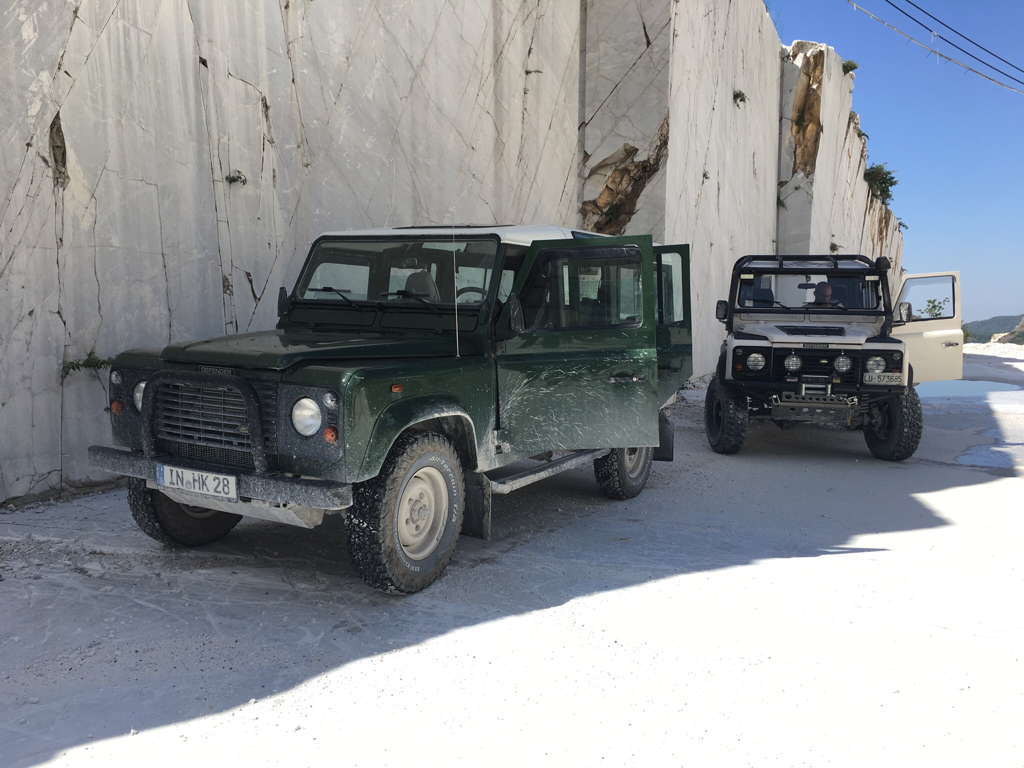
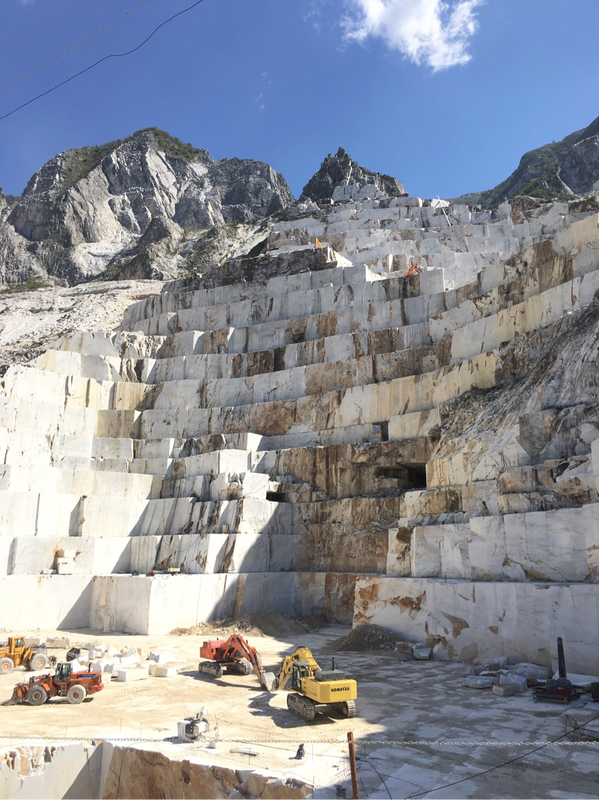
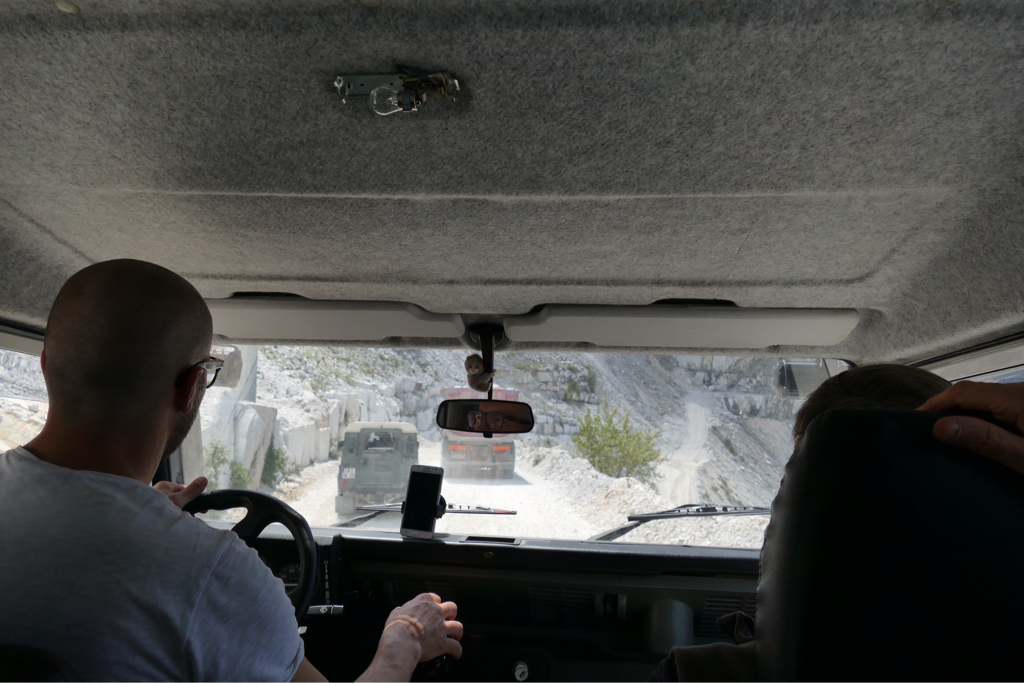
May 6 was a lovely day and we left at 9:00 to drive north along the coast to the town of Carrara. We transferred into two 4-wheel drive Land Rovers for the trip up into the mountains to see the marble quarry in action. Heiki was our guide, and as she drove the first vehicle, we could listen to her narration through sets of headphones. The mountains hold a series of working quarries so we were on the same roads as the large trucks that moved the stones down the mountain. At the first stop we could look over a pit and see the diamond studded chains being set, preparing to cut the huge blocks of marble.

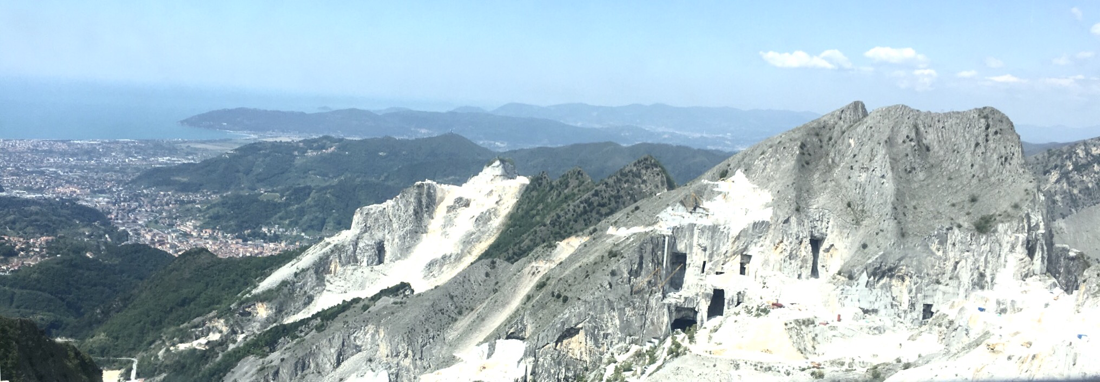
From there we drove further up the mountain along narrow steep winding roads, making room for oncoming trucks when necessary. From that vantage point there was a beautiful view of the Mediterranean Sea. Next we drove back down to a road that broke off and went through a very long tunnel. This was where the trains used to run. Those trains took the marble down the mountain. From inside the tunnel we could see several underground quarries, which have been around for quite a long time. There will not be any more underground quarries started because they are expensive and do not produce better marble.

Some of these quarries were started in these Apuan Alps by the Romans. There have been at least 650 sites opened though the years. Each quarry is privately owned, and the work is very hazardous. The marble ranges from white to a blue-grey and is very high quality. It was from these quarries that the marble for the famous David statue in Florence was harvested.

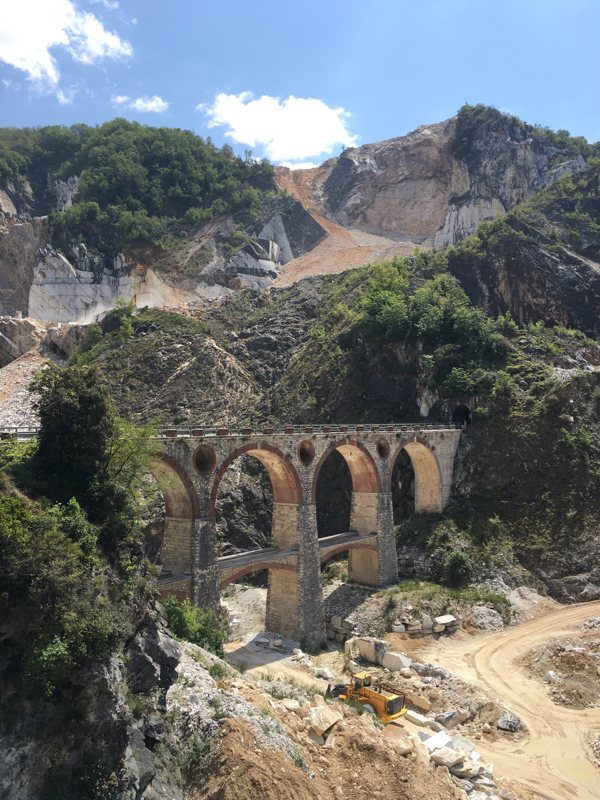
Once back down the hill, we made a stop where we could look at two of the bridges used in the area. They were quite stunning with their arch support design. Back into the city of Carrara, we took a short walk to a local restaurant for lunch before heading back to Lucca.

In the evening some chose to go back into Lucca to have an "Aparativo." This means you buy a drink and it comes with some food; enough for us to call it dinner. From there we walked the short distance to the old church where we attended an evening concert. This particular night there was a soprano, a tenor, and a pianist. They performed a number of Puccini arias. It was nice to participate in a local cultural event. Such concerts go on there every evening.

That concluded a very interesting day.
Next we left for Florence and the Chianti region.
Picture
Paul in front of the "David" in Florence
Picture
The two vehicles that took us into the quarry.
Picture
The large equipment is dwarfed by the size of the mountain and blocks of marble.
Picture
Sharing the road with the large trucks
0 Comments

Parma to Lucca

5/11/2016

0 Comments


Interesting Transfer Day

Picture
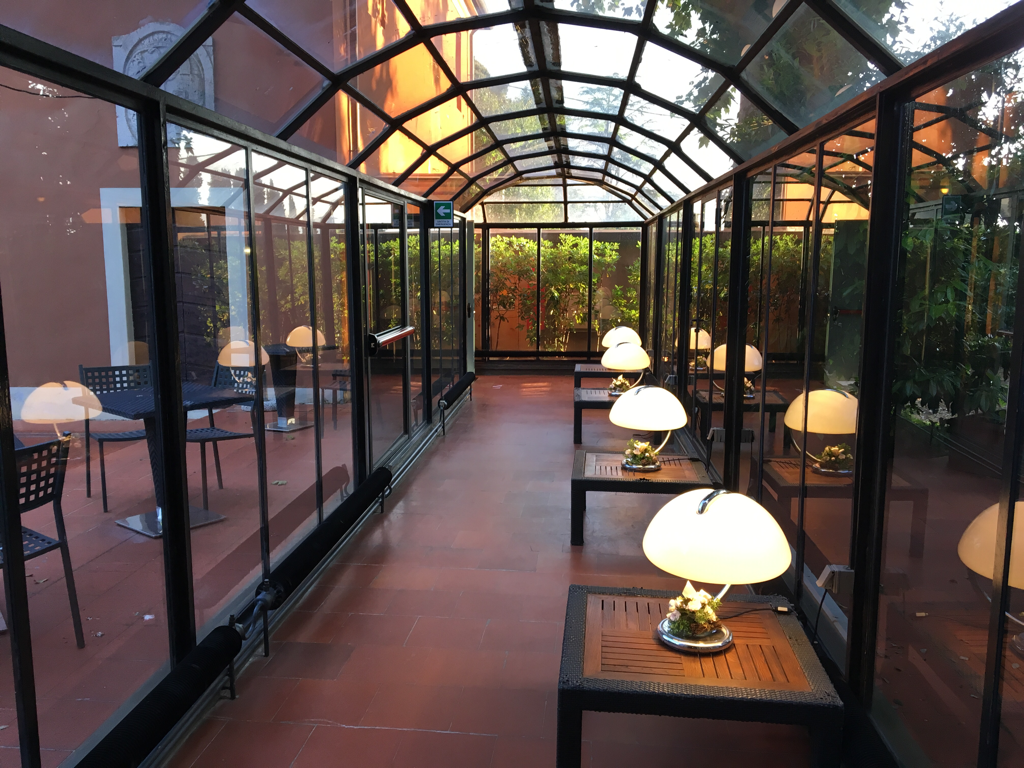
Walkway out to the "Stables" section, the oldest part of La Principessa Hotel
Picture
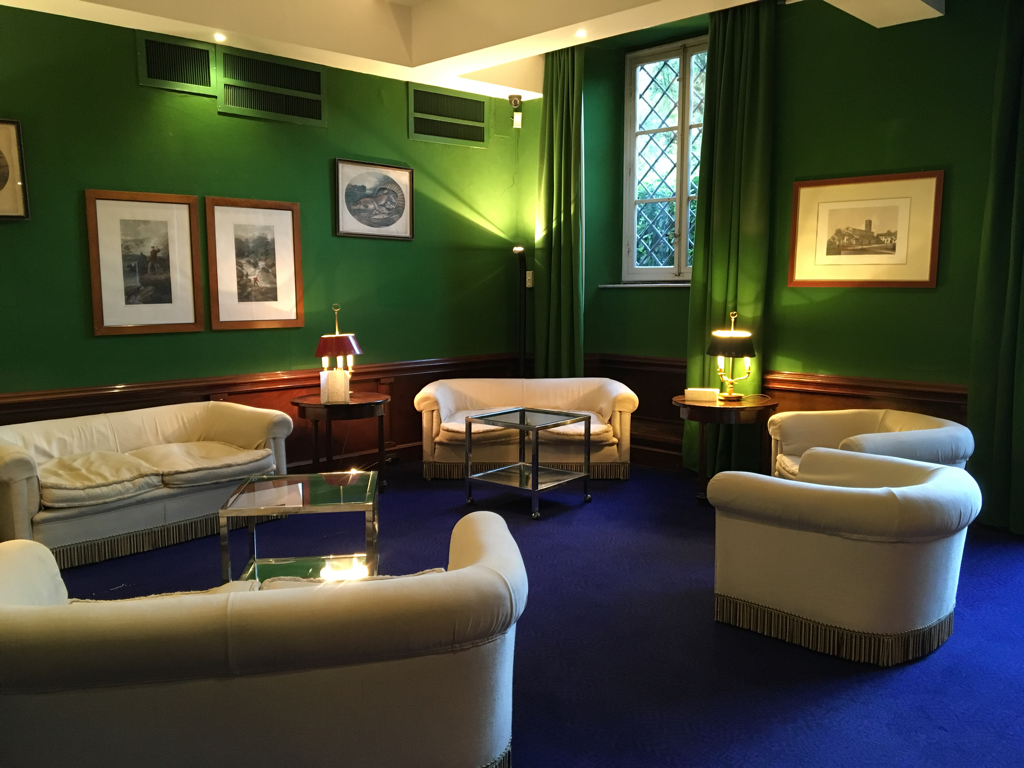
Lounge and bar area of La Principessa Hotel
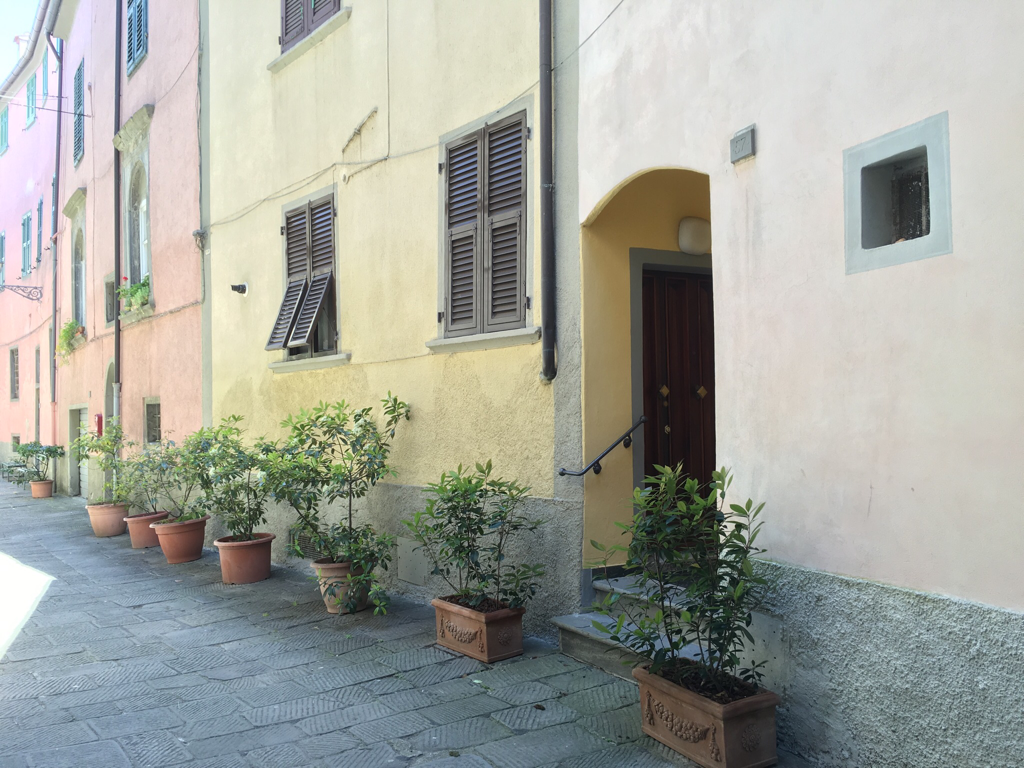
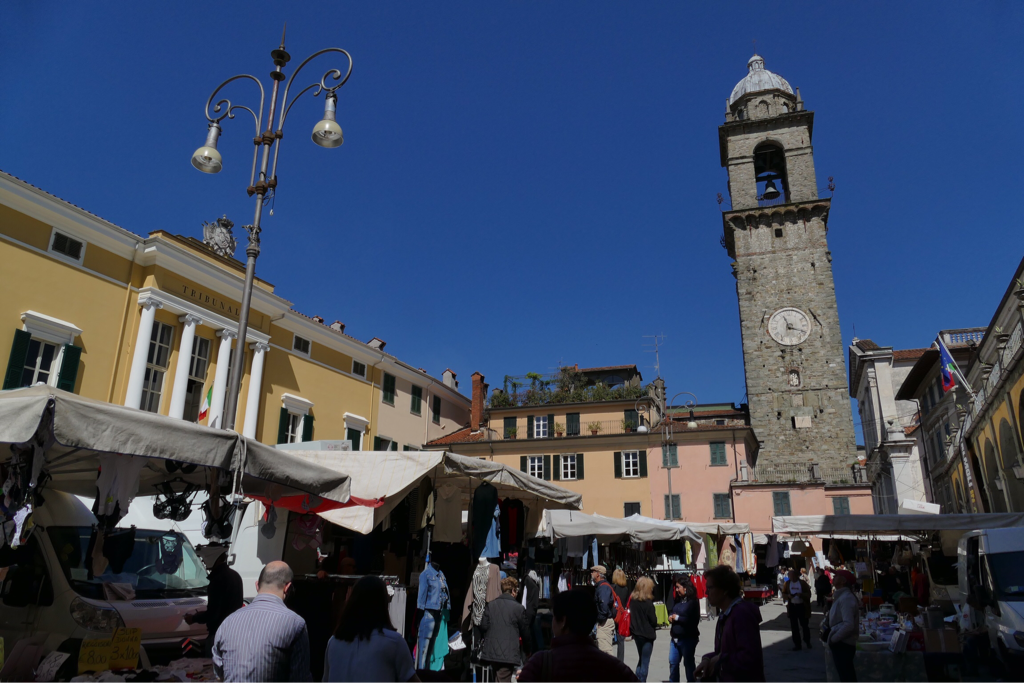
May 4 was another nice day as we left Parma and headed directly west to Lucca. This takes us through the Lunigiana Valley and the Apennines Mountains which are very scenic with some old towns on the hills. Our first stop is in the charming medieval town of Pontremoli where a local guide walked us through the narrow streets. There were several squares in this hill town and we were fortunate that is was market day, adding some interest to the visit.

Before leaving the area we made a stop to visit Gratziella at her home bakery where she specializes in making the local bread called Testaroli. This is made from just flour and water: no eggs. She gets up very early in the morning to make these flat rounds of bread to sell to the locals and local restaurants. She has sixteen iron skillets where she has a system that allows her to make from 300 - 400 a day. She uses about 200 lbs of flour a day, with about 10 oz. in each piece.

We were served three kinds of Testaroli for lunch. One kind had pesto sauce on it, another had Parmesan cheese, and another tomato sauce. We ate out on the back patio and Gratziella was kind to sit and answer questions and show us where she stored the flour she uses. For desert she served us a very good cake called chumbeloni.

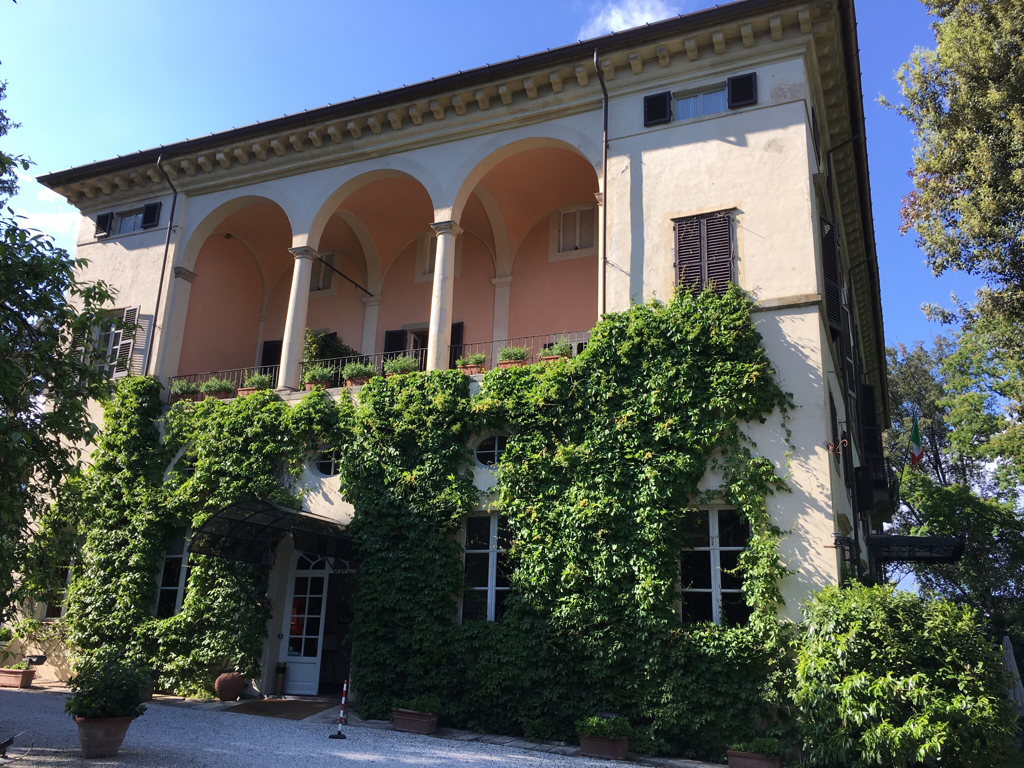
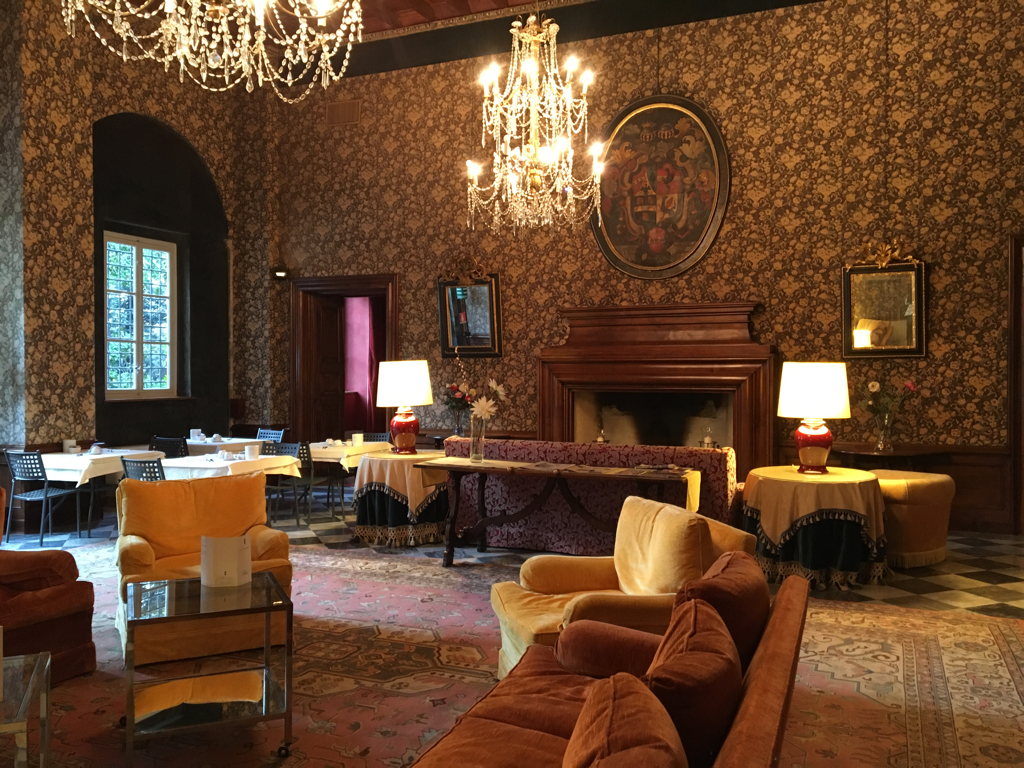
After lunch we headed further west to Lucca, arriving at the Hotel Villa La Principessa, an old palace. We had plenty of time to get settled in to our very large room, and explore the grounds before meeting at 6:30 for the "Welcome" drinks and food. The pool was large, but unfortunately it was being refinished, so there was no water in it. This is when we met the two new couples joining our group for the "Main Tour." We met outside the oldest part of the palace, on the patio next to what were the stables. The whole place was furnished with period pieces and made us feel like we were living in the distant past.

Tomorrow we venture into Lucca for the day. We look forward to this, as we only had a brief few hours there in 2001.

The adventure continues,
Grace and Paul
Picture
Pontremoli street
Picture
Market in square at Pontremoli
Picture
Gratziella making Testaroli
Picture
La Principessa Hotel outside Lucca
Picture
Main Living Room at La Principessa Hotel
0 Comments

Po River Adventure

5/11/2016

0 Comments


Parma, Italy

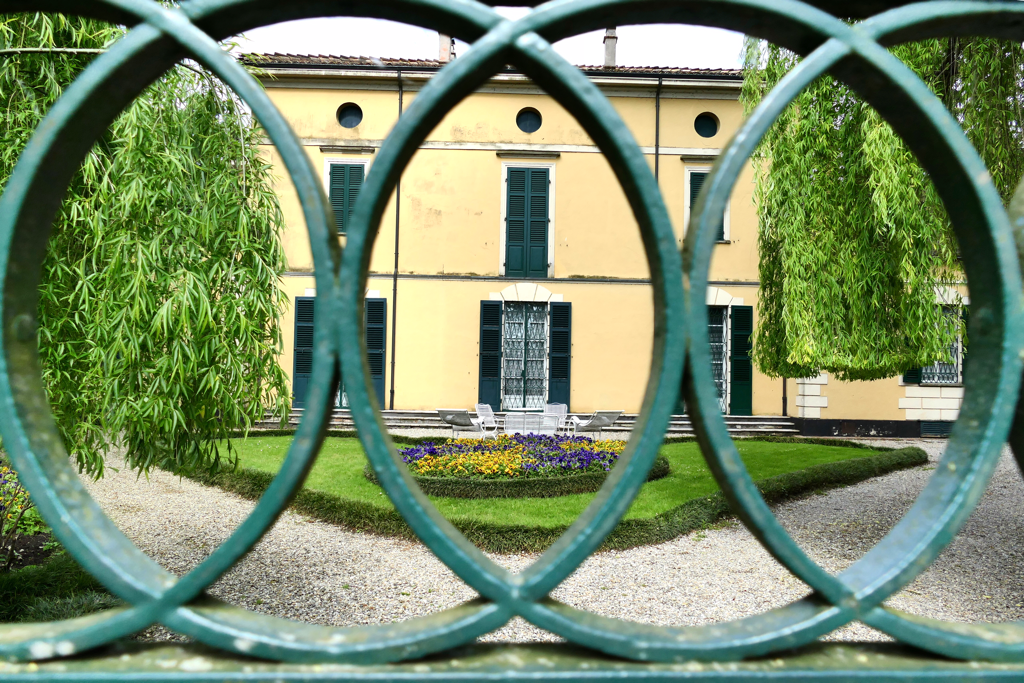
May 3 was very different from the rainy day before when we took the walking tour of Parma. The weather was sunny and warm for our excursion to the Po River area, and to visit the home area of Giuseppe Verdi. We picked up Stephano, our local guide, who drove around with us. He told us about Verdi's life, where he was born, and where he came back to live for the majority of his life. Verdi came back to the area and purchased lots of property. We drove by several of these places, including his home where he lived for at least 50 years. It had beautiful flowers in the front. There was also a mill which was in very bad shape.

There was a small river/creek beside the road, which was the bounty between the Province of Parma and the next Provence. That was the boundary between where they could make Parmesan cheese and a cheese they had to call something else.

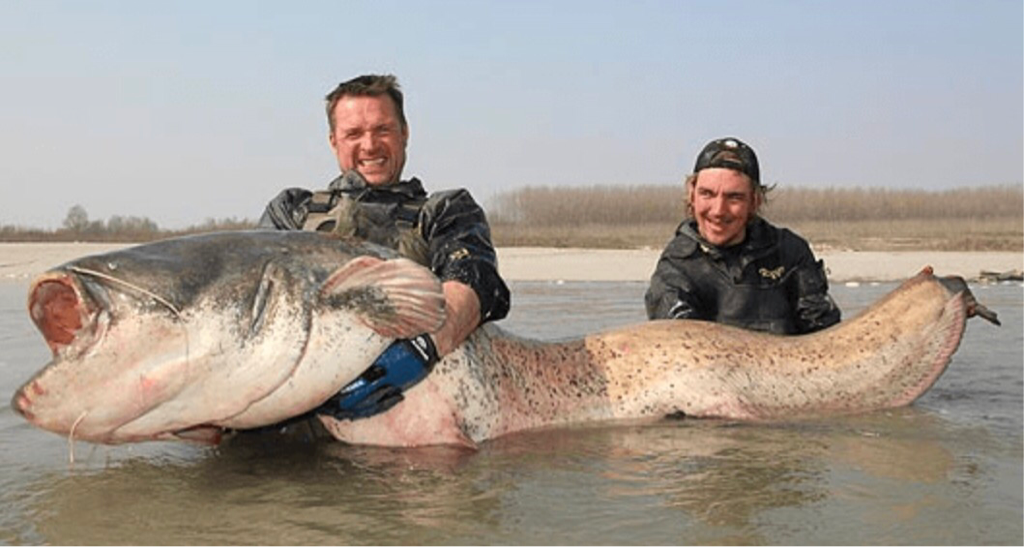
The Po River is the biggest in Italy, and the 4th largest in Europe. It is 450 miles long and goes all the way from the western border with France to the east where it flows into the Adriatic Sea near Ravena, south of Venice. It is responsible for the vast wide plain that makes this area so rich for agriculture. It cannot be used for large boat navigation because it is not very deep, and the sediments shift around. Sometimes it floods and in 2000 there were over 40,000 people who had to leave their homes. They have a major problem with an Asian Catfish which has taken over the waters. This fish is very ugly and can grow to be 9 feet long.

This area is famous for raising pigs and cows. We stopped for a walk to see the black pigs that are unique specialty. One of the byproducts of these animals is Bio Gas from all the methane. We visited a very old Salumificio where they produce the traditional Culatello Parma ham. This very old castle has a Michelin star restaurant, but more important, it has a cellar where they age the Culatello ham. This is made from the best part of the rump of the pigs. It is smaller than a regular ham and put into a pig's bladder before being wrapped in a string bag and hung to cure. There were special pieces for the king of Monico and for Prince Charles. Each ham weighs about 4 kg, and costs about 400 Euros.

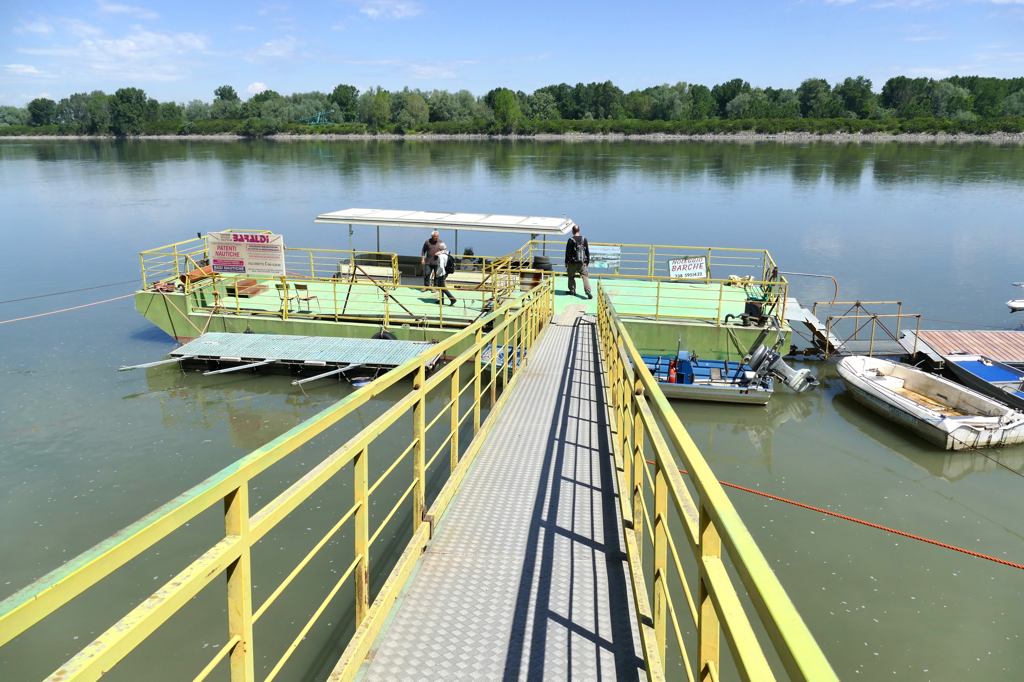
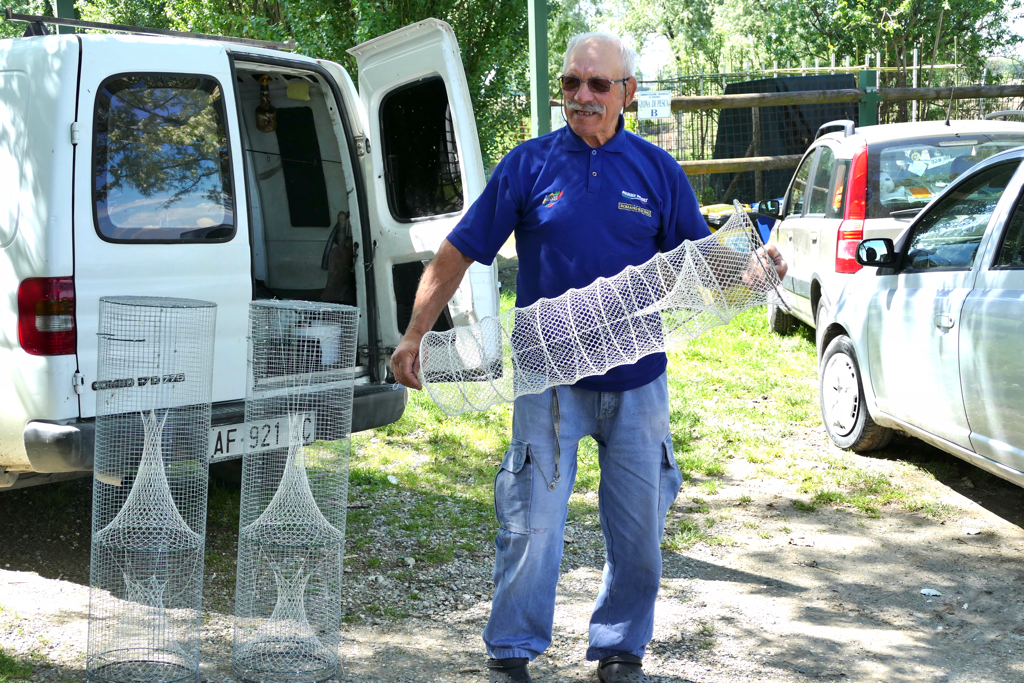
Next we boarded Stephano's pontoon boat for a leisure ride up the Po River to an island where we had a special picnic lunch, provided by the restaurant. It consisted of Parma ham, sausage, bread, lettuce and a desert pudding. It was delicious. Somehow a conversation started between Paul and the gal serving us, only to find out she was from Romania and spoke Russia. They carried on quite a conversation. We walked over to a fishermen's shack where there were a number of guys just hanging around. One of them makes fish traps from fine twine, and he showed us several models and explained how they work. This is just a hobby for him, but he was very proud of his producers.

After the leisure drift/ride back down the river to the landing site we boarded the bus for the ride back to Parma. What fortune to have this be a beautiful day.

For the evening, although dinner was on our own, Ben never disappoints, and he had a suggestion for a good place close to the hotel. Not only was it close, but the food was good and we were able to get individual checks. The only bad thing was that we couldn't get in until 8:00. So goes evening life in Italy. During dinner a very noisy thunderstorm passed by, but was finished by the time we were done and ready to walk back to the hotel.

Back in the room we had to get everything ready to depart Parma for Lucca in the morning.

That's it for now,
​Grace and Paul
Picture
Giuseppe Verdi's home
Picture
Asian Catfish have taken over the Po River.
Picture
Black pigs are a specialty in the area
Picture
Zibello, where Culatello Parma ham is made and cured
Picture
Po River
Picture
Culatello Parma ham hanging to cure
Picture
Hand made fish traps
0 Comments

The Making of Parmesan Cheese

5/2/2016

1 Comment


Bologna to Parma, Italy

May 1, Bologna to Parma
The morning started with an early departure from our small unique Porta San Mamolo Hotel for the bus ride to Parma. Along the way we made several stops for what OAT called "Learning and Discovery," The first stop was near Castelfranco Emilia, in an agricultural area to visit a small producer of Parmigiano cheese. This is the only area where true Parmesan cheese is made, using cows fed designated grasses and other specific agricultural products.

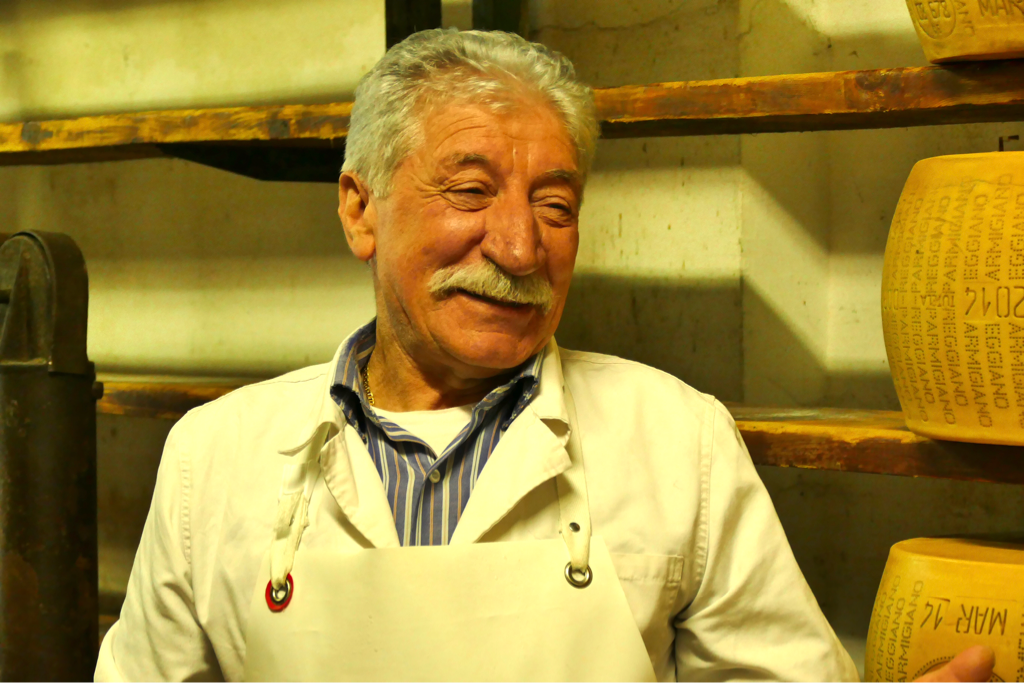
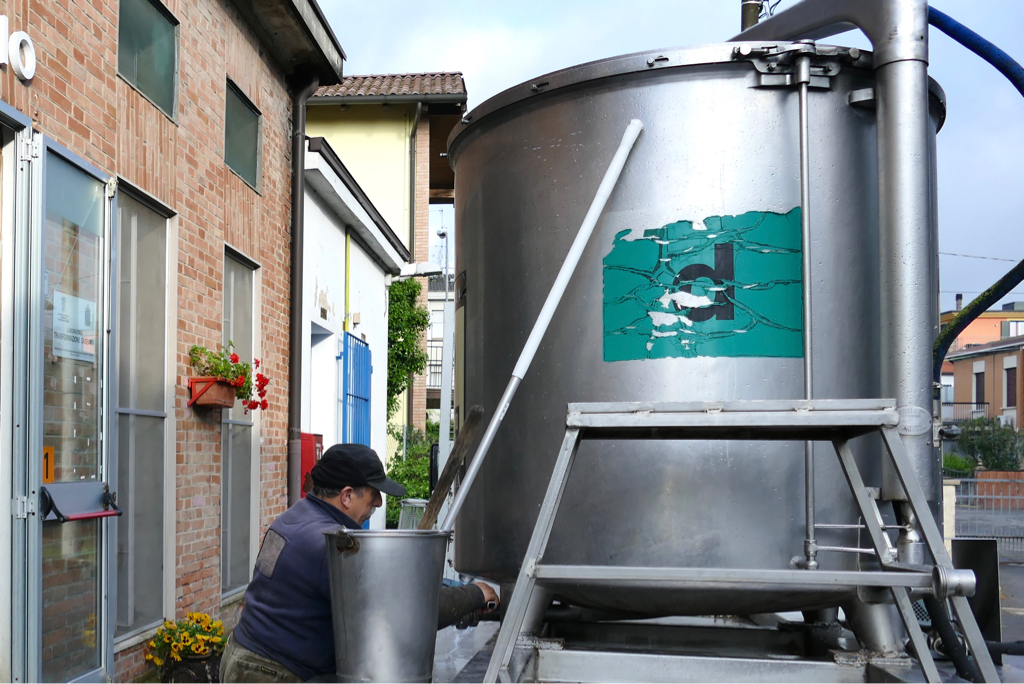
We met Giuseppe and his wife, Luisa, who work as a team during the whole process. We arrived just as the fresh milk had been off loaded from a small transport tank, into two deep conical vessels used for the first step in making the cheese. The milk was churned and heated to about 31 degrees centigrade. Throughout the process, Giuseppe explained, through our guide, exactly what was happening and what he was looking for in the process. At one point early in the process, Luisa added enzymes which had been saved from the batch the day before. This started the process of coagulation.

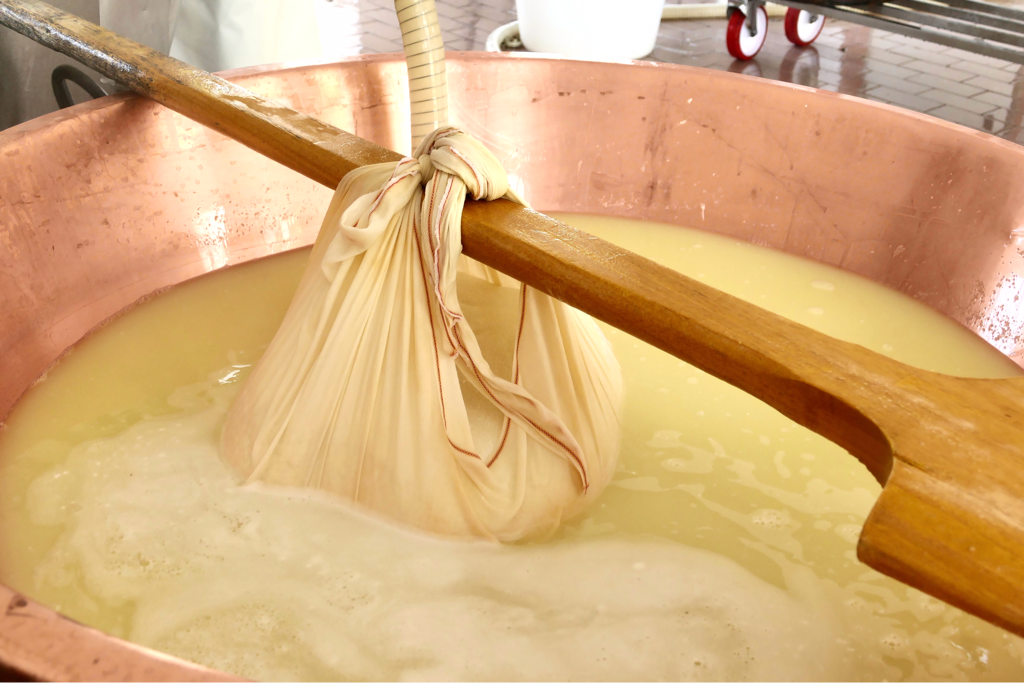
As the curds began to form, Giuseppe and Luisa stirred the vats with huge wire frame whisks to keep everything in suspension for a while and break up any large pieces. Eventually the milk separated and the heavy parts fell to the bottom and the top became clear. At this point, Luisa took off the enzymes that would be needed for the next day's batch. When all of the curds had settled and formed into a mass, Giuseppe and Luisa used large wooden paddles to ease the mass up to the top where they surrounded it with a large piece of cheese cloth. They suspended the mass to begin draining it.

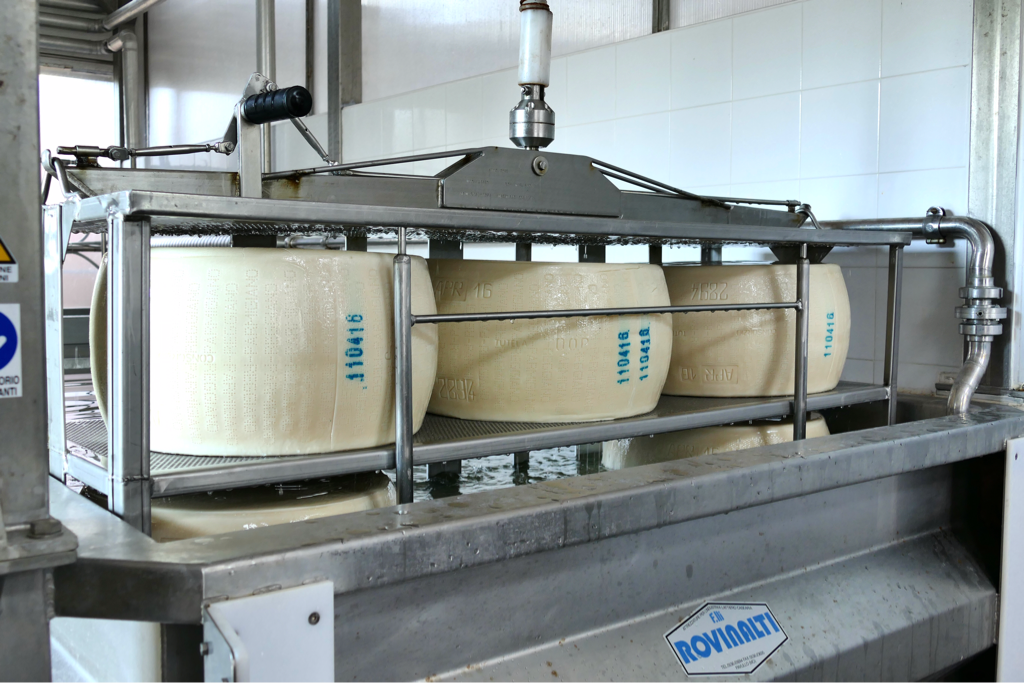
Eventually, each large bundle of the now fresh cheese was put into a round mold to further shape and drain it. The insides of the molds contained embossed wording and the date. That information was permanently pressed into the outside of each round. The rounds weighed about 80 lbs. each. They are left in the white molds for 24 hours, then changed to a stainless steel molds for 48 hours, for further draining. After that, the rounds are moved onto racks and submerged in a brine for three weeks. This helps seal the outside of the rounds.

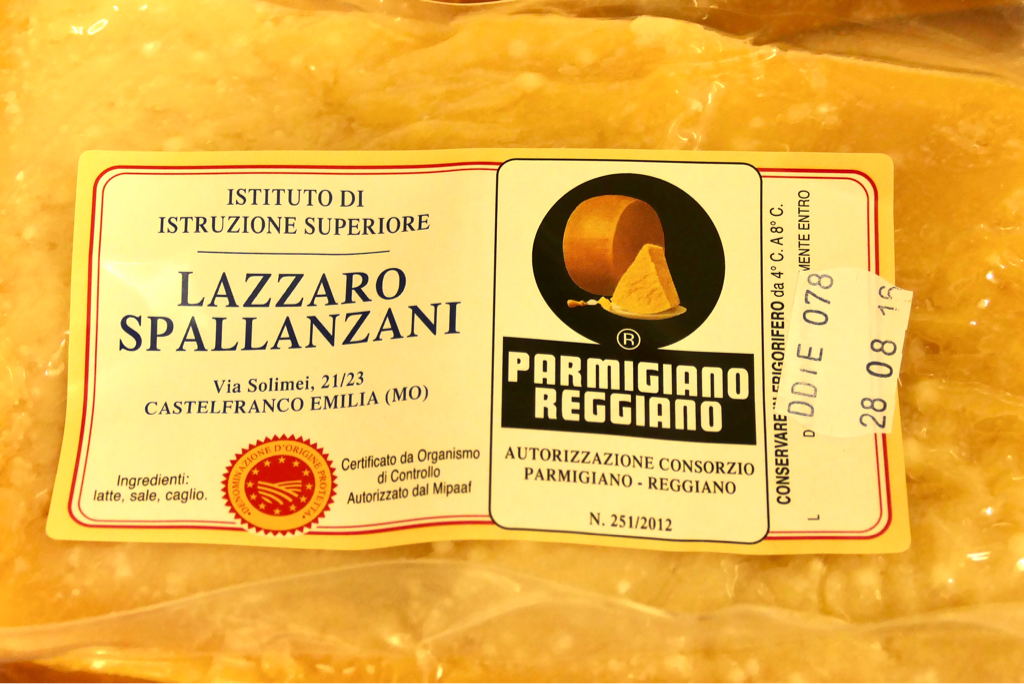
Once out of the brine, the rounds are moved to a storage room where they will be kept for two years before officials come to test them for quality. One testing method is tapping them with a small hammer. If the sound is uniform all the way around, it means there are no imperfections. During this time, the outside of the round continues to darken in color. After four years it is ready to be sold as aged Parmesan. When looking at pieces of cheese in the market, look for several things. One would be the official yellow and orange seal that indicates it is certified as authentic from this area. Another is to look for the small white dots, which is not mold, but an indication that the enzymes have crystallized, which is a good thing. That was new information for me.

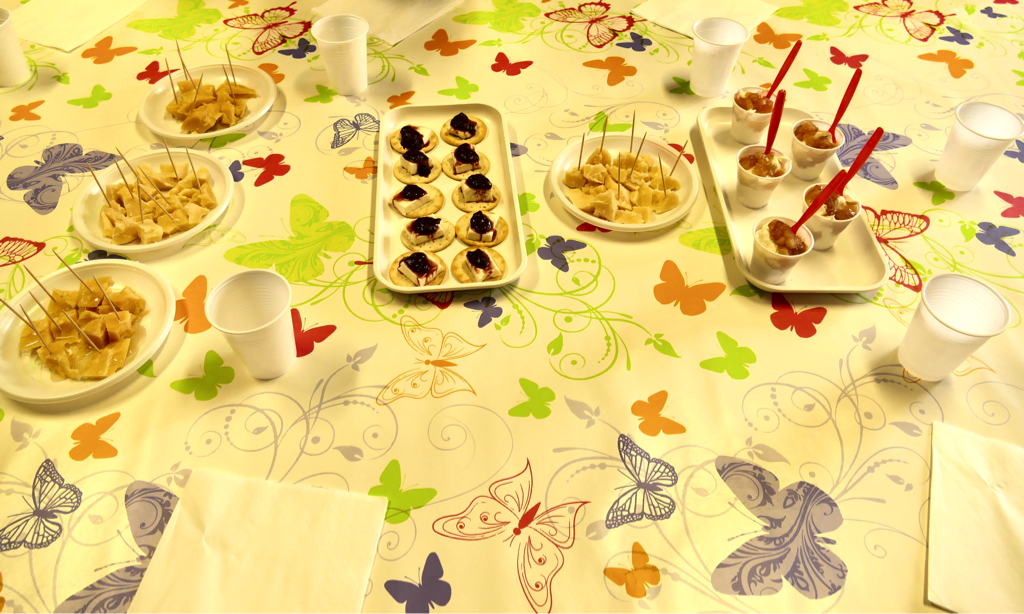
After learning and watching all these steps, we were given a chance to sample the cheese. Some pieces had honey, or jam on them. Then there was the Ricotta cheese, which is a byproduct of this process. It is very light and was served with some fruit on top. The rest of the leftover milk - the whey - is fed to pigs in the area.

This whole process was labor intensive, and had to be done every day. After all, cows do not take a break. Giuseppe and Luisa occasionally take a day off, but they have others who can take over when they are gone. Giuseppe teaches students at the Agricultural High School and the students learn the whole process from raising the crops to making the cheese.

From now on, I'll certainly have a new appreciation for the "Real" Parmesan cheese.

Our second stop was to visit a family that makes "Traditional Balsamic Vinegar," and I'll explain that in my next post.

All for now,
Grace and Paul

Picture
Giuseppe is very proud of his product.
Picture
Where Parmesan cheese is made
Picture
Transport tank
Picture
Giuseppe and Luisa explain process through guide
Picture
This will be one round of cheese.
Picture
One day in these molds sets shape and imprints information
Picture
This is the brine bath where they will spend three weeks.
Picture
Age for four years before ready to eat.
Picture
Red/orange seal indicates authenticity
Picture
Samples of Parmesan cheese and Ricotta with fruit.
1 Comment
<<Previous
Forward>>

    Author

    Grace and Paul Pitzer are retired school teachers who love to travel and share their stories and photos with others.
    Grace: [email protected]
    Paul:
    [email protected]
    Other Blogs:
    PitzerAdventures.com/grace-blog
    Chronicles Grace's journey through breast cancer
    PitzerTravels.blogspot.com
    Other Photos:
    PitzerShare.smugmug.com

    Archives

    October 2019
    September 2019
    July 2019
    June 2019
    September 2018
    August 2018
    July 2018
    June 2016
    May 2016
    April 2016
    March 2016
    February 2016
    December 2015
    November 2015
    October 2015

    Categories

    All
    Arizona
    Family
    Oregon
    Travel

    RSS Feed

Created: Oct. 24, 2015
Updated April 1, 2026
Home
About

Grace and Paul Pitzer
We hope you will keep checking back regularly  to see what is new. I'm always out and about with some camera and love to stretch my skills and add to my volume of work. 
Motto: "Pack light and take lots of pictures."

Paul: [email protected]
Grace: [email protected]
  • Home
  • About Us
  • Photo Galleries
    • Africa
    • Antarctica
    • Baja California
    • Asia
    • Cuba
    • Europe
    • USA
    • Canada
    • Family and Friends
    • IPhone Photography
    • Green Valley AZ
  • Videos
  • Travels
  • Blogs
    • Travel Blog
    • Grace Blog
  • Classes
    • MW iPhone Photography
    • MW iPad Class